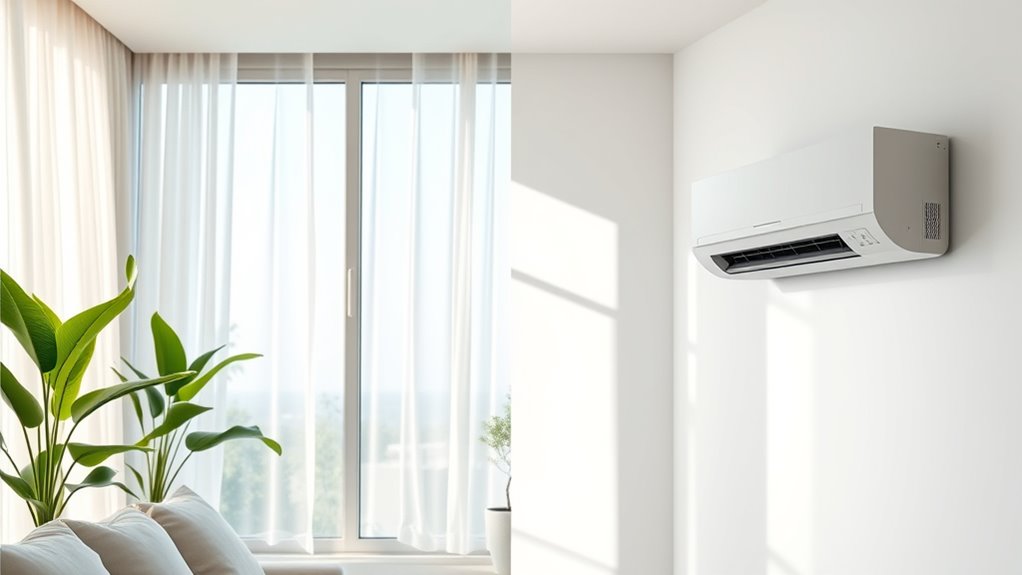

When choosing between natural ventilation and air conditioning for comfort, consider your indoor quality needs, climate, and budget. Natural ventilation offers fresh air and lower energy costs but depends on good outdoor air quality and mild weather. A/C provides precise temperature and humidity control, especially in hot or humid conditions, though it consumes more energy. To optimize comfort and efficiency, exploring how combining both options can benefit you might be worthwhile.
Key Takeaways
- Natural ventilation offers fresh air and improves indoor air quality but depends on mild weather conditions.
- Air conditioning provides consistent temperature and humidity control, ensuring comfort during extreme weather.
- Natural ventilation is energy-efficient and cost-effective but may be less reliable in polluted or high pollen areas.
- AC ensures comfort regardless of outdoor climate but consumes more energy and requires maintenance.
- A balanced approach combining natural ventilation when possible with energy-efficient AC optimizes comfort and environmental impact.
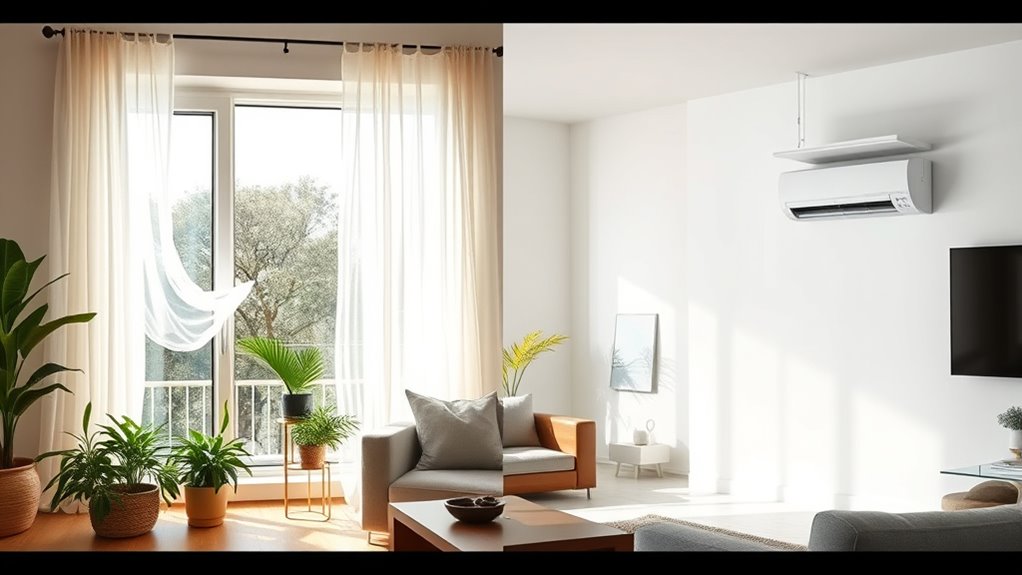
When choosing how to cool and ventilate your indoor spaces, you often face the decision between natural ventilation and air conditioning. Both options influence your comfort, but they also impact indoor air quality and energy efficiency in different ways. Natural ventilation involves opening windows and doors to let fresh air circulate, which can markedly improve indoor air quality by reducing pollutants and stale air buildup. It’s a cost-effective way to bring in outdoor air, especially when the weather is mild. However, it’s not always reliable for maintaining a consistent temperature or controlling humidity, especially during extreme weather conditions, which can compromise your comfort.
Natural ventilation improves air quality and reduces energy use but may struggle with temperature and humidity control.
On the other hand, air conditioning offers precise control over indoor temperature and humidity levels. It ensures a comfortable environment regardless of outdoor conditions, making it ideal for hot or humid climates. But this comfort comes with some trade-offs. Air conditioning units consume a lot of energy, which means higher utility bills and a larger carbon footprint. Modern systems are becoming more energy-efficient, but they still rely on electricity, which may be generated from non-renewable sources. Additionally, air conditioning can negatively impact indoor air quality if filters aren’t regularly maintained, trapping dust, allergens, and other pollutants inside. Proper maintenance of AC units is essential to prevent these issues and to keep the indoor environment healthy.
Natural ventilation, when done correctly, can promote better indoor air quality by continuously replacing stale indoor air with fresh outdoor air. It also reduces energy consumption because it doesn’t require electricity to operate fans or compressors. However, it’s less effective in controlling airborne pollutants or allergens that might be present outdoors, especially during high pollen seasons or pollution spikes. You must weigh these factors against your specific needs and local climate conditions. Effective ventilation strategies can help optimize indoor air quality and comfort.
In terms of energy efficiency, natural ventilation clearly has the advantage when outdoor conditions allow. It reduces dependence on mechanical cooling systems, therefore lowering your energy bills and decreasing your environmental impact. But in climates where outdoor air can’t be relied upon to maintain comfort, air conditioning becomes a necessary investment, despite its higher energy use. The key is finding a balance: using natural ventilation when weather permits, supplemented by energy-efficient AC units when needed. This approach helps you optimize indoor air quality and comfort while being mindful of energy consumption and environmental effects.
Frequently Asked Questions
How Does Natural Ventilation Affect Indoor Air Quality?
Natural ventilation improves indoor air quality by enhancing indoor air circulation, helping to remove pollutants and stale air. It can also help control VOCs (volatile organic compounds) by bringing in fresh air and reducing buildup. However, you should monitor outdoor air quality since pollutants can enter. When properly managed, natural ventilation creates a healthier indoor environment, but it’s essential to balance airflow with pollutant control for ideal air quality.
Can Natural Ventilation Be Effective in Humid Climates?
Natural ventilation can be like trying to catch a whisper in a storm in humid climates. It’s less effective because high humidity hampers airflow efficiency and makes humidity control difficult. You might find it challenging to maintain comfort, as moisture lingers and cool breezes are less effective. To succeed, combine natural ventilation with dehumidification methods or mechanical systems to better manage humidity and improve airflow efficiency.
What Are the Maintenance Requirements for Air Conditioning Systems?
You need to regularly replace filters to keep your air conditioning system running efficiently and maintain good indoor air quality. Schedule system servicing at least once a year to check refrigerant levels, clean coils, and guarantee all parts function properly. This routine maintenance helps prevent breakdowns, extends the lifespan of your AC, and keeps it operating at peak performance, providing consistent comfort and energy efficiency.
How Do Costs Compare Long-Term for Ventilation Options?
Imagine your expenses as a garden. Natural ventilation is like planting seeds—low installation costs and cost efficiency over time, requiring minimal upkeep. Air conditioning resembles watering with a hose—higher installation expenses and ongoing energy bills. Long-term, natural ventilation tends to save you money thanks to lower operational costs, while air conditioning may drain your budget with higher energy consumption. Your choice impacts your financial landscape, shaping future savings.
Are There Health Risks Associated With Natural Ventilation?
Natural ventilation can pose health risks if indoor allergens like pollen, mold, or dust are present, as they can circulate more easily. Poor ventilation efficacy may lead to indoor air quality issues, increasing your exposure to these allergens. To minimize risks, make certain of proper filtration and consider using natural ventilation during low allergen periods. Regular maintenance and air quality monitoring help keep your indoor environment healthy and safe.
Conclusion
Ultimately, choosing between natural ventilation and air conditioning is like selecting a dance partner—each has its rhythm and charm. Natural ventilation offers a invigorating breeze that awakens your senses, while air conditioning provides a steady, reliable comfort. Consider your environment and personal preference, but remember, the right choice can transform your space into a sanctuary. Embrace the option that best suits your lifestyle, and let your comfort dance to the beat of your needs.