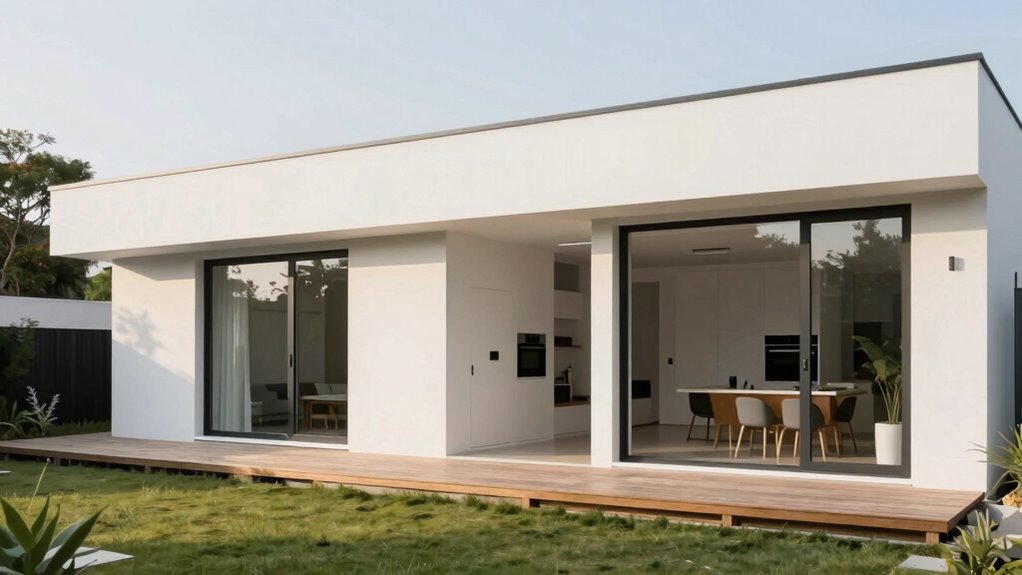

Focusing on fewer extras and stronger core systems helps your family home run smoothly, with less clutter and easier maintenance. Smart core systems like efficient HVAC and quality insulation boost comfort and cut energy costs over time. Simplifying reduces repair needs and keeps your home more resilient. By making mindful choices now, you create a sustainable, cost-effective space that adapts to your family’s needs. Keep exploring to discover how these strategies can transform your home.
Listen free for 30 days with Audible
Thousands of audiobooks and originals — cancel anytime.
As an affiliate, we earn on qualifying purchases.
Key Takeaways
- Simplifying systems reduces maintenance, repairs, and clutter, making home management easier and more cost-effective.
- Focusing on essential core systems ensures reliable comfort and efficiency over the long term.
- Fewer extras minimize distractions and promote a calmer, more functional living environment for families.
- Better core systems support energy savings, sustainability, and lower utility bills.
- Streamlined homes are adaptable to future needs and easier to upgrade or repair.

In today’s family homes, prioritizing essential features over unnecessary extras can lead to more comfortable and efficient living spaces. When you focus on the core systems that truly support daily life, you create an environment that’s easier to manage and more sustainable. This focus helps prevent the clutter and complexity that can lead to higher maintenance needs and energy waste. This approach isn’t about stripping away comfort but about enhancing it through smarter choices. Incorporating smart technology into your home allows you to automate lighting, heating, and security, which not only adds convenience but also reduces energy consumption. These systems can learn your routines, adjusting settings automatically for maximum efficiency. As a result, you save money on utility bills while maintaining a comfortable atmosphere for your family.
Eco friendly design plays a vital role in these core systems. Using sustainable materials and energy-efficient appliances helps minimize your home’s carbon footprint. Simple changes like installing solar panels, using low-impact insulation, or choosing appliances with high energy ratings make a difference. When you invest in eco friendly design, you’re not just helping the environment—you’re also creating a healthier indoor space for your loved ones. These choices often lead to lower operating costs over time, making your home both financially and environmentally sustainable. Understanding energy efficiency and how it impacts your overall home performance allows you to make more informed decisions that benefit both your wallet and the environment.
Fewer extras mean you don’t get distracted by gadgets or features that don’t add real value. Instead, you focus on the essentials that improve your family’s quality of life. For example, a well-designed HVAC system with smart controls ensures consistent comfort without wasting energy. Quality insulation and windows reduce drafts and keep heat in, decreasing the need for excessive heating or cooling. These core systems form the backbone of your home, providing reliability and long-term savings. Recognizing the importance of core systems helps you make smarter investment choices for your home’s future. Additionally, understanding how home technology can further streamline your household operations and reduce unnecessary energy use allows you to optimize your living environment.
When you cut back on superfluous features, you also simplify maintenance. Less cluttered, more streamlined systems are easier to keep in good working order. This means fewer repairs and less hassle, giving you more time to enjoy your family. By emphasizing smart technology and eco friendly design, you build a home that’s adaptable and resilient. It becomes a space that grows with your family’s needs, rather than one burdened by unnecessary gadgets or outdated features. Incorporating sustainable materials into your home’s design can further enhance its longevity and eco-friendliness.
Ultimately, choosing fewer extras and investing in better core systems transforms your family home into a more sustainable, comfortable, and cost-effective space. It’s about making mindful decisions that serve your family’s needs now and into the future. When you focus on what truly matters—smart technology, energy efficiency, and reliable infrastructure—you create a home that’s not only functional but also a better place for everyone to thrive.
smart HVAC system with energy efficiency
As an affiliate, we earn on qualifying purchases.
As an affiliate, we earn on qualifying purchases.
Frequently Asked Questions
How Can Homeowners Identify Unnecessary Extras in Their Homes?
You can identify unnecessary extras in your home by evaluating which decorative fixtures or luxury appliances truly add value or comfort. Ask yourself if these items serve a practical purpose or if they’re just for show. If they’re rarely used or don’t enhance daily life, consider removing or replacing them. Simplifying your space helps prioritize core systems, making your home more efficient, functional, and less cluttered.
What Are the Most Critical Core Systems for Family Homes?
The most critical core systems for your family home include the plumbing, electrical, HVAC, and roofing systems. These foundational elements guarantee comfort, safety, and functionality. While interior design and exterior aesthetics enhance your home’s look, they shouldn’t overshadow these essential systems. Prioritize reliable core systems first, and then incorporate thoughtful interior design and exterior aesthetics to create a balanced, safe, and comfortable living environment for your family.
How Do Fewer Extras Improve Home Safety?
Fewer extras, like decorative features and luxury upgrades, streamline your home, reducing clutter and potential hazards. This minimalist approach minimizes tripping risks from ornate decor or fragile fixtures and simplifies maintenance, so you can quickly identify issues. By focusing on essential systems, you guarantee core safety features—like smoke alarms and secure locks—function properly, making your home safer for everyone, especially children and elderly family members.
What Is the Cost Difference Between Focusing on Core Systems and Adding Extras?
Focusing on core systems saves you money compared to luxury upgrades and aesthetic enhancements. While extras may seem appealing, they often come with higher costs for installation and maintenance. Investing in essential systems like plumbing, electrical, and HVAC provides greater value and safety. Luxury upgrades tend to be costly and can lead to frequent repairs, whereas prioritizing core systems guarantees your home remains functional, safe, and cost-effective in the long run.
How Can Homeowners Upgrade Core Systems Without Extensive Renovations?
You can upgrade your core systems easily by installing smart thermostats and energy-efficient lighting. These upgrades don’t require extensive renovations; you simply replace outdated thermostats with smart ones for better temperature control and swap bulbs for energy-efficient options. These improvements boost comfort, save energy, and are cost-effective, making your home more efficient without major construction. Plus, they’re quick to install and deliver immediate benefits.
Conclusion
Ultimately, stripping away unnecessary extras and focusing on robust core systems transforms your family home into a sanctuary of efficiency and comfort. Like a well-tuned orchestra, each element plays its part, ensuring harmony and resilience. Remember, even in an age of modernity, sometimes less truly is more—just as a classic steamer never goes out of style. Prioritize quality over quantity, and your home will stand the test of time, just like a timeless work of art.
NFL season / tailgating Picks
team gear
As an affiliate, we earn on qualifying purchases.