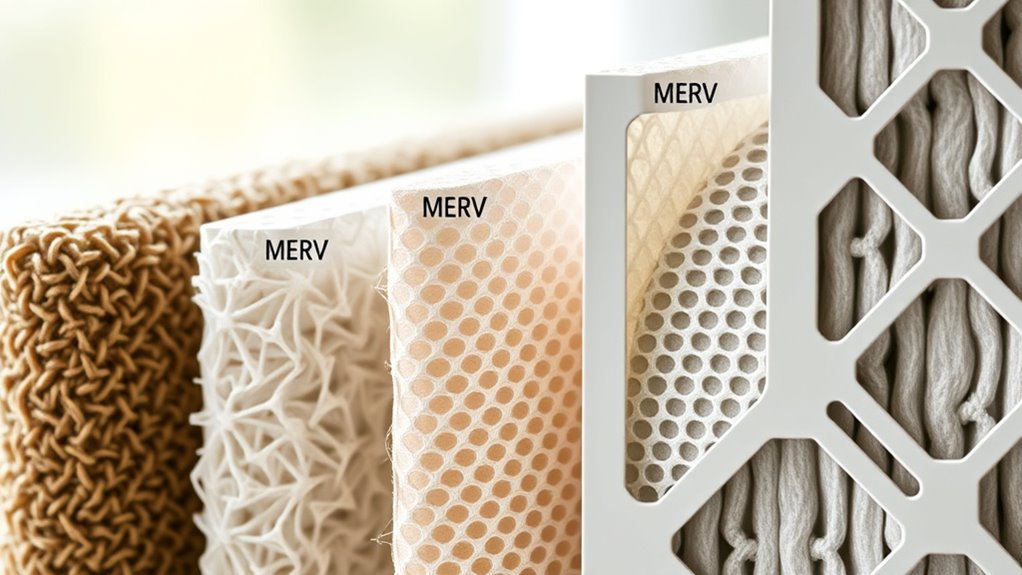

Understanding MERV ratings helps you choose the right HVAC filters to improve indoor air quality and protect your system. MERV, or Minimum Efficiency Reporting Value, grades filters based on their ability to trap particles like dust, pollen, and pet dander. The higher the MERV number, the more efficient the filter is at capturing tiny pollutants. However, higher-rated filters may restrict airflow if your system isn’t compatible. If you want to learn more about choosing the best filter grade, keep going.

Get decor and gifts delivered free with Prime
- Fast, free delivery on millions of items
- Prime Video, Amazon Music and more included
- Member-only deals all year
Key Takeaways
- MERV ratings measure a filter’s ability to trap airborne particles, ranging from 1 (lowest) to 20 (highest).
- Lower MERV filters (1-4) are suitable for basic dust and pollen, while higher MERV (13-16) filters trap smaller allergens and bacteria.
- Higher MERV ratings provide better filtration but may restrict airflow, potentially impacting HVAC system performance.
- Choose MERV ratings based on household needs, such as allergies, pets, or air quality concerns.
- Regularly replace filters according to MERV grade to maintain efficiency and indoor air quality.
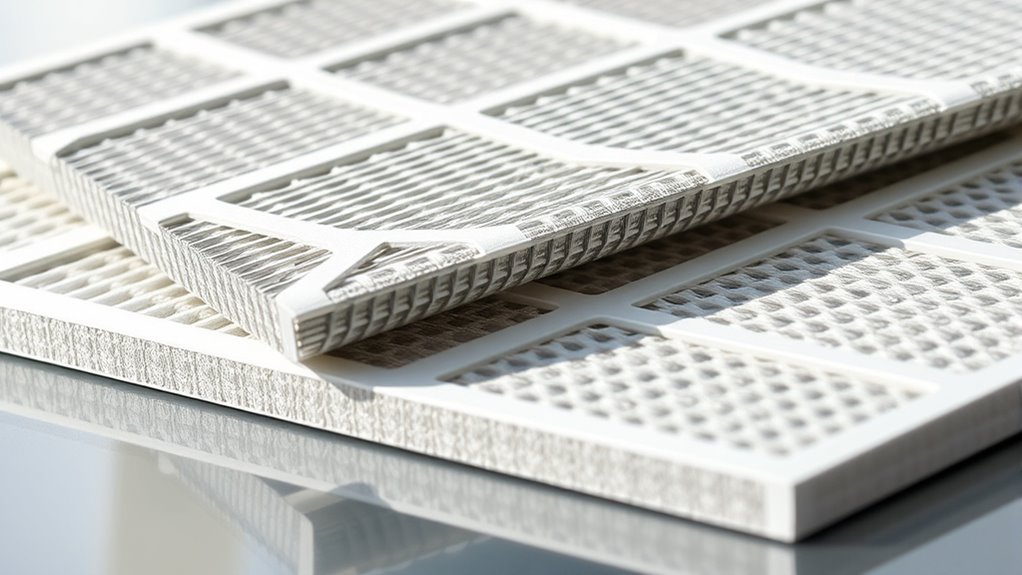
Have you ever wondered how to choose the right HVAC filter for your home? Picking the correct filter isn’t just about grabbing the one with the highest MERV rating; it involves understanding air filter materials and knowing how often to replace your filter. Your HVAC system relies on these filters to trap dust, pollen, pet dander, and other airborne particles, ensuring cleaner indoor air. But not all filters are created equal, and selecting the right one can make a big difference in your home’s air quality and system efficiency.
When considering air filter materials, you’ll notice options like fiberglass, pleated cotton, polyester, and electrostatic filters. Fiberglass filters are inexpensive and good for basic dust trapping, but they tend to have lower MERV ratings, meaning they don’t filter out the smaller particles that impact your health. Pleated filters, made from cotton or polyester, often have higher MERV ratings because their design offers a larger surface area for trapping contaminants. Electrostatic filters use static electricity to attract airborne particles, making them effective for capturing smaller pollutants. Your choice of material influences not just filtration efficiency but also the lifespan of the filter, so it’s vital to match the filter material with your specific needs.
Alongside selecting the right filter material, adhering to proper filter replacement schedules is essential. Even the best air filter materials will become less effective over time as they fill with dust and debris. Most filters should be replaced every 1 to 3 months, but this can vary depending on factors like your household’s air quality, presence of pets, and the type of filter you use. For instance, high-efficiency filters with higher MERV ratings tend to clog faster, requiring more frequent changes. Conversely, if you live in a less dusty environment or have no pets, you might stretch the schedule a bit longer. Regularly inspecting your filter and noting when airflow seems restricted or when the filter looks dirty can help you determine the ideal replacement timeline.
As an affiliate, we earn on qualifying purchases.
Frequently Asked Questions
How Do MERV Ratings Compare to Other Filter Standards?
When comparing MERV ratings to other standards, you’ll find they directly relate to air filter efficiency. MERV ratings measure how well a filter captures particles, with higher ratings indicating better filtration. Unlike other standards, MERV provides a clear, standardized comparison, so you can easily choose the right filter for your needs. This helps you guarantee ideal air quality and filter performance, making your indoor environment healthier and more comfortable.
Can Higher MERV Ratings Restrict Airflow Excessively?
Did you know that filters with very high MERV ratings can reduce airflow by up to 20%? You might worry that higher MERV ratings cause too much airflow restriction, but it’s not always true. While increased filter efficiency often means better particle removal, it can also restrict airflow if not properly matched to your system. Confirm your HVAC system can handle higher MERV filters to avoid performance issues.
Are MERV Ratings Suitable for All HVAC Systems?
You might wonder if MERV ratings suit all HVAC systems. While higher ratings can improve air quality, they may restrict airflow if your system isn’t designed for them. Always consider your system’s specifications before air filter installation. Regular filter maintenance tips include changing filters as recommended and checking for airflow issues. This ensures your system runs efficiently without unnecessary strain, keeping your indoor air clean and safe.
How Often Should HVAC Filters Be Replaced Based on MERV Grade?
Think of your HVAC filter as a hardworking gatekeeper—its lifespan depends on how well it does its job. The higher the MERV grade, the more it traps tiny particles, but it may need more frequent replacement. Generally, you should replace filters every 1 to 3 months, depending on usage and MERV rating. This keeps your system running smoothly and maintains healthy indoor air quality.
Do Higher MERV Filters Improve Indoor Air Quality Significantly?
Higher MERV filters can improve indoor air quality considerably by capturing more airborne particles. When choosing air filter materials, opt for those with higher MERV ratings for better filtration. Proper filter installation tips include ensuring a snug fit and regular replacement to maintain effectiveness. Keep in mind, though, that very high MERV filters might restrict airflow, so balance filtration with your system’s capacity for ideal indoor air quality.
Conclusion
Think of your HVAC filter as the guardian of your home’s air, silently standing watch. Choosing the right MERV rating is like selecting the strongest shield to protect your sanctuary from unseen invaders. When you understand these grades, you’re arming yourself with knowledge—turning your filter into a symbol of safety and comfort. Trust in this choice, and let your home be a fortress where pure air reigns, shielding those you love most.
Halloween Picks
halloween
As an affiliate, we earn on qualifying purchases.