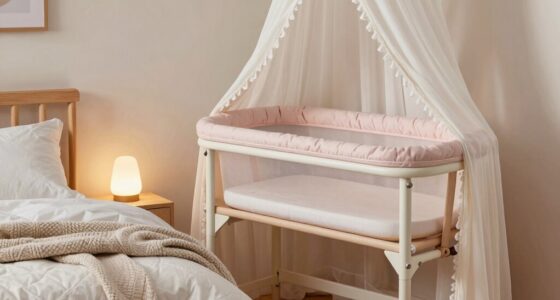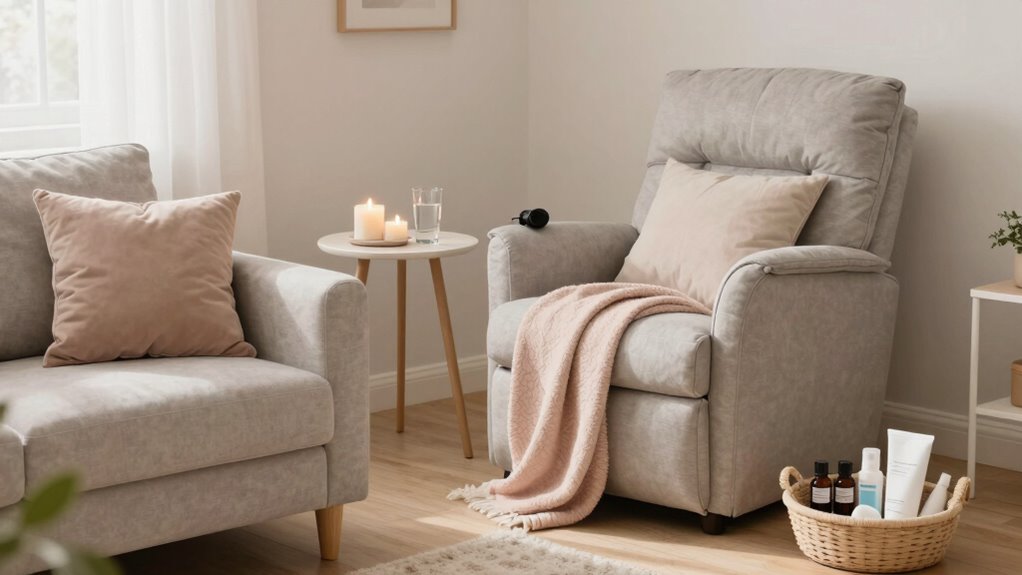
Create a cozy, clutter-free space with soft lighting, plush seating, and calming music to promote relaxation. Keep essentials like snacks, water, and postpartum supplies nearby for convenience. Include a comfortable nursing nook with supportive pillows for soothing your baby and yourself. Stock the area with self-care items like creams, medications, and relaxation tools. Personalize it with comforting items that bring you joy. To discover more tips, explore how to make this space perfect for healing and bonding.

Get decor and gifts delivered free — and shop member deals
- Fast, free delivery on millions of items
- Access to Prime Big Deal Days deals on October 6–7
- Prime Video, Amazon Music and more included
Key Takeaways
- Design a calm, clutter-free space with soft lighting, plush seating, and soothing sounds for relaxation and recovery.
- Organize essential postpartum supplies, including medications, nursing items, and comfort products within easy reach.
- Create a dedicated area for infant soothing with comfortable seating, pillows, and calming items nearby.
- Personalize the space with photos, blankets, and items that promote comfort, mindfulness, and emotional well-being.
- Regularly maintain and declutter the area to ensure it remains a peaceful, supportive environment for healing and bonding.
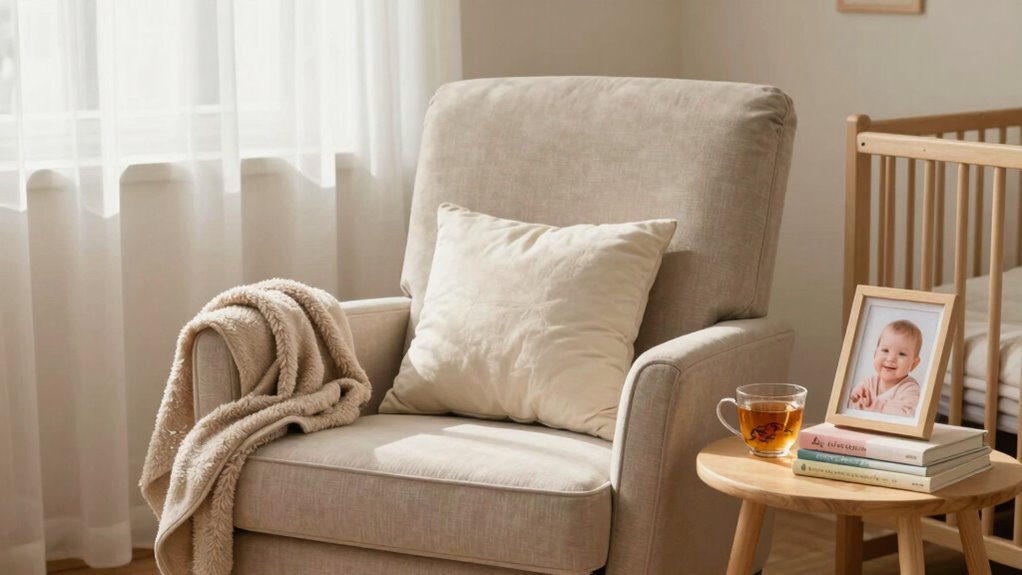
Creating a dedicated recovery zone at home is crucial for new moms to rest and heal effectively after childbirth. This space becomes your sanctuary, allowing you to focus on postpartum self care without distractions. When setting up your recovery zone, prioritize comfort and accessibility. Use soft lighting, plush seating, and easy-to-reach essentials like water, snacks, and postpartum supplies. Keep a few comforting items nearby, such as cozy blankets or soothing music, to help you relax during moments of rest.
Create a cozy, accessible recovery space with soft lighting, plush seating, and comforting essentials for restful postpartum healing.
Your recovery zone should also support infant soothing techniques. If you plan to spend a lot of time holding or nursing your baby, guarantee the area has a comfortable chair or nursing nook where you can sit for extended periods. Place pillows or cushions nearby to help position your baby comfortably and reduce strain on your arms and back. Having a designated spot for infant soothing techniques can make calming your newborn easier and more effective, fostering a peaceful environment for both of you.
It’s equally important to organize your recovery zone around your postpartum self care needs. Stock it with essentials like nursing pads, creams, and any medications prescribed by your healthcare provider. Keep a small first aid kit handy for quick access to bandages or ointments. Incorporate items that promote relaxation, like calming teas, aromatherapy diffusers, or a journal to jot down your thoughts and feelings. Creating a space that encourages mindfulness and self-compassion can considerably aid your healing process. Additionally, mindfulness practices can enhance your emotional well-being during this recovery period. Incorporating self-care routines into your daily habits can further support your mental health and overall recovery. Regularly updating and maintaining your recovery zone by organizing supplies can help sustain its calming environment and ensure that it continues to meet your evolving needs.
To make your recovery zone truly functional, declutter the area regularly. Remove unnecessary items that may cause stress or make the space feel crowded. Keep the space tidy and organized so you can easily find what you need, reducing frustration and saving energy. Use storage baskets or bins to keep supplies orderly and within arm’s reach, making your postpartum self care routine more seamless.
Finally, personalize your recovery zone with items that bring you comfort and joy. Whether it’s photographs, a favorite blanket, or a beloved book, these touches help you feel more at ease. Remember, this space is your haven. By thoughtfully setting it up with your physical and emotional needs in mind—focusing on postpartum self care and infant soothing techniques—you create an environment that supports your healing journey. This dedicated area becomes an indispensable part of your postpartum experience, helping you recover physically and emotionally while bonding with your baby. Incorporating child development resources can further enhance your understanding of your baby’s needs during this recovery period.
As an affiliate, we earn on qualifying purchases.
Frequently Asked Questions
How Long Should the Recovery Zone Be Used Daily?
You should spend about 30 minutes to an hour daily in your recovery zone, depending on your needs. This time allows you to focus on breastfeeding support and emotional healing without feeling overwhelmed. Use this space for gentle relaxation, bonding, or self-care activities. Consistently dedicating this time helps promote healing, reduces stress, and strengthens your connection with your baby, making your recovery process smoother and more fulfilling.
Can the Recovery Zone Be Shared With Other Family Members?
Sharing a recovery zone is like walking a tightrope—you must balance family boundaries and shared space considerations carefully. You can share the space with other family members, but set clear boundaries to protect the mom’s rest and healing. Communicate openly, ensuring everyone understands the zone’s purpose. This way, the recovery zone remains a sanctuary while respecting others’ needs, fostering a supportive environment for everyone’s well-being.
What Are the Essential Safety Features for the Recovery Zone?
You should prioritize nursery safety by securing furniture, covering outlets, and keeping cords out of reach. Emergency preparedness is essential—install a smoke detector, keep a first aid kit nearby, and have an emergency plan in place. Make certain the recovery zone is free of hazards, with soft flooring and baby-proof locks. These safety features help create a secure environment, giving you peace of mind as you focus on recovery and caring for your little one.
How to Customize the Recovery Zone for Different Postpartum Needs?
You can customize your recovery zone for different postpartum needs by incorporating elements that promote postpartum relaxation and personalized comfort. Add adjustable lighting, soothing music, and comfy seating tailored to your preferences. Include items like supportive pillows, calming scents, and easy-to-reach essentials. This flexibility guarantees your space adapts to your evolving recovery, providing a sanctuary where you feel safe, relaxed, and cared for during every stage of postpartum healing.
Is Professional Medical Advice Necessary to Set up the Recovery Zone?
Yes, professional medical advice is essential when setting up a recovery zone. You should seek a medical consultation to guarantee the space meets safety guidelines tailored to your postpartum needs. A healthcare professional can recommend specific modifications, suggest safe furniture and equipment, and address any health concerns. Following their guidance helps create a secure environment, promoting faster recovery and peace of mind during this important postpartum period.
Conclusion
Creating a cozy recovery zone at home isn’t just about comfort—it’s about nurturing your well-being during this special time. By thoughtfully arranging a peaceful space, you give yourself permission to rest and renew. Remember, this sanctuary is your gentle retreat, a quiet embrace when life feels bustling. Embrace the little moments of calm, knowing you’re nurturing both your body and soul. A well-loved recovery corner becomes your secret garden of renewal—your haven of hope.
Halloween Picks
halloween
As an affiliate, we earn on qualifying purchases.