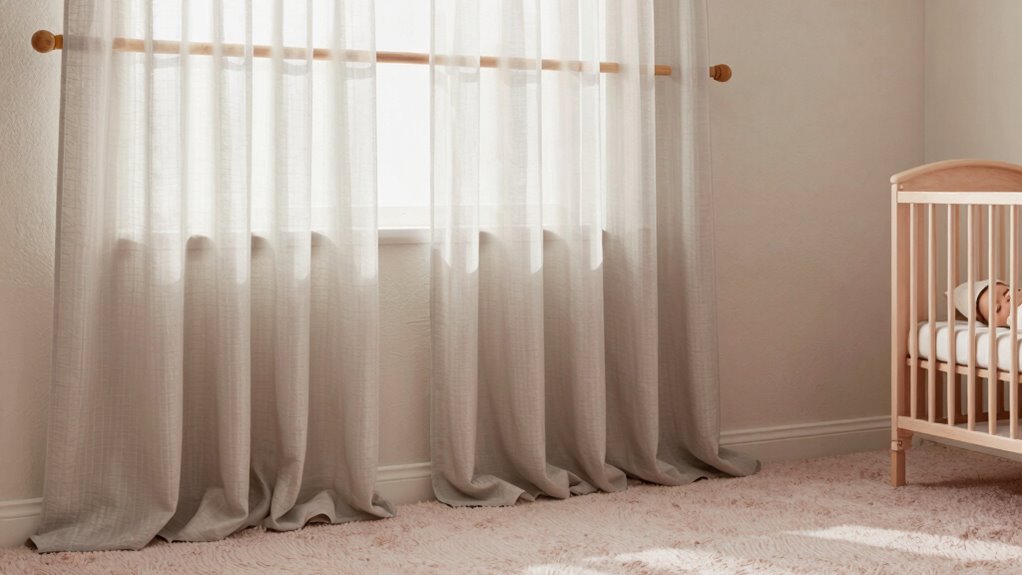

Soundproof curtains for nurseries are about more than just blocking noise from shared walls. They help create a calm, restful space by reducing sounds from neighbors, street noise, and household activities, allowing your baby to sleep peacefully. These curtains also add insulation, helping to regulate the room’s temperature and minimize outside distractions. Ensuring safety and durability is key for effective use. Keep exploring to discover how the right choices can make your nursery a serene haven for your little one.

Get decor and gifts delivered free with Prime
- Fast, free delivery on millions of items
- Prime Video, Amazon Music and more included
- Member-only deals all year
Key Takeaways
- Soundproof curtains in nurseries help create a peaceful environment, reducing external noise that can disturb shared sleep.
- They primarily block outside sounds from street or neighbor noise, not just shared wall noise.
- Effective nursery soundproofing focuses on internal noise management for better sleep quality.
- Proper installation and heavy fabrics enhance noise reduction, benefiting shared sleep situations.
- Combining curtains with additional soundproofing strategies optimizes overall noise control for nurseries.
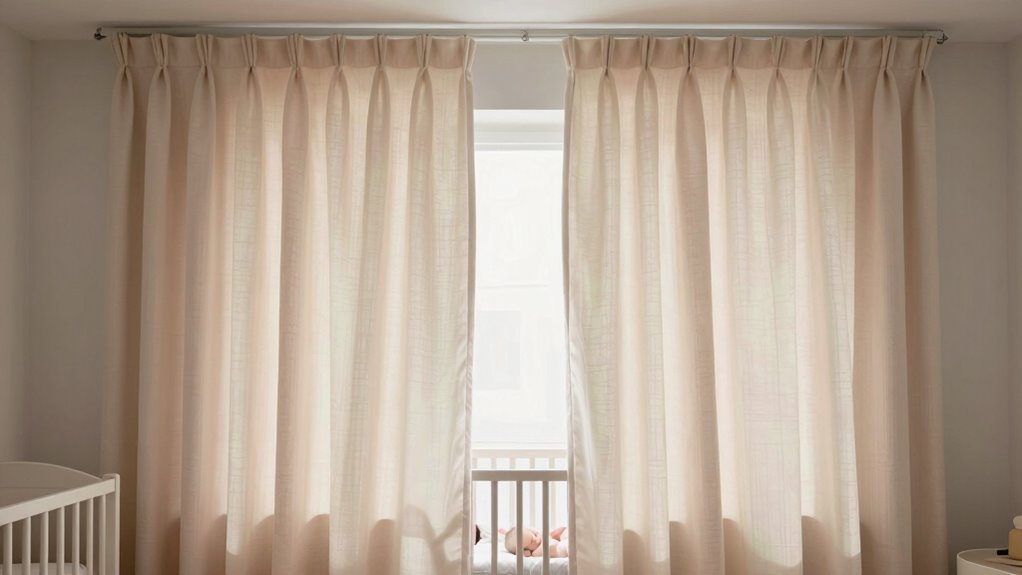
Creating a peaceful environment in your nursery is vital for your baby’s restful sleep and overall well-being. When you consider soundproof curtains, you’re not just thinking about blocking noise; you’re aiming to create a calm space where your little one can rest undisturbed. While many assume these curtains are primarily about shared walls and shared sleep, their benefits extend beyond that. They help manage noise levels inside the room itself, creating an environment that’s quiet and soothing. This is especially important if you live in an apartment or house with thin walls, where sounds from neighbors, street noise, or household activities can disrupt your baby’s sleep. When you choose soundproof curtains, make sure you prioritize child safety. Opt for curtains that are free from harmful chemicals and dyes, and confirm they’re securely installed to prevent any choking hazards. Child safety is vital, especially since babies tend to pull or chew on anything within reach. Choosing curtains with a sturdy, durable design means they won’t easily tear or fray, which could pose safety risks over time. Material durability is a key factor here; you want curtains made from high-quality, heavy fabrics that can withstand daily use without losing their soundproofing qualities. Thick, dense fabrics like velvet or specialized soundproofing materials are preferable because they effectively absorb sound and last longer. Avoid flimsy or low-quality fabrics, as they tend to wear out quickly and won’t provide the noise reduction you need. When you install these curtains, make sure they cover the entire window and extend beyond the frame, creating a barrier that minimizes sound leakage. Proper installation is vital to maximize their effectiveness, especially if shared walls are a concern. Remember, soundproof curtains aren’t a magic fix for all noise issues, but they greatly contribute to a more peaceful nursery environment. They also add a layer of insulation, helping to regulate temperature and reduce outside distractions. Additionally, soundproofing materials can enhance their effectiveness by further reducing noise transmission and improving overall sound absorption. Using soundproof fabrics can significantly boost the noise reduction properties of your curtains. Incorporating soundproofing techniques into your window treatments can optimize their performance and provide a more serene space for your baby. Properly choosing the right soundproofing methods can make a noticeable difference in noise reduction. Ultimately, your goal is to foster a space where your baby feels safe, secure, and undisturbed. By selecting curtains that prioritize child safety and material durability, you’re making a smart investment in your nursery’s comfort. This helps guarantee your baby can drift off peacefully and enjoy consistently restful sleep, which benefits everyone in the household. In the end, soundproof curtains are about more than just shared walls—they’re about creating a sanctuary where your child’s health, safety, and sleep quality are prioritized every day.
As an affiliate, we earn on qualifying purchases.
Frequently Asked Questions
Do Soundproof Curtains Improve Overall Nursery Air Quality?
Soundproof curtains mainly block noise, so they don’t directly improve your nursery’s air quality. However, they can help maintain better air circulation by sealing gaps that might trap stale air. Plus, by reducing dampness and moisture buildup, they assist mold prevention. Overall, while they aren’t filters, soundproof curtains can contribute to a healthier nursery environment by supporting better airflow and mold control.
How Do Soundproof Curtains Compare to Acoustic Panels?
Soundproof curtains and acoustic panels both reduce noise, but they serve different needs. Curtains are easier to install, offer fabric durability, and come in various aesthetic options to match your nursery decor. Acoustic panels, on the other hand, provide more effective sound absorption for shared walls. Choose curtains for style and convenience, or panels if you prioritize maximum soundproofing. Both can improve nursery comfort, depending on your needs.
Are Soundproof Curtains Safe for Newborns?
Think of soundproof curtains as gentle shields for your baby’s dreams. They’re safe when you choose non-toxic fabrics and follow proper curtain installation, ensuring no choking hazards or loose parts. Always supervise during setup, and avoid heavy materials that could sag or fall. Your baby’s safety comes first, so opt for curtains specifically designed for nurseries, and double-check that all components are secure and child-friendly—peace of mind for both of you.
Can Soundproof Curtains Help With Daytime Noise Disturbances?
Yes, soundproof curtains can help with daytime noise disturbances. They act as a barrier against outdoor noise, reducing sound transmission into your nursery. Proper curtain installation is key—ensure they cover the entire window and extend beyond its edges for maximum noise reduction. By doing this, you’ll create a quieter environment, making it easier for your little one to rest and focus, even when outside noise levels spike.
How Long Do Soundproof Curtains Typically Last?
Soundproof curtains typically last around 3 to 7 years, depending on durability factors like material quality and usage. You can extend their lifespan by following simple maintenance tips, such as regular gentle cleaning and avoiding harsh chemicals. Proper care prevents wear and tear, ensuring your curtains stay effective and beautiful longer. If you invest in high-quality fabrics, you’ll enjoy their soundproofing powers for years, making your nursery peaceful and protected.
Conclusion
So, next time you’re tempted to buy those fancy soundproof curtains for your nursery, remember—they’re not magic. The real peace comes from shared walls, not just fabric barriers. Ironically, while you might think curtains will silence everything, they only muffle the noise a little. Sometimes, the best remedy is simply understanding that true quiet often depends on your home’s layout, not just your decor. Who knew?
Halloween Picks
halloween
As an affiliate, we earn on qualifying purchases.