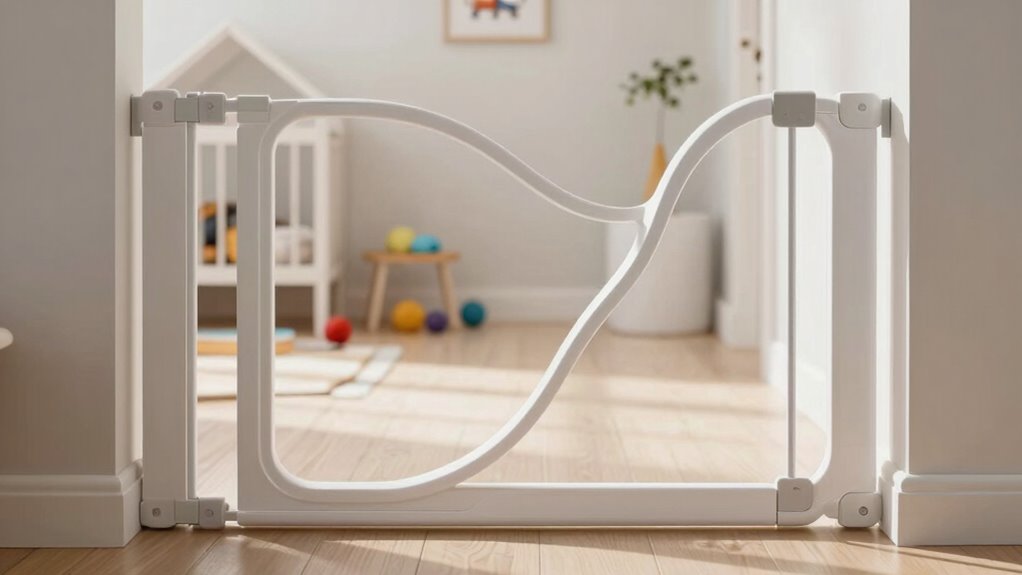

To keep your child safe, you need a gate that follows their natural movements, not just blocks doorways. Kids crawl, climb, and twist in unpredictable ways, so a gate designed solely for size can still be bypassed. Safety should adapt to how children behave, using barriers that respond to their climbing or pushing. If you want to understand how modern designs maximize safety by considering movement patterns, keep exploring these innovative approaches.

Get decor and gifts delivered free — and shop member deals
- Fast, free delivery on millions of items
- Access to Prime Big Deal Days deals on October 6–7
- Prime Video, Amazon Music and more included
Key Takeaways
- Child movement patterns include crawling, climbing, and twisting, requiring gates that adapt beyond just doorway width.
- Flexible, multi-directional gates better accommodate unpredictable navigation behaviors.
- Designing gates to follow natural child movements enhances safety and reduces fall risks.
- Material choices should respond to climbing and leaning tendencies for increased protection.
- Recognizing typical child actions informs the development of more effective, behavior-aware safety barriers.
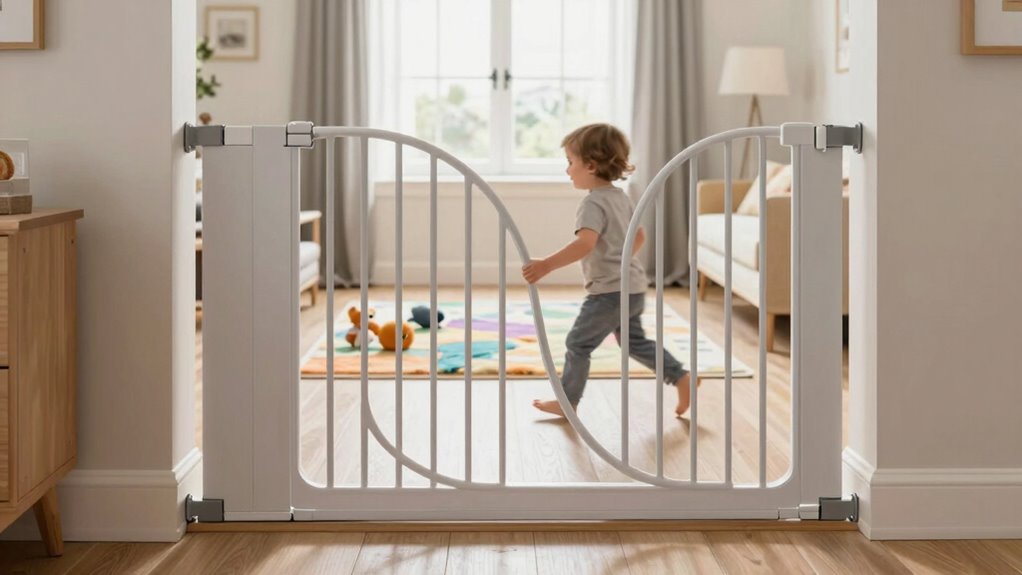
When designing baby gates, it’s crucial to take into account how both children and parents move through doorways and barriers. Children don’t always follow straight paths; they tend to crawl, climb, and twist as they navigate their environment. As a parent, you’ve probably noticed that your little one might try to squeeze through narrow openings or attempt to climb over traditional gates. This is why focusing solely on the width of a doorway isn’t enough. Instead, the movement patterns of your child should guide your choice of safety gate materials and design. Modern child proofing innovations have introduced features that accommodate these unpredictable movements, making gates more effective and versatile.
Child proofing innovations now include flexible, multi-directional gates that adapt to a child’s natural movement. These innovations are built to withstand climbing, pushing, or leaning, which are common behaviors at this stage. For example, some gates now incorporate pressure-mounted designs that are easy to install but sturdy enough to prevent accidental falls. Others feature retractable barriers that can be adjusted in size, ensuring that they follow a child’s movement rather than just blocking a doorway. These innovations help you create a safer environment without restricting your child’s exploration too rigidly, which is vital for their development. Recognizing the importance of child movement patterns in safety design can significantly enhance the effectiveness of your child’s barriers. Additionally, understanding how child behavior influences safety features can lead to more tailored and effective solutions. Paying attention to child safety considerations when selecting materials further ensures that the gate responds appropriately to your child’s actions and environment. Incorporating child-specific safety features into your gate choice can further improve protection.
flexible multi-directional baby gate
As an affiliate, we earn on qualifying purchases.
As an affiliate, we earn on qualifying purchases.
Frequently Asked Questions
How Do I Identify Common Movement Patterns in My Home?
To identify common movement patterns in your home, observe how your child moves around different rooms. Watch for routes they frequently take, like between furniture and play areas. Consider furniture arrangements that might encourage or block certain paths. Use this insight to develop effective childproofing strategies, placing gates along their natural pathways instead of just doorways. This proactive approach guarantees safety while allowing your child freedom to explore comfortably.
Are There Specific Baby Gate Types Suited for Dynamic Movement?
Yes, there are baby gate types suited for dynamic movement, especially those with flexible, pressure-mounted designs or expandable panels. When choosing, consider design considerations like ease of installation and adaptability to different movement patterns. Material durability is essential; opt for gates made from strong, long-lasting materials like metal or high-quality plastic. These guarantee safety during active movement, providing stability without restricting your child’s natural exploration.
Can Adjustable Gates Accommodate Changing Toddler Movement?
Yes, adjustable gates can accommodate changing toddler movement effectively. Look for smart gate features like flexible height adjustments and easy-to-reconfigure panels to keep up with your child’s growing mobility. Flexible gate materials, such as lightweight yet sturdy fabrics or adaptable plastics, allow you to customize the gate’s shape and placement. These features guarantee your gate remains secure and functional as your toddler explores and develops new movement patterns.
How Do Gates Ensure Safety During Unpredictable Toddler Movements?
Did you know that 75% of accidents happen when toddlers unexpectedly move? You can guarantee safety by choosing gates with reliable safety lock mechanisms that prevent accidental openings. Also, opt for gates made from durable materials like metal or high-quality plastic, which withstand rough toddler play and prevent breakage. These features work together to keep your little explorer safe, even during unpredictable movements, giving you peace of mind.
What Are the Best Practices for Installing Gates in High-Traffic Areas?
You should install gates in high-traffic areas by first conducting a home safety audit to identify potential hazards. Use childproofing strategies that prioritize secure, easy-to-open gates for adults but difficult for toddlers. Position gates along natural movement pathways, not just doorways, to prevent accidents. Regularly check the stability and condition of the gates, ensuring they follow safe movement patterns and effectively shield your child from danger.
Conclusion
If you want to keep your little explorer safe, don’t just rely on traditional door-mounted gates. Instead, follow their movement patterns and adjust your barriers accordingly. Think of it as outsmarting a tiny tornado—your baby’s curiosity is unstoppable! By paying attention to how they move, you create a fortress that adapts with them, not against them. Stay one step ahead, and you’ll prevent chaos before it even starts. Your peace of mind depends on it!
Fall Picks
fall essentials
As an affiliate, we earn on qualifying purchases.