TL;DR

Get decor and gifts delivered free — and shop member deals
- Fast, free delivery on millions of items
- Access to Prime Big Deal Days deals on October 6–7
- Prime Video, Amazon Music and more included
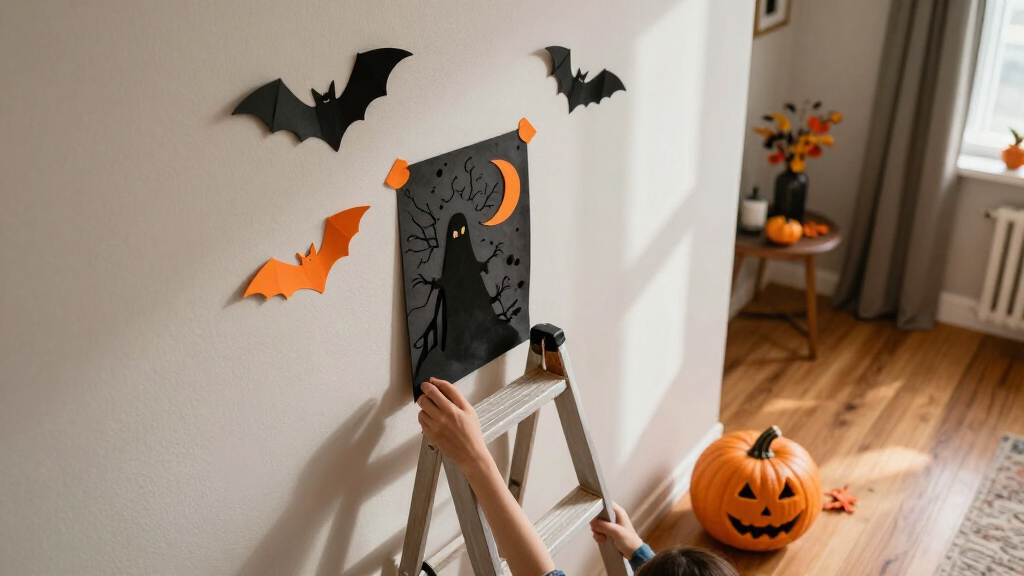
Spooky Halloween wall art ranges from playful pumpkin prints to eerie portraits, and a few well-chosen pieces can change a room’s mood without taking up floor space. Choose one clear style, coordinate colors and sizes with your room, hang lightweight pieces using wall-safe methods, and store prints flat so you can enjoy them again next year.
A single crooked portrait can make a familiar hallway feel like it has a secret. Spooky Halloween wall art gives you that seasonal shift without rearranging furniture or filling every corner with props.
This style ranges from playful pumpkin prints to eerie portraits, haunted houses, bats, black cats, and gothic botanicals. Because the art hangs on the wall, it can make a room feel transformed while keeping the floor clear for guests, kids, and the dog who insists on patrolling the house.
You’ll learn how to choose a mood, arrange pieces at the right scale, hang them with care, and store them so next October’s display takes minutes rather than a frantic search through a damp box. The best result isn’t necessarily the scariest one. It’s the one that feels at home in your home.
Pick a clear mood—playful, vintage, gothic, or eerie—before buying individual prints.
Use one focal piece and repeat a color, frame style, or image detail to connect a gallery wall.
Measure the wall and check doors, switches, and walking paths before hanging seasonal art.
Check adhesive weight limits and surface guidance; test removable products in an inconspicuous spot.
Store paper prints flat and dry, and choose moons, ravens, or dark florals if you want art that can stay up after Halloween.
Choose a Halloween mood that fits your home
Spooky Halloween wall art works best when you pick a mood before you pick individual prints: cute, classic, vintage, gothic, or genuinely eerie. That decision acts like a costume for the room, giving each image a role instead of leaving you with a random collection of bats, pumpkins, and haunted houses. It also makes later choices easier: when you know the room should feel playful rather than unnerving, you can quickly rule out images that pull the display in the wrong direction.
For a family living room, smiling ghosts and orange pumpkins can feel festive without spooking younger children. A dark hallway, by contrast, can handle antique-style portraits, black branches, and a raven illustration. A useful palette is two or three colors drawn from the room—perhaps cream, black, and muted orange—rather than every Halloween shade at once. Limiting the colors helps the display feel connected to furniture and existing decor, while still letting a single bright accent signal the season.
Imagine your usual living room with its tan sofa and brass lamp. A black-framed print of a moonlit house, a small pumpkin illustration, and one rust-colored accent can echo the room’s warm details while still signaling October. The spooky effect grows like dusk, not like a sudden costume-shop explosion. The tradeoff is that a restrained palette may feel less exuberant than a wall packed with bright orange and purple; if you want more energy, add it through one lively print rather than making every piece compete.
Broadly, current decorating directions include customizable printable art, vintage paper textures, personalized spooky scenes, and displays that mix creepy with playful. These are useful options, not a ranked list of what everyone should buy. Customizable or printable art can make it easier to match your sizes and colors, while vintage textures create atmosphere but may look visually busy beside patterned wallpaper. If a haunted portrait makes you uneasy every time you pass it, choose a clever ghost instead; the room should delight you, not make a routine trip to the laundry feel like a dare.
As an affiliate, we earn on qualifying purchases.
Mix sizes and frames for a display that looks intentional
Spooky Halloween wall art looks intentional when the sizes, frame finishes, or colors give the eye something to connect. You can mix different images, but a shared detail—black frames, cream backgrounds, or a repeated moon shape—helps the display read as one composition rather than a stack of unrelated decorations. Repetition creates visual order, which matters especially when the subject matter is already varied or dramatic; without it, the eye has no clear place to settle.
Use one larger print as an anchor, then place smaller pieces around it. For example, a 16-by-20-inch haunted-house image above a console table can sit beside two 8-by-10-inch prints of bats and pumpkins. The larger image gives the arrangement a focal point, while the smaller pieces add detail without competing equally for attention. If you prefer a tidy look, choose three frames of the same size and hang them in a straight row. This is simpler to measure and tends to suit narrow walls, though it can feel more formal than a varied gallery.
A comparison can help you decide which arrangement suits your wall:
| Display style | Works well in | What it feels like |
|---|---|---|
| One oversized print | Open wall or above furniture | Bold focal point |
| Three matching frames | Hallway or narrow wall | Neat and balanced |
| Mixed-size gallery | Entry or stair landing | Layered and collected |
Before you hammer a nail, arrange paper templates on the wall with removable tape and step back from the doorway. Viewing the layout from a distance reveals whether the focal piece is clear and whether the arrangement fits the furniture beneath it. If the gallery looks crowded from across the room, remove one piece. Negative space is not wasted space; it gives the remaining art room to breathe, like a quiet pause before the next scene. A fuller arrangement can feel collected, but the tradeoff is that it needs more careful spacing to avoid looking accidental.
Hang Halloween art safely without spoiling your walls
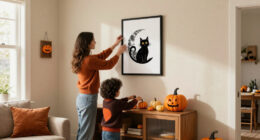
Spooky Halloween wall art should hang where you can see it clearly without blocking doors, switches, or everyday use. Entryways and living rooms make popular display spots because guests notice them, while a staircase or hallway gives smaller prints a natural path to follow. Placement is more than appearance: a frame in a door’s swing or a narrow walking route can be knocked down, while art covering a switch is inconvenient every day.
For a temporary display, lightweight frames, poster rails, and removable hooks may work well. Always check the product’s weight limit and surface guidance first; a product that behaves on smooth painted drywall may pull wallpaper or delicate paint when removed. Test an adhesive in a hidden spot before relying on it for the whole gallery. The lighter the piece, the easier it is to hang temporarily, but a lightweight paper print may need a frame or rail for a more finished look. Choose the method by balancing appearance, weight, and how much risk your wall surface can tolerate.
Here’s a practical sequence for setting up a seasonal wall:
- Measure the wall and note nearby furniture, doors, switches, and walking paths.
- Lay out the arrangement on the floor or use paper templates taped to the wall.
- Choose a suitable hanging method for the art’s weight and your wall surface.
- Check the view from the room entrance and make small adjustments before securing every piece.
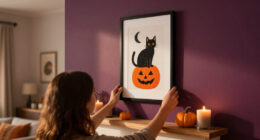
For instance, a renter with painted walls might use lightweight prints and removable hooks rated for their weight, then remove them slowly according to the manufacturer’s directions. If the paint is fragile or the wall has wallpaper, even removable products may not be risk-free, so a freestanding display or an existing picture rail can be a better compromise. If your display includes lights, choose battery-operated options and keep artwork away from open flames and heat sources. A candle’s flickering shadow can look wonderfully haunted; keeping paper and fabric well clear of the flame matters more.
Use lighting and placement to build a stronger spooky mood
Spooky Halloween wall art becomes easier to enjoy when you place it where light reveals its details instead of burying them in shadow. Warm lamps can bring out aged-paper textures and burgundy ink, while a small battery-operated light can make a dark illustration readable in an entryway after sunset. Light changes not only visibility but also the mood: a softly lit image can feel old and mysterious, while bright, even light makes bold colors and playful designs easier to appreciate.
Think about the room at the hour you’ll use it. A print above a console may look clear in afternoon daylight but disappear at night when the only lamp sits behind the sofa. Try moving a lamp or turning on a nearby light before adding extra fixtures; sometimes the simplest fix is changing the angle rather than adding more decoration. Extra lighting can improve the display, but it also adds cords, clutter, or another item to store, so first see whether the room’s existing light can do the job.
Placement also changes how a design feels. A friendly ghost at a child’s eye level can make a bedroom feel playful, while an old-fashioned portrait at the end of a dim corridor can create a more mysterious effect. Put art where people naturally pause—near the entrance, beside a coat rack, or along a staircase—but keep it clear of swinging doors and crowded corners. Eye-level placement makes details easy to see; higher placement can help a small image read from farther away, but may make it less noticeable in a room where people sit.
Picture a narrow entryway with cream walls and one amber lamp. A small group of black-and-cream prints beside the mirror can set the mood without making the space feel smaller. The display helps set the room’s mood without taking up floor space, which is especially useful when boots, bags, and Halloween candy already compete for the same few feet.
Make prints and DIY art easy to reuse next October
Spooky Halloween wall art is easier to reuse when you protect the paper, save the frame, and choose designs that can change size or style from year to year. Digital downloads are one option: you can print a design to fit a frame you already own, although the final result depends on file quality, paper, printer settings, and the frame. Reusing a frame reduces the need to buy new decor each season, but a print made for a different proportion may need cropping or a border, so check dimensions before printing.
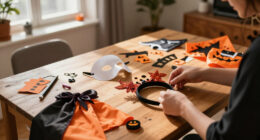
Printable art also gives you room to experiment. A household might test a small pumpkin print in a kitchen frame one year, then replace it with a black cat illustration the next. If you like making things by hand, try a painted canvas, a framed paper collage, or a fabric panel. DIY pieces can be tailored to your room and made with materials you already have, though handmade work may take longer to produce and may need sturdier hanging hardware than a simple paper print. Keep materials appropriate for the room and use hanging methods suited to the finished piece’s weight.
After Halloween, store paper prints flat in a portfolio or dry storage box. Keep them away from damp basements, direct sunlight, and heavy items that could crease the corners. Flat storage helps prevent curled edges and pressure marks, while a dry location reduces the risk of moisture damage. Framed art benefits from a dust cover or a clean cloth between pieces if you stack frames for storage; avoid putting pressure on glass or frame corners.
Some designs can stay up beyond October. Moons, ravens, dark florals, and gothic architecture often blend into year-round decor, while a jack-o’-lantern or “trick or treat” message reads as distinctly seasonal. If you want a display that lasts, choose one or two enduring images and add the obviously Halloween pieces around them. That way, the wall can shift from autumn atmosphere to full-on October without starting from zero. The tradeoff is that keeping permanent pieces may make the Halloween change feel subtler, but it also means less seasonal storage and fewer items to reinstall each year.
Keep a Halloween gallery polished, not cluttered
Spooky Halloween wall art feels polished when you limit the palette, leave some breathing room, and give the wall one clear focal point. More pieces do not automatically create more atmosphere; too many competing colors and sizes can make a gallery feel like a clearance rack rather than a carefully chosen scene. A restrained arrangement lets the images read clearly from across the room, while a denser display can feel lively and immersive if the colors and spacing still connect.
Start with one image you love, then add only pieces that support it. If a vintage portrait is the star, use smaller prints with similar aged-paper tones. If your focal piece is a bright orange pumpkin, let the supporting art repeat black, cream, or muted green rather than introducing several unrelated colors. This approach makes it easier to spot what does not fit: if an image adds neither a useful color, a complementary subject, nor a change in scale, it may be better displayed elsewhere.
For example, a dining nook might need only one framed haunted-house print above a sideboard and two small bat silhouettes nearby. A large blank wall in the living room can take a fuller gallery, especially if you mix framed art with a mirror or lightweight garland. The amount of available wall space should guide the number of pieces, but furniture matters too: a display that extends much wider than a narrow sideboard may feel top-heavy. Keep every element easy to reach and away from switches, heaters, or open flames.
Kids and guests may also have different comfort levels. Friendly ghosts, smiling pumpkins, and cartoon witches keep the display welcoming, while skeletons and unnerving portraits can go in a more private hallway. A coordinated small group often looks more finished than many unrelated prints, and it gives each image a chance to tell its part of the story. If you do prefer a fuller gallery, repeat a frame finish or color and leave enough space between pieces to preserve that sense of order.
Frequently Asked Questions
What kinds of Halloween wall art are popular?
Common choices include pumpkins, bats, ghosts, witches, black cats, haunted houses, skeletons, and vintage portraits. If you want a less seasonal look, try ravens, moons, dark florals, or gothic architecture.
Where should I hang Halloween wall art?
Entryways and living rooms make the display easy to notice, while hallways and staircases work well for a series of smaller prints. Keep pieces clear of doors, switches, and busy walking paths.
How do I hang seasonal art without damaging the wall?
Lightweight prints, poster rails, and removable hanging products may help, but check the product’s weight limit and surface guidance. Test adhesive in an inconspicuous place, especially on delicate paint or wallpaper, and remove it according to the maker’s directions.
Can Halloween wall art be family-friendly?
Yes. Choose friendly ghosts, smiling pumpkins, cartoon witches, or autumn scenes instead of graphic or frightening imagery. You can place scarier designs in a private room and keep shared spaces playful.
Is printable Halloween wall art worth it?
Printable art is useful when you want flexible sizing or an inexpensive seasonal change, especially if you already own frames. The final look depends on the file quality, paper, printer, and frame, so test a small print before ordering a large one.
How should I store Halloween prints after the season?
Store paper prints flat in a dry portfolio or storage box, away from moisture, direct sunlight, and heavy objects. Protect framed pieces from dust and avoid stacking them where pressure could damage the frames or glass.
Conclusion
Start with one wall, one mood, and one image you genuinely like. Then add a few coordinated pieces, check the lighting, and use a hanging method suited to both your art and your walls.
A good Halloween display doesn’t need to fill the house. Sometimes one quiet portrait, catching the amber glow of a lamp, is enough to make the hallway feel like October has just stepped inside.
Halloween Picks
halloween
As an affiliate, we earn on qualifying purchases.