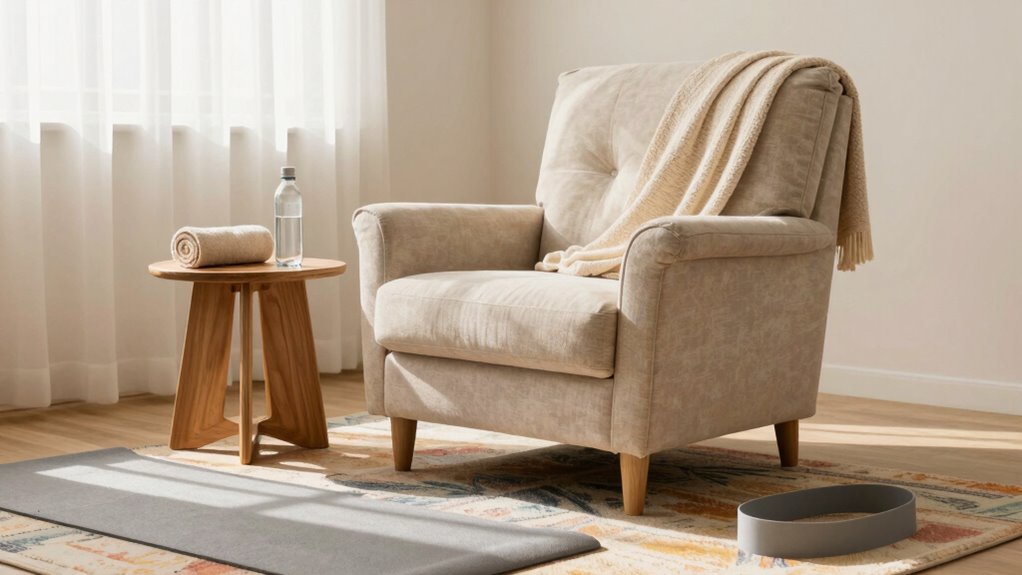

To make chair exercises more comfortable at home, choose a sturdy, stable chair that doesn’t wobble, and guarantee it’s at the right height so your feet rest flat and knees are at 90 degrees. Add ergonomic accessories like lumbar support, cushions, or an adjustable footrest to boost comfort. Sit upright with relaxed shoulders and good posture, keeping your workspace well-organized, well-lit, and safe. Keep exploring to find more tips for a perfect setup.

Get decor and gifts delivered free with Prime
- Fast, free delivery on millions of items
- Prime Video, Amazon Music and more included
- Member-only deals all year
Key Takeaways
- Select a sturdy, non-slippery chair with adjustable height to ensure stability and proper foot placement.
- Incorporate ergonomic accessories like lumbar support and cushions for enhanced comfort and proper posture.
- Position the chair close to the support surface, maintaining a 90-degree knee bend for optimal alignment.
- Arrange the workspace with appropriate lighting, ventilation, and desk height to promote good posture and focus.
- Use non-slip mats and ensure a safe, stable environment to prevent slips and support sustained exercise routines.
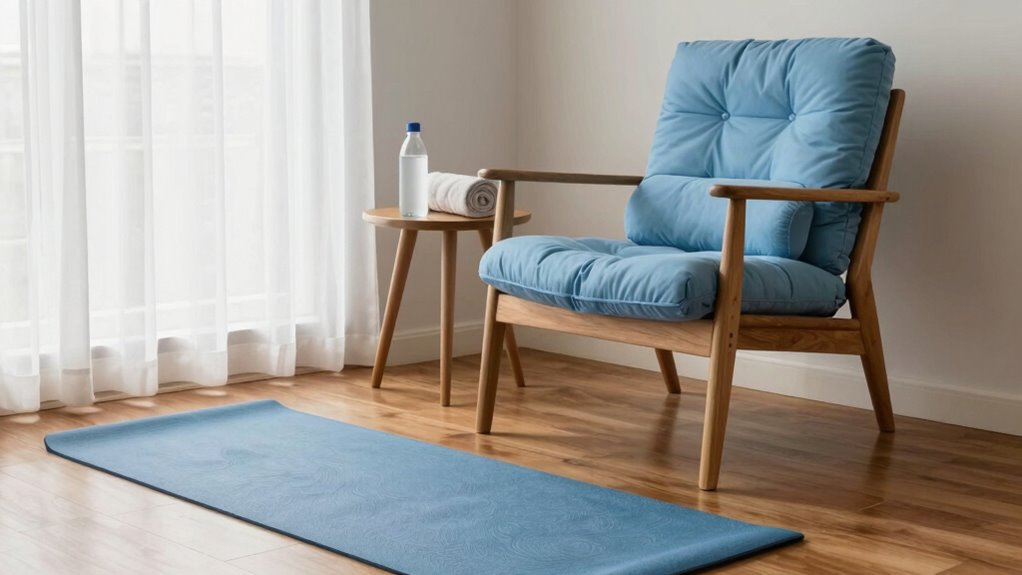
Creating a comfortable and safe environment is vital for effective chair exercises at home. Your setup directly impacts your ability to perform movements correctly and comfortably, so paying attention to your seating arrangements is essential. Start by choosing a sturdy, stable chair that doesn’t wobble or slide when you sit or move. Ideally, it should be free of wheels unless you’re confident in controlling its movement. The height of the chair matters too—make sure your feet rest flat on the floor, with your knees bent at about a 90-degree angle. This position helps reduce strain on your hips and knees, making your exercises more comfortable and effective.
Choose a stable, wobble-free chair with proper height for comfort and safety during exercises.
Incorporate ergonomic accessories to enhance your comfort and support. A lumbar support pillow can help maintain the natural curve of your lower back, preventing discomfort during extended sessions. Place a cushion or folded towel behind your lower back if the chair lacks proper support. You might also consider an adjustable footrest if your feet don’t reach the ground comfortably. Proper foot support helps improve circulation and stability, reducing fatigue. For additional comfort, add a non-slip mat on the seat to prevent slipping or sliding, especially if the chair surface is smooth or slippery. These accessories don’t have to be elaborate; simple ergonomic tools can greatly improve your exercise experience. Maintaining proper seating posture is also crucial for preventing discomfort and maximizing the benefits of your workout.
Your seating arrangements should promote good posture to avoid injuries and maximize benefits. Sit upright with your shoulders relaxed and your chest open. Keep your core engaged to support your spine and improve balance during movements. If you’re using a desk or table nearby, ensure it’s at an appropriate height to prevent you from hunching over or straining your neck. Position your chair close enough to the support surface so that your arms are comfortable when you reach for weights, resistance bands, or other equipment. Maintaining proper alignment minimizes tension on your muscles and joints, making your workout safer and more enjoyable. Additionally, paying attention to ergonomic principles can greatly enhance your overall comfort and effectiveness during chair exercises. Creating an environment with adequate lighting and ventilation also contributes to your overall well-being and ability to focus on your workout.
ergonomic lumbar support pillow for office chair
As an affiliate, we earn on qualifying purchases.
As an affiliate, we earn on qualifying purchases.
Frequently Asked Questions
What Type of Chair Is Best for Exercise?
You should choose a sturdy, armless chair with good chair stability to guarantee safety during exercises. A firm, non-slippery seat helps you maintain balance and confidence. Look for a chair with a flat, even surface that allows for a variety of exercise variations. Avoid wheeled or unstable chairs, as they can increase the risk of falls. This type of chair supports effective, safe workouts right at home.
How Can I Prevent Slipping During Chair Exercises?
To prevent slipping during chair exercises, you should use slip-resistant mats under your chair for stability and traction. Wearing grip-enhancing gloves can also help you maintain a firm grip and control during movements. Make sure your chair is on a flat, non-slippery surface, and check that the mats stay in place. These steps will help you stay secure and focused on your workout safely.
Should I Use Cushions or Supports?
You should definitely use cushions or supports to enhance your comfort during chair exercises. Imagine sinking into a plush cushion, its thickness perfectly cushioning your sit bones, or using foam supports that gently cradle your back. Opt for support types that suit your needs, like memory foam for softness or firm cushions for stability. These additions make your workout more enjoyable and help maintain proper posture effortlessly.
How Do I Adjust My Chair for Different Exercises?
You should start with ergonomic adjustments by adjusting your chair’s height so your feet rest flat on the floor and your knees are at a 90-degree angle. Make sure chair stability by locking wheels or using a sturdy surface. For different exercises, switch between upright and reclined positions or adjust armrests for support. Always double-check that your chair remains stable to prevent slips or falls during your workout.
What Should I Wear for Comfortable Chair Workouts?
Think of your outfit as the armor that supports your workout journey. For comfortable chair workouts, wear breathable clothing made from soft materials like cotton or moisture-wicking fabrics. Opt for loose-fitting tops and stretchy pants or shorts to allow free movement. Incorporate fashion tips like layering or adding a splash of color to boost your confidence. Comfortable, flexible clothing keeps you focused, making your exercises feel less like a battle and more like a breeze.
Conclusion
Creating a comfy home setup for chair exercises makes a big difference—you’ll stay motivated and avoid discomfort. Just remember, over 60% of adults experience some form of musculoskeletal pain, often from poor posture or inadequate support. By investing a little time in your space, you can enjoy more effective, pain-free workouts right at home. So, set up your chair and environment thoughtfully—you’ll be surprised at how much easier and enjoyable your exercises become!
Halloween Picks
halloween
As an affiliate, we earn on qualifying purchases.