
Tracking how often you use your belongings helps you make smarter decluttering decisions. By creating an inventory of your items and monitoring usage patterns, you can easily identify what’s truly necessary and what can be donated or discarded. This data-driven approach removes emotional attachments and guesswork, making decluttering less stressful. When you stay consistent with tracking, it becomes easier to maintain an organized space that reflects your actual habits—discover more tips to streamline your home.

Get decor and gifts delivered free — and shop member deals
- Fast, free delivery on millions of items
- Access to Prime Big Deal Days deals on October 6–7
- Prime Video, Amazon Music and more included
Key Takeaways
- Conduct an inventory of possessions to gather accurate data on item quantities and categories.
- Track usage frequency over time to identify which items are regularly used versus rarely or never used.
- Use digital tools or logs to monitor item interactions, aiding objective decluttering decisions.
- Focus on removing items with low or no recent usage, supporting efficient space management.
- Leverage usage data to make evidence-based choices, reducing emotional attachment and clutter.
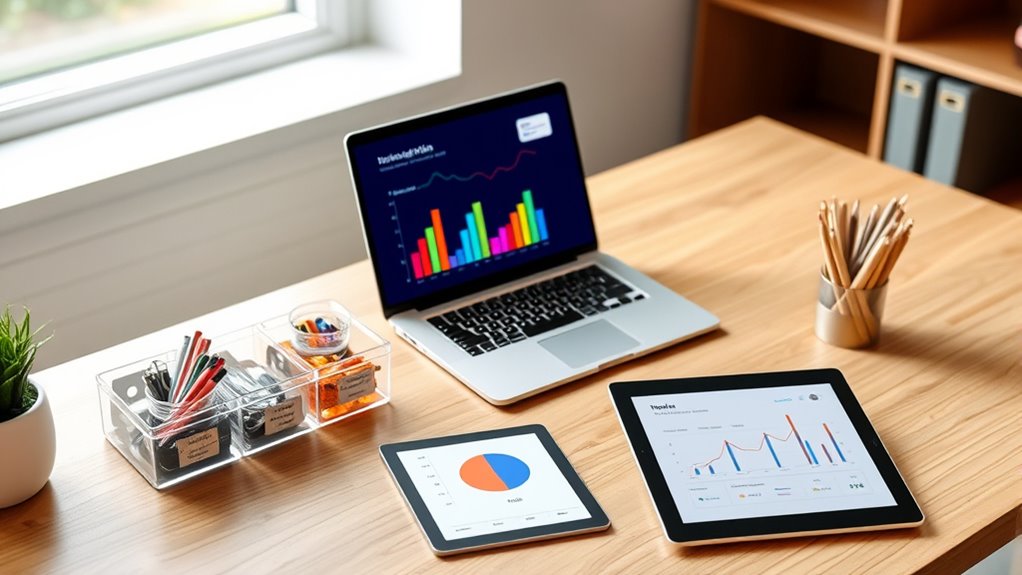
Have you ever felt overwhelmed by clutter, not just in your home but also in your digital life? It’s easy to accumulate stuff—whether physical items or digital files—and then struggle to decide what to keep and what to let go. One effective way to tackle this is by using data to inform your decluttering process. By tracking your item usage, you gain insights that help you make smarter decisions. This is where inventory analysis and understanding usage patterns come into play. Instead of guessing or relying on emotional attachment, you back your choices with concrete information.
Start by conducting an inventory analysis. List out the categories of items you own—clothing, gadgets, documents, digital files, or kitchen tools. Once you’ve created your inventory, monitor how often you use each item. This doesn’t have to be complicated; you can keep a simple log or use apps designed for tracking usage. The goal is to identify patterns: Which items are used daily? Which ones sit untouched for months? This data reveals your actual needs versus your assumptions or sentimental value.
Create an inventory and track usage to identify what you truly need and use regularly.
As you analyze your usage patterns, you’ll notice clear trends. Items that are frequently used are worth keeping, while those rarely touched may be candidates for donation, sale, or recycling. For example, if you find a shirt in your closet that you haven’t worn in over a year, it’s probably time to let it go. Similarly, digital files that haven’t been opened in months can be safely archived or deleted. The key is to let the data guide your decisions rather than relying solely on gut feelings.
Using this approach, you’ll find decluttering becomes more objective and less emotional. You’re no longer overwhelmed by the idea of parting with possessions; instead, you’re making evidence-based choices. It also helps you avoid the common trap of holding onto things “just in case,” which often leads to clutter buildup. Additionally, understanding your usage patterns can help you reorganize your space more efficiently, placing frequently used items within easy reach and storing or removing seldom-used ones.
Furthermore, implementing well-being tips like organizing your space based on usage can boost your mental clarity and overall satisfaction. Over time, this process can be incredibly liberating. You’ll create a space that reflects your actual habits and needs, not just your assumptions or past attachments. Plus, tracking usage can extend into your digital life, helping you manage storage, streamline workflows, and keep your devices clutter-free. By leveraging data through inventory analysis and usage patterns, you take control of your environment, making decluttering a manageable, even satisfying, task instead of an overwhelming chore.
As an affiliate, we earn on qualifying purchases.
Frequently Asked Questions
How Do I Start Tracking Item Usage Effectively?
To start tracking item usage effectively, you should focus on creating a simple system that fits your lifestyle. Use inventory management tools or a notebook to record when you use each item. Make it a habit by noting usage daily or weekly. Consistency is key, so set reminders. Over time, this habit formation helps you identify what you truly need, making decluttering easier and more efficient.
What Tools Can Help Monitor Item Frequency Automatically?
You can use inventory management tools or apps that automatically track item usage through barcode scanning or smart sensors. These tools provide usage analytics, helping you identify which items are used frequently and which are collecting dust. By leveraging these technologies, you get real-time data, making it easier to decide what to keep and what to declutter. This approach streamlines your organization process and guarantees data-driven decisions.
How Long Should I Track Data Before Decluttering?
Imagine your cluttered space as a garden needing careful tending. You should track data for at least one to three months, allowing you to observe seasonal patterns and usage ebb and flow. This tracking duration provides a solid foundation for data analysis, revealing which items truly serve you and which ones gather dust. Be patient; the insights gained will help you prune your belongings with confidence and clarity.
Can Tracking Data Help With Sentimental Item Decisions?
Tracking data can help you make decisions about sentimental items by revealing patterns of emotional attachment over time. When you record how often you use or appreciate these items, you gain clarity beyond feelings of nostalgia. This objective insight supports better decision-making, showing you which items truly hold meaning and which may no longer serve a purpose. Ultimately, data-driven tracking helps you balance emotional attachment with practical decluttering.
What Are Common Mistakes When Decluttering by Data?
Imagine you’re trying to clean a closet, but overthink every item’s worth. That’s like misinterpreting data during decluttering; you risk holding onto stuff because you think it’s valuable, when it’s not. Common mistakes include overanalyzing usage data, leading to overthinking clutter, or relying solely on numbers without considering emotional value. Stay balanced, trust your instincts, and remember that data guides, but doesn’t replace your personal judgment.
Conclusion
Just like the wise gardener tends to their plants, tracking your item usage helps you nurture a clutter-free life. By letting go of what no longer serves you, you create space for growth and new opportunities. Remember, every item you release is a step toward clarity and peace—your own personal garden of serenity. Embrace the power of data, and let your space flourish with intention and purpose. The choice is yours; make it wisely.
Fall Picks
fall essentials
As an affiliate, we earn on qualifying purchases.