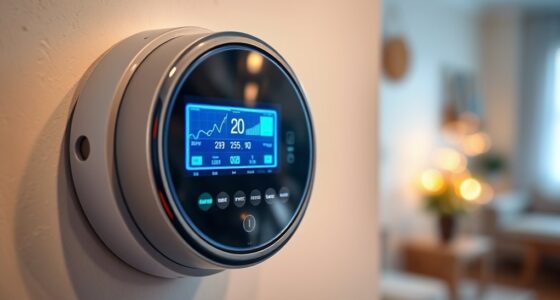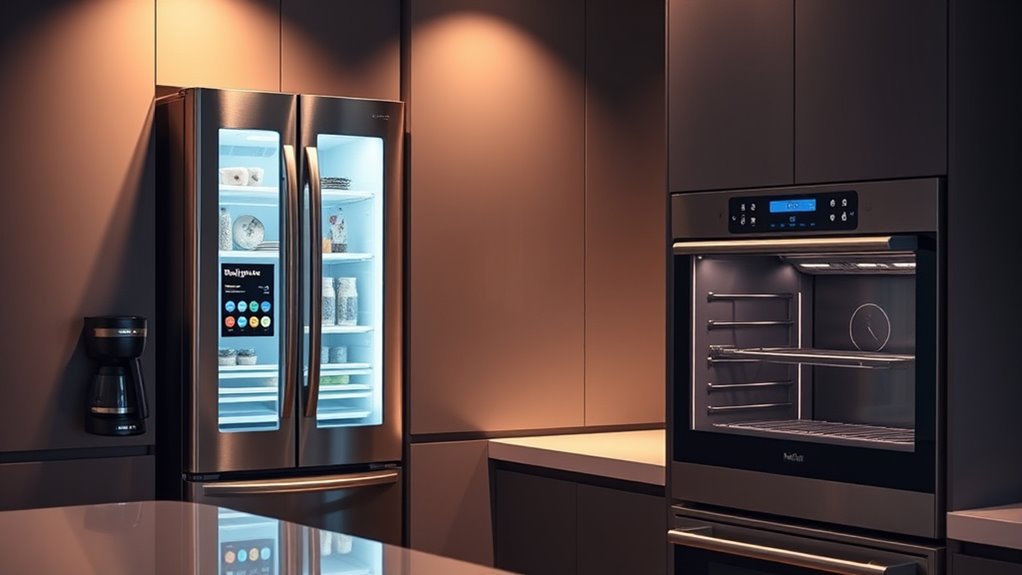

AI in kitchen appliances is revolutionizing your cooking experience by offering voice commands, personalized recommendations, and smart diagnostics that keep your devices running smoothly. You can control your oven, fridge, or dishwasher hands-free, while appliances learn your preferences to suggest recipes or optimize settings. Cybersecurity is key to safeguard your data and ensure safety. As these trends evolve, you’ll see even more connected, intuitive appliances that make your kitchen smarter—stay tuned to discover more.
Key Takeaways
- Integration of voice commands for hands-free control of cooking, timers, and appliance settings.
- Use of AI for smart diagnostics to detect issues early and optimize appliance performance.
- Personalized cooking experiences through AI that learns user preferences and suggests tailored recipes.
- Enhanced cybersecurity measures to protect user data and ensure safe operation of connected appliances.
- Increasing automation of kitchen tasks like cooking, cleaning, and organizing for a smarter, more efficient environment.

Artificial intelligence is transforming kitchen appliances, making cooking more efficient and enjoyable. One of the most noticeable advancements is how voice commands now play a central role in everyday cooking. Instead of fiddling with buttons or screens, you can simply speak to your smart appliances to set timers, adjust temperatures, or switch modes. This hands-free approach not only saves time but also keeps your focus on the task at hand, whether that’s chopping vegetables or stirring a pot. With voice commands, you can ask your smart oven to preheat to a specific temperature, or instruct your fridge to check for expired items, all without interrupting your workflow. This seamless interaction makes your kitchen feel more intuitive and user-friendly, especially when your hands are busy or messy.
Alongside voice commands, smart diagnostics are revolutionizing how appliances troubleshoot and maintain themselves. When a device encounters a problem, it can now detect issues early and notify you with detailed information, often through your connected app. For example, if your dishwasher detects a clog or a malfunction, it can send a notification explaining the problem and sometimes even suggest solutions or scheduling a service. This proactive approach minimizes downtime and prevents small issues from escalating into costly repairs. Smart diagnostics also help optimize appliance performance by providing real-time feedback and adjusting settings automatically for the best results, whether it’s a refrigerator maintaining ideal temperature or an oven fine-tuning its heat levels based on the food inside. These intelligent features give you peace of mind, knowing your appliances are constantly monitoring and maintaining themselves, reducing the guesswork and manual troubleshooting. Additionally, understanding cybersecurity considerations related to connected devices is crucial to protect your personal data and ensure safe operation in your smart kitchen.
Integrating voice commands and smart diagnostics into kitchen appliances also opens the door for personalized cooking experiences. Your devices learn your preferences over time and can suggest recipes, remind you of ingredient quantities, or adjust settings based on your previous choices. Imagine telling your smart oven to prepare a dish exactly how you like it, and it automatically adjusts cooking times and temperatures to match your taste. Or, your refrigerator could notify you when it detects a specific item is running low, prompting you to restock or suggesting recipes that use what’s available. These innovations make your kitchen smarter and more responsive, giving you more time to focus on enjoying your meals rather than managing appliances. As AI continues to evolve, expect even more intuitive, connected, and efficient kitchen experiences that transform the way you cook, clean, and organize your culinary space.
Frequently Asked Questions
How Secure Is Data Collected by Ai-Enabled Kitchen Devices?
The data collected by your AI-enabled kitchen devices is generally secure, thanks to measures like data encryption and user authentication. These devices use encryption to safeguard your information from unauthorized access, and user authentication ensures only you can control or view your data. However, stay cautious by regularly updating device software and using strong, unique passwords to maintain security and prevent potential breaches.
Can AI Adapt to Unique Cooking Preferences Over Time?
Imagine your smart oven adjusts cooking times based on your pasta preferences; it learns your ideal doneness over time. AI can indeed adapt to your unique cooking preferences, enhancing personalization accuracy through continuous learning. With advancements in learning adaptability, your appliances become more intuitive, tailoring recipes and settings to your tastes. This means your kitchen experience becomes smoother and more customized, making cooking easier and more enjoyable every day.
What Are the Costs Associated With Implementing AI in Home Kitchens?
Implementing AI in your home kitchen involves various costs, including initial investment, device purchase, and ongoing maintenance. A thorough cost analysis helps you understand expenses, but be aware of implementation challenges like compatibility issues and setup complexity. You might also need to upgrade existing appliances or hire technical support, which can add to costs. Overall, while AI offers convenience, planning your budget carefully is essential to avoid surprises.
How Do AI Kitchen Appliances Impact Energy Consumption?
AI kitchen appliances impact energy consumption like a smart thermostat adjusting your home’s temperature. They improve energy efficiency by learning your usage patterns, reducing waste. These appliances optimize power use during peak and off-peak times, helping you save on energy bills. As a result, your kitchen becomes more eco-friendly, and your energy consumption patterns shift toward smarter, more sustainable habits.
Are There Privacy Concerns Related to Voice-Controlled Kitchen Devices?
Yes, there are privacy concerns with voice-controlled kitchen devices. When you use these devices, they collect voice data that could be stored or shared without your knowledge. This data may also contribute to user profiling, raising issues about how your personal information is used. You should be aware of these risks and review privacy settings regularly to protect your data and maintain control over your voice information.
Conclusion
Imagine your kitchen as a lively symphony, with AI acting as the maestro guiding each instrument. As technology advances, your appliances become skilled performers, harmonizing seamlessly to make cooking effortless. With AI’s help, your kitchen transforms into a vibrant, intelligent space—a future where every meal is a masterpiece. Embrace these trends, and watch your culinary world flourish, turning ordinary cooking into an extraordinary dance of innovation and convenience.