When choosing air quality monitors, trust depends on your specific needs. CO2 sensors, especially NDIR types, give reliable data on ventilation, while PM2.5 sensors track tiny particles that affect respiratory health—but low-cost models may lack accuracy. VOC sensors detect chemical fumes but often have broad estimates. To make informed decisions, select high-quality sensors suited to your environment. Keep exploring to discover how to interpret these readings effectively for a healthier indoor space.

Get decor and gifts delivered free — and shop member deals
- Fast, free delivery on millions of items
- Access to Prime Big Deal Days deals on October 6–7
- Prime Video, Amazon Music and more included
Key Takeaways
- Trust sensors with proven technology like NDIR for CO2, laser scattering for PM2.5, and reliable VOC detection methods.
- CO2 sensors indicate ventilation quality, but their accuracy depends on proper calibration and sensor quality.
- PM2.5 sensors require high-quality laser scattering technology to reliably detect fine particulate matter.
- VOC sensors vary widely; choose those with validated accuracy for detecting household chemical emissions.
- Overall, investing in reputable, well-reviewed sensors ensures more trustworthy indoor air quality data.
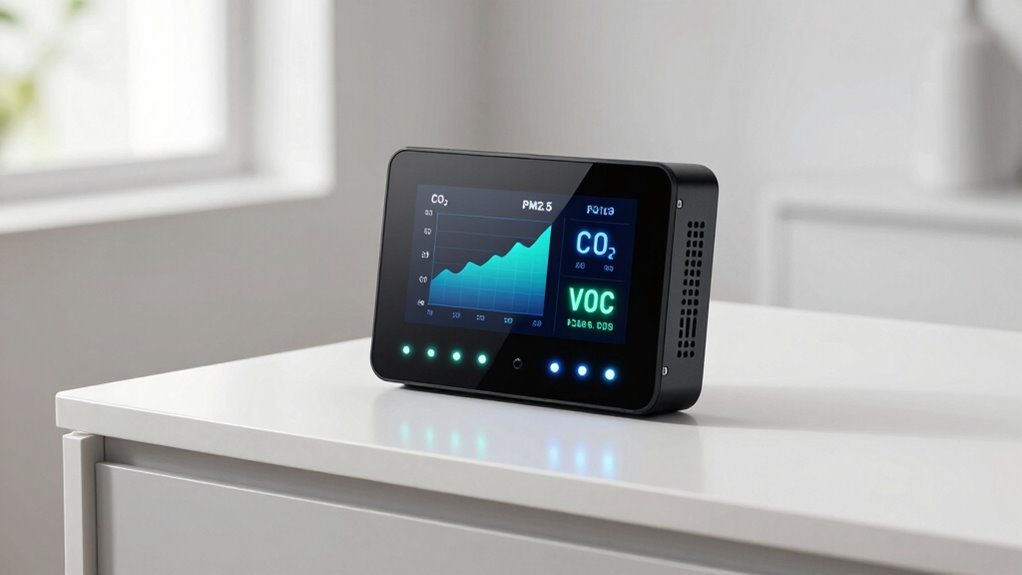
Air quality monitors have become essential tools for anyone looking to guarantee a healthier environment. When choosing a monitor, one of your top concerns should be sensor accuracy, because it directly impacts how reliable the readings are. A highly accurate sensor provides data you can trust, which is vital for making informed decisions about your indoor air quality. But even the best sensors aren’t helpful if you don’t interpret the data correctly. Understanding what the numbers mean helps you take the right actions to improve your environment. So, it’s worth investing time in learning how to interpret the data your monitor provides, especially when comparing different sensor types like CO2, PM2.5, and VOC sensors.
CO2 sensors are popular because they measure carbon dioxide levels, which indicate how well your ventilation system is working. If CO2 levels rise above recommended limits, it’s a clear sign that fresh air isn’t circulating properly. However, keep in mind that sensor accuracy varies among models. Cheaper sensors might give you approximate readings, but they may not be precise enough to detect subtle changes. Reliable CO2 sensors often use Non-Dispersive Infrared (NDIR) technology, offering more consistent and precise data. When interpreting CO2 data, look for trends over time rather than just single readings. A sudden spike might suggest a temporary issue, but persistent high levels indicate a need for better ventilation.
Reliable CO2 sensors use NDIR technology and reveal trends over time for better indoor air quality management.
PM2.5 sensors measure tiny particulate matter, which can penetrate deep into your lungs and even enter your bloodstream. These sensors are especially important if you’re concerned about pollution from outdoor sources or indoor activities like cooking or smoking. Sensor accuracy here can be tricky because many low-cost PM2.5 monitors struggle with precision, especially at low concentrations. High-quality sensors use laser scattering technology, which generally provides more dependable data. When interpreting PM2.5 readings, pay attention to concentration levels and how they change throughout the day. Sudden increases might point to specific activities or sources, prompting you to improve filtration or ventilation.
VOC sensors detect volatile organic compounds emitted by paints, cleaning products, and other household items. These sensors can alert you to potential indoor pollution sources that aren’t visible or easily measurable otherwise. However, sensor accuracy for VOCs varies widely, with many low-cost models giving broad estimates rather than precise measurements. When interpreting VOC data, consider the context—certain activities like painting or cleaning will temporarily increase VOC levels. Understanding the limitations of your sensor helps you make better decisions about air purification and source control.
Additionally, some sensors use advanced technology that can improve accuracy and reliability, making your data more trustworthy. Ultimately, trusting your air quality monitor hinges on understanding both sensor accuracy and data interpretation. By choosing sensors with proven reliability and learning how to read the data correctly, you can create a safer, healthier environment tailored to your specific needs.
NDIR CO2 sensor air quality monitor
As an affiliate, we earn on qualifying purchases.
As an affiliate, we earn on qualifying purchases.
Frequently Asked Questions
How Do Calibration Differences Affect Sensor Accuracy?
Calibration differences directly impact sensor accuracy by ensuring measurements stay precise over time. If calibration procedures aren’t regularly followed, sensor drift can occur, causing readings to become unreliable. You should regularly recalibrate your sensors according to the manufacturer’s guidelines to maintain trustworthiness. Proper calibration counters drift and keeps your air quality data accurate, so you can make informed decisions about your environment.
Can Sensors Detect Multiple Pollutants Simultaneously?
Yes, sensors can detect multiple pollutants simultaneously through sensor integration, which combines different sensing technologies into a single device. This allows you to monitor various pollutants like CO2, PM2.5, and VOCs at once, providing a thorough view of your air quality. Make sure the sensor uses advanced detection methods to accurately identify each pollutant, so you get reliable data without needing separate devices for different pollutants.
What Maintenance Is Required for Long-Term Sensor Accuracy?
You should follow a regular maintenance schedule to make certain long-term sensor accuracy. Check the sensor lifespan guidelines provided by the manufacturer, typically replacing or calibrating sensors every 6 to 12 months. Keep the sensors clean and free of dust or debris, and calibrate them periodically to maintain precision. Proper maintenance helps prolong sensor lifespan and guarantees reliable, accurate air quality readings over time.
Are There Industry Standards for Air Quality Sensor Reliability?
Sure, industry standards for air quality sensor reliability exist, but they often feel as durable as your smartphone’s battery. You should prioritize data validation and understand each sensor’s robustness. While standards like ISO and EPA guidelines set benchmarks, keep in mind that real-world conditions can challenge even the best sensors. Trust but verify—regular calibration and validation ensure your monitor’s data stays accurate and reliable over time.
How Do Environmental Factors Influence Sensor Performance?
Environmental factors like temperature, humidity, and airflow can substantially impact your sensor’s performance. Proper sensor placement is vital; avoid areas with direct sunlight, drafts, or heat sources, as these can distort readings. When interpreting data, consider these influences to guarantee accuracy. Adjust your understanding based on environmental conditions, and regularly calibrate your sensors to maintain reliable measurements. This way, you’ll get dependable data to make informed decisions.
Conclusion
Choosing the right air quality monitor is like picking the right tool for a job—you want reliability. I once ignored my CO2 monitor’s reading, only to realize too late that poor ventilation was making my home stuffy and unhealthy. Remember, each sensor measures different pollutants, so trust the one that aligns with your concerns. Think of it as having a personal health guardian—know what to trust, and breathe easier every day.
Fall Picks
fall essentials
As an affiliate, we earn on qualifying purchases.