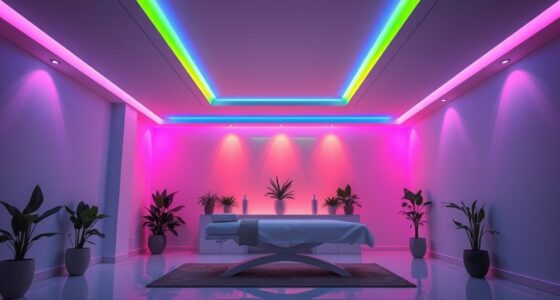
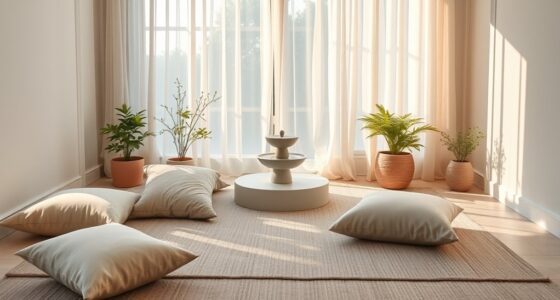
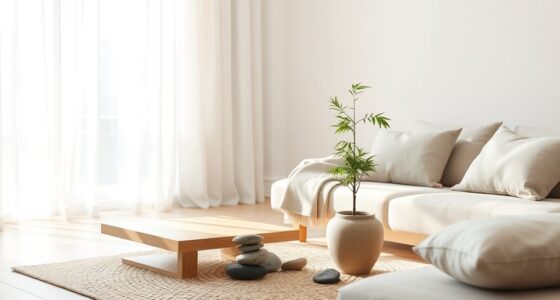
To design spaces that soothe anxiety, focus on incorporating natural elements like plants, natural light, and textured materials to create a calming environment. Keep the space uncluttered, with smooth pathways and soft lighting, to promote ease and comfort. Use calming colors such as muted greens and blues, and integrate sensory cues like gentle sounds or soothing scents. If you want to explore how thoughtful environment choices can directly improve mental well-being, there’s more to discover.
Key Takeaways
- Incorporate biophilic elements like natural light, plants, and textures to foster tranquility and reduce anxiety.
- Use calming colors and soft lighting to create a soothing visual environment.
- Design open, uncluttered spaces with clear pathways to promote ease of movement and reduce overwhelm.
- Integrate sensory elements such as gentle sounds and tactile features for balanced sensory input.
- Include natural materials and textures that connect occupants with nature, supporting mental relaxation and resilience.

Have you ever considered how the spaces around you impact your mental well-being? The environment you’re in influences your mood, stress levels, and overall sense of calm. When designing spaces that promote mental health, paying attention to elements like biophilic design and sensory integration can make a significant difference. Biophilic design, which incorporates natural elements into built environments, connects you with nature even indoors. Think about how natural light filters through windows, plants soften harsh corners, or textures mimic outdoor terrains. These features aren’t just aesthetic; they help reduce anxiety and foster a sense of tranquility. By integrating nature, your space becomes a refuge, offering mental relief from the overstimulation of modern life.
Connecting with nature through design reduces anxiety and fosters tranquility indoors.
Sensory integration is equally essential in creating calming environments. Your senses — sight, sound, touch, smell, and even taste — all influence your emotional state. When a space is cluttered or overly stimulating, it can overwhelm your senses, heightening feelings of anxiety. Conversely, a thoughtfully designed environment balances sensory inputs, allowing you to feel more centered. Soft lighting, calming sounds like gentle water features or ambient music, and tactile elements like smooth stones or plush fabrics help anchor your senses. These subtle cues work together to create a cohesive atmosphere that soothes your mind.
In designing for mental health, consider how the flow and layout of a space influence your sensory experience. Open, uncluttered areas with clear pathways promote ease of movement and reduce feelings of confinement. Incorporate natural textures and materials that feel comforting under your touch. Use colors that evoke calm, such as muted greens or blues, which are known to lower stress. Make sure there’s enough natural light during the day and dimmable fixtures for evening relaxation. Additionally, understanding the importance of contrast ratio in visual clarity can help create environments where the visual elements support relaxation rather than strain your eyes. These choices aren’t just decorative—they’re strategic, aimed at creating a sanctuary where your mind can rest and reset.
Ultimately, designing for mental health isn’t about creating perfection; it’s about fostering environments that nurture your well-being. When you consciously include biophilic elements and prioritize sensory integration, you’re crafting spaces that actively support your mental health. These environments help you disconnect from overstimulation, reconnect with nature, and find moments of peace amid everyday chaos. By paying attention to these details, you empower yourself to thrive mentally, even in the most hectic of settings.
Frequently Asked Questions
How Can Color Choices Influence Mental Health in Space Design?
Color choices profoundly influence mental health through color psychology and mood-enhancing hues. When you select calming shades like soft blues and greens, you promote relaxation and reduce anxiety. Bright, energetic colors can uplift mood, while muted tones create a sense of safety. By thoughtfully applying these hues, you can craft spaces that soothe stress and foster well-being, helping individuals feel more comfortable and at peace in their environment.
What Role Does Natural Light Play in Reducing Anxiety?
Natural light plays a vital role in reducing anxiety by boosting your mood and regulating your sleep. Even if you think artificial lighting is enough, sunlight therapy and increased daylight exposure can considerably improve mental health. You benefit from the calming effects of sunlight, which helps balance your circadian rhythm, reduce stress, and promote relaxation. So, prioritize large windows and open spaces to let in ample natural light for a healthier, more soothing environment.
Are There Specific Textures That Help Calm the Mind?
You’ll find that textures with gentle contrast and tactile stimulation help calm your mind. Soft, smooth fabrics combined with natural, textured materials create a soothing environment by offering tactile contrast that’s calming rather than overwhelming. Incorporate plush rugs, linen cushions, or wooden surfaces to engage your senses gently. These textures provide tactile stimulation that promotes relaxation, helping you feel grounded and less anxious in your space.
How Can Soundproofing Improve Mental Well-Being in a Space?
Soundproofing enhances your mental well-being by reducing noise distractions and creating a peaceful environment. With effective sound insulation, you’ll experience better acoustic comfort, which helps decrease stress and anxiety. When you block outside noise, your space becomes calmer and more relaxing, allowing you to focus or unwind. Prioritizing soundproofing guarantees you’re in a soothing setting that promotes mental clarity and emotional balance, making your space truly a sanctuary.
What Are Affordable Ways to Create Calming Environments?
Imagine transforming your space into a peaceful retreat on a budget—like turning a plain room into a calming oasis with simple touches. You can use budget-friendly decor such as soft lighting, cozy textiles, or calming artwork. DIY calming projects, like making a scented sachet or hanging a DIY wall hanging, add tranquility. These small changes create a soothing environment without breaking the bank, helping you feel more relaxed and centered.
Conclusion
As you design these spaces, remember that every detail shapes someone’s mental well-being—sometimes in ways you might not immediately see. The path to truly soothing environments isn’t straightforward; it’s layered with subtle choices and unexpected impacts. Will your next decision bring peace or stir hidden anxieties? Keep questioning, keep refining. Because in creating spaces that calm, you hold the power to transform lives—perhaps in ways you’ve yet to fully imagine.