Lighting greatly affects your sleep quality and mental health by regulating your circadian rhythm and melatonin levels. Exposure to natural daylight helps you stay alert during the day, while dimming lights at night promotes melatonin production for restful sleep. Artificial light, especially blue light from screens, can suppress melatonin and delay sleep, impacting mood and mental stability. Managing your light environment can improve both sleep and emotional well-being—if you explore further, you’ll discover how to optimize your lighting habits effectively.

Get decor and gifts delivered free — and shop member deals
- Fast, free delivery on millions of items
- Access to Prime Big Deal Days deals on October 6–7
- Prime Video, Amazon Music and more included
Key Takeaways
- Exposure to natural light during the day supports healthy circadian rhythms and improves sleep quality.
- Artificial light, especially blue light from screens at night, suppresses melatonin and delays sleep onset.
- Poor sleep caused by improper lighting can increase stress, impair mood, and negatively affect mental health.
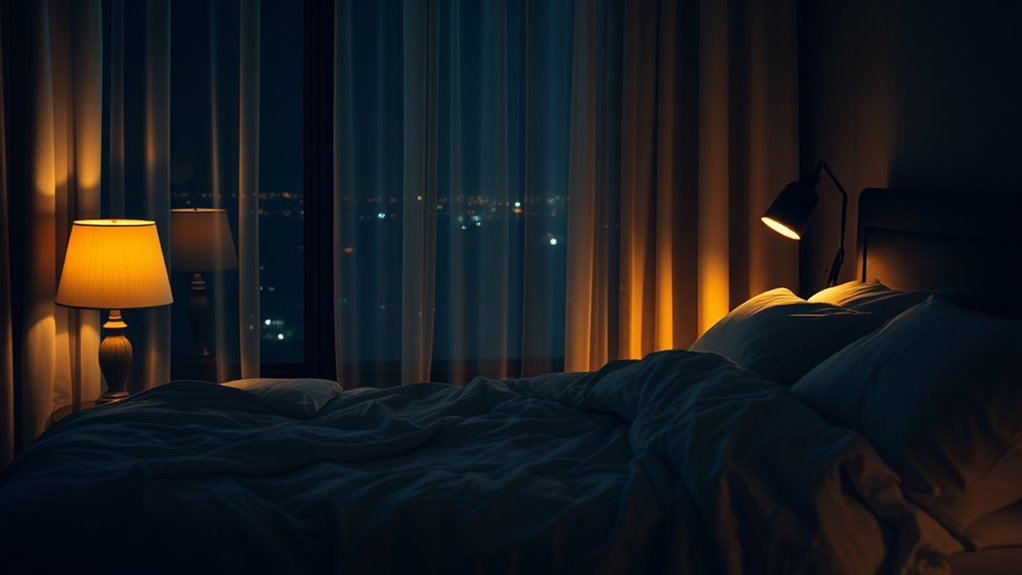
- Using dim, warm lighting in the evening and limiting screen time enhances melatonin production.
- Proper light management maintains mental well-being by promoting restful sleep and stabilizing the body’s internal clock.
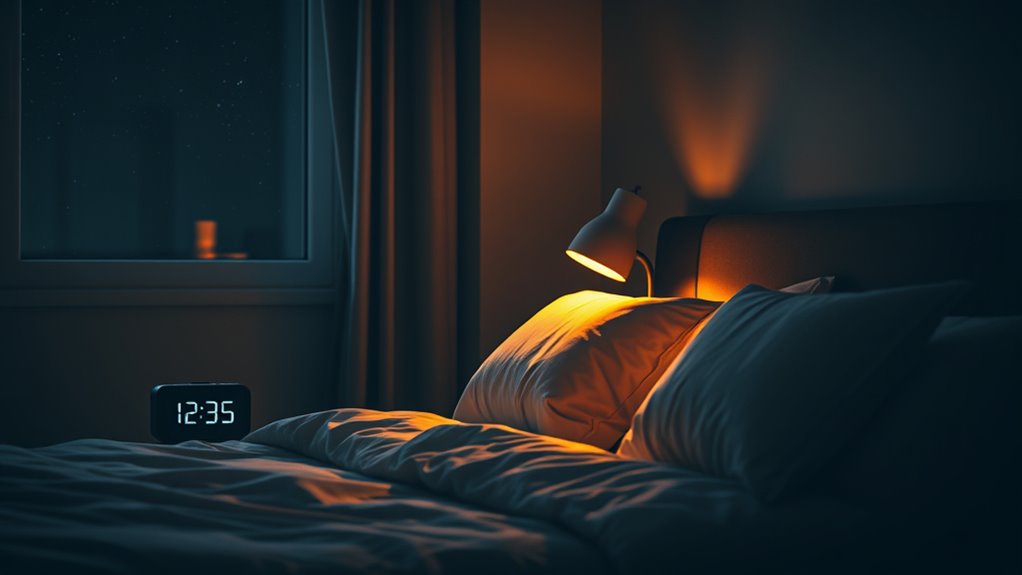
Lighting plays a crucial role in regulating your sleep and mental health, influencing your body’s internal clock and overall well-being. Your circadian rhythm, the natural cycle that governs sleep-wake patterns, relies heavily on light cues to stay synchronized. When you’re exposed to natural light during the day, it signals your brain to stay alert and active, ensuring your internal clock remains aligned with the external environment. Conversely, as daylight fades, darker surroundings prompt your body to prepare for rest. Disruptions to this cycle—such as excessive artificial light at night—can throw your circadian rhythm off balance, leading to sleep problems and affecting your mental health.
One of the key ways light impacts your sleep is through melatonin production. Melatonin is a hormone your body naturally produces in response to darkness, and it’s essential for signaling that it’s time to sleep. When you’re exposed to bright artificial light, especially blue light from screens like phones or computers, melatonin production is suppressed. This suppression can delay the onset of sleep, reduce sleep quality, and make it harder to wake feeling rested. Not only does this interfere with your sleep cycle, but it can also influence your mood, increasing vulnerability to anxiety and depression over time.
Understanding how lighting affects melatonin production and your circadian rhythm empowers you to make better choices. During the day, aim to get plenty of natural sunlight, which helps reinforce your internal clock and boosts your mood. When evening approaches, dim the lights and avoid screens, or use blue light filters to minimize melatonin suppression. Creating a dark, cool, and quiet environment at night signals your body that it’s time to wind down, supporting healthy melatonin levels and promoting restorative sleep. Additionally, exposure to natural light during the day helps regulate your circadian rhythm and enhances overall mental health.
The quality of your sleep directly impacts your mental health. Poor sleep can lead to increased stress, difficulty concentrating, and heightened emotional reactivity. Over time, chronic disruption of your circadian rhythm and melatonin production can contribute to more serious mental health issues. By managing your lighting exposure—especially in the evening—you can help regulate your internal clock, improve sleep quality, and support your mental well-being. Small adjustments, like using blackout curtains or limiting screen time before bed, can have a profound effect on your overall health and daily functioning.
As an affiliate, we earn on qualifying purchases.
Frequently Asked Questions
How Does Natural Daylight Influence Circadian Rhythms?
Natural daylight plays a crucial role in aligning your circadian rhythms. When you get adequate light exposure, especially in the morning, it helps regulate your sleep-wake cycle, making it easier to fall asleep at night and wake up refreshed. Your body responds to this light, signaling it to adjust hormone levels and body temperature. Consistent natural daylight exposure supports healthy sleep regulation and boosts your overall mental health.
Can Specific Light Colors Improve Mood Disorders?
Yes, certain light colors can dramatically boost your mood! Bright blue or green hues from light therapy harness color psychology to lift depression and anxiety. You might feel like a new person, energizing your mind and calming your nerves in seconds. By choosing specific light colors, you tap into powerful mood-enhancing effects that can transform your mental well-being, making every day brighter and more positive.
What Are the Best Lighting Practices for Shift Workers?
As a shift worker, you should prioritize lighting consistency to maintain your circadian rhythm. Minimize blue light exposure during your rest periods by using blue light filters or wearing glasses, especially before sleep. During your shifts, opt for bright, cool-colored lighting to stay alert. Managing light exposure strategically helps improve sleep quality and mental health, making your work routine more sustainable and your overall well-being better.
How Does Screen Time Before Bed Affect Sleep Quality?
Screen time before bed negatively affects your sleep quality because blue light from devices suppresses melatonin production. This hormone helps regulate your sleep cycle, so when it’s blocked, falling asleep becomes harder, and sleep may be less restorative. To improve sleep, limit screen use at least an hour before bed, or use blue light filters and glasses. Doing so helps maintain your natural melatonin levels and promotes better rest.
Are There Any Long-Term Health Risks From Artificial Lighting?
Yes, artificial light can pose long-term health risks. Exposure to excessive light pollution and artificial light at night disrupts your melatonin production, increasing risks for sleep disorders and other health issues. Over time, this disruption can contribute to more serious conditions like obesity, depression, and cardiovascular disease. To protect your health, limit artificial light exposure in the evening, especially blue light from screens, and guarantee your sleeping environment is dark.
Conclusion
You can see how lighting deeply influences your sleep and mental health. Exposure to bright, blue-rich light at night disrupts your circadian rhythm, making it harder to relax and rest. Conversely, dim, warm lighting promotes melatonin production, helping you sleep better. Imagine your brain as a city powered by light; when the lights are right, everything runs smoothly. Prioritizing healthy lighting habits can truly transform your mental well-being and sleep quality.
Fall Picks
fall essentials
As an affiliate, we earn on qualifying purchases.