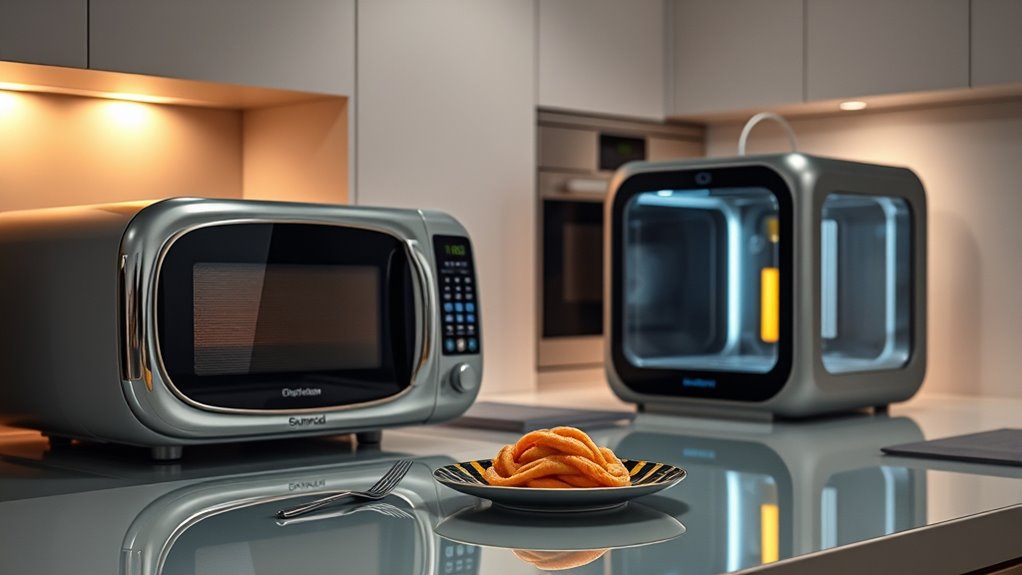

The evolution of smart kitchens started with basic appliances like microwave ovens, which revolutionized cooking convenience. Over time, technology advanced to include interconnected devices, automation systems, and ingredient tracking, making your kitchen more efficient and personalized. Today, innovative innovations like 3D food printers are pushing boundaries even further. If you keep exploring, you’ll discover how these developments continue shaping what your future kitchen can do.
Key Takeaways
- Early smart kitchen innovations began with microwave ovens and basic appliances for convenience.
- The evolution shifted towards integrated systems enabling automation, remote control, and personalized cooking experiences.
- Development of ingredient tracking and inventory management advanced smart kitchens into intelligent, self-sufficient ecosystems.
- Connected devices like smart refrigerators and ovens contributed to the transition from simple appliances to interconnected systems.
- Emerging technologies like 3D food printing are now expanding smart kitchen capabilities into innovative, customizable culinary methods.
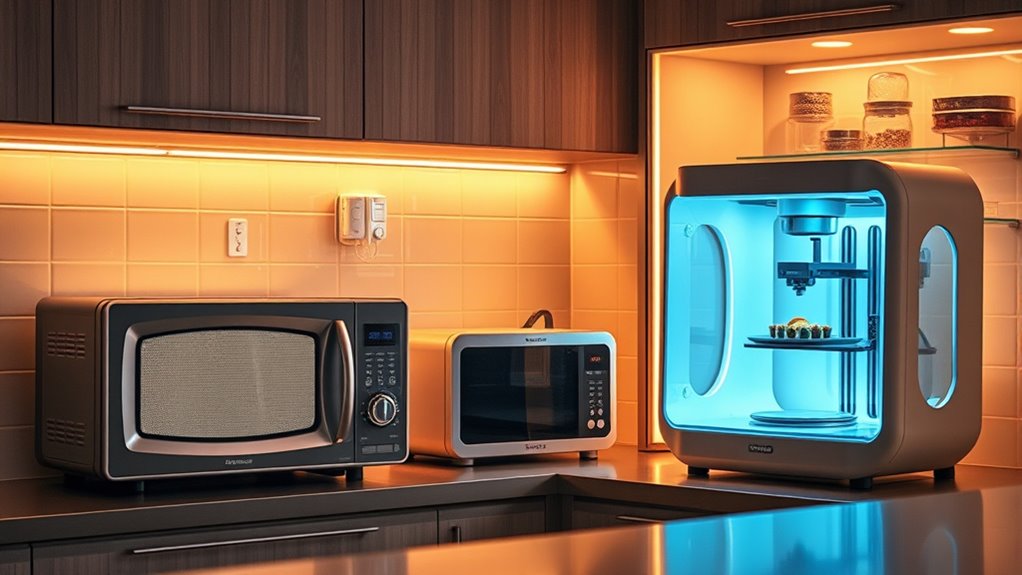
The concept of a smart kitchen has evolved rapidly over the past few decades, transforming the way we cook, clean, and manage our household tasks. Today, it’s not just about modern appliances but about integrated systems that make everyday life more efficient and connected. You’re now able to automate many cooking processes, reduce food waste, and streamline your meal preparation. At the core of this transformation is cooking automation, which allows you to set precise cooking times, temperatures, and even cooking sequences, often through voice commands or smartphone apps. For example, you might start a slow cooker remotely or have your oven adjust temperatures automatically based on your recipe. This level of automation saves time and reduces the guesswork involved in cooking.
Ingredient tracking has also become an essential feature in smart kitchens. With intelligent inventory systems, you can keep tabs on what’s in your fridge or pantry without manual checks. These systems use barcode scanning, RFID tags, or even weight sensors to monitor ingredient levels in real-time. When supplies run low, the system can notify you or automatically order replacements, ensuring you never run out of essential items. Some setups even suggest recipes based on what ingredients you have on hand, helping you minimize waste and make the most of your groceries. This integration of ingredient tracking not only simplifies shopping but also encourages healthier and more cost-effective eating habits. Additionally, understanding the cost of electric appliances can help you make smarter choices when upgrading your kitchen tools.
You’re increasingly interacting with kitchen devices that communicate seamlessly. Smart refrigerators, for instance, can display recipes, suggest meal plans, and track expiration dates, all while syncing with your smartphone. Smart ovens and stovetops adjust their settings based on the dish you’re preparing, often guided by connected apps or voice assistants. These features mean you can monitor and control your kitchen from anywhere, ensuring your meals are cooked perfectly without constant oversight. Such innovations contribute to a more intuitive and responsive cooking environment, where technology anticipates your needs.
The evolution from basic appliances to interconnected, intelligent systems signifies a shift toward more personalized and efficient household management. You’re now part of a kitchen ecosystem that learns from your habits, predicts your needs, and automates routine tasks. This progression not only makes cooking more enjoyable but also helps you save time, reduce waste, and achieve better results. As technology continues to advance, your smart kitchen will likely become even more integrated into your daily life, offering unprecedented convenience and control at your fingertips.

AI Smart Vending Machine for Business – Commercial Combo Snack & Drink Fridge Dispenser with Card Reader,Cashless Smart Payment, Inventory Tracking Auto Restock Alert
- Supports Multiple Payment Methods: Swipe/tap credit cards, NFC, mobile wallets
- High-Accuracy AI Scanning: 99.7% auto-billing accuracy, reduces theft
- Auto Restock Alerts: Real-time inventory tracking and alerts
As an affiliate, we earn on qualifying purchases.
As an affiliate, we earn on qualifying purchases.
Frequently Asked Questions
How Have Smart Kitchen Devices Impacted Household Energy Consumption?
Smart kitchen devices boost your energy savings by optimizing appliance efficiency. They monitor and control energy use, ensuring appliances run only when needed, reducing waste. For example, smart ovens or refrigerators adjust their operation based on usage patterns, cutting down energy consumption. This not only lowers your utility bills but also helps the environment. By adopting these devices, you make your household more energy-efficient and eco-friendly, saving money and reducing your carbon footprint.
What Are the Future Technological Trends in Smart Kitchen Appliances?
You’ll see future smart kitchen appliances increasingly feature voice control and AI integration, making cooking more intuitive. These technologies will allow your devices to anticipate your needs, suggest recipes, and optimize energy use automatically. Expect appliances to learn your habits over time, improving efficiency and personalization. As AI advances, your kitchen will become smarter, more responsive, and seamlessly integrated into your daily routines, transforming how you cook and manage household tasks.
How Do Smart Kitchens Influence Culinary Creativity and Skill Development?
Think of your smart kitchen as a magic wand that sparks your culinary creativity. It enables you to experiment with recipe customization, tailoring dishes to your taste and dietary needs. As you navigate this high-tech environment, you naturally enhance your skills, gaining confidence and mastery. These appliances serve as your culinary tutors, helping you learn new techniques and improve your skills, transforming cooking from a chore into an inspiring art form.
What Safety Concerns Are Associated With Smart Kitchen Technology?
You should be aware that smart kitchen technology raises safety concerns like privacy issues and cyber security risks. Hackers could access your devices, potentially compromising personal data or disrupting your appliances. Always update your software regularly, use strong passwords, and secure your Wi-Fi network. Staying vigilant helps protect your smart kitchen from cyber threats and keeps your personal information safe while enjoying modern convenience.
How Accessible Are Smart Kitchen Innovations for Different Socioeconomic Groups?
Smart kitchen innovations aren’t equally accessible due to socioeconomic barriers and affordability challenges. You might find that these technologies are often priced higher, making them less available to lower-income households. While some companies offer financing options or discounts, it’s still a struggle for many to access the latest smart appliances. As a result, technological advancements may widen the gap between different socioeconomic groups, limiting widespread adoption and benefits.
Conclusion
As you reflect on the journey from humble microwave ovens to sophisticated 3D printing, it’s clear that your kitchen has gracefully evolved into a space of innovation and possibility. Each advancement gently ushers in a new era of convenience and creativity, inviting you to explore uncharted culinary horizons. Embrace this delicate balance of tradition and modernity, knowing that your kitchen’s quiet transformation continues to enrich your everyday life with subtle elegance and endless potential.