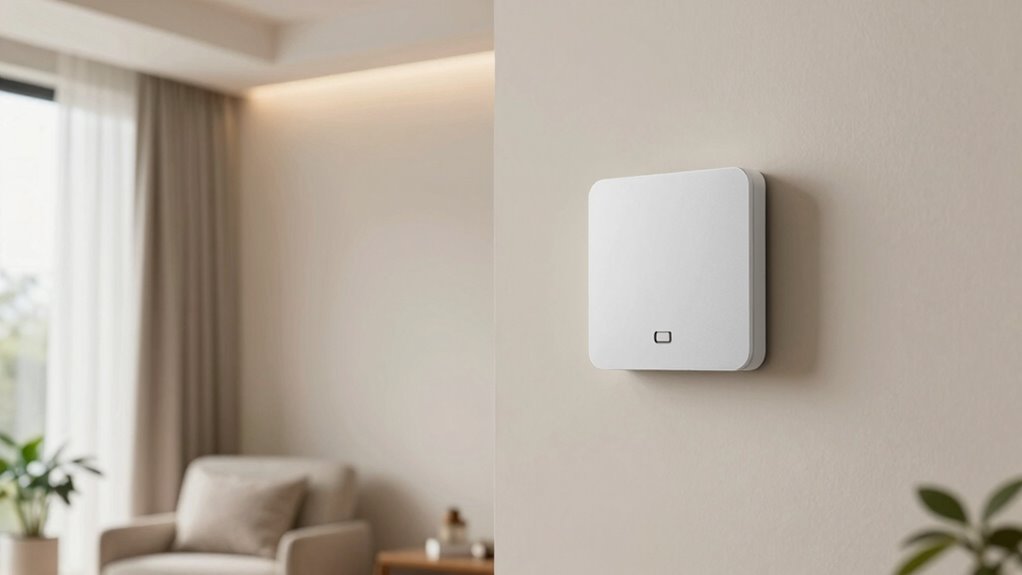
Room sensors are key to fixing hot upstairs and cold downstairs issues by providing real-time data on temperature and occupancy. They allow your smart thermostat to target specific zones, adjusting heating or cooling based on actual needs. This tailored approach prevents energy waste and creates a more comfortable home environment. By using sensors, you’ll see how precise climate control can work for you—continue to explore how this simple solution makes a big difference.

Get decor and gifts delivered free with Prime
- Fast, free delivery on millions of items
- Prime Video, Amazon Music and more included
- Member-only deals all year
Key Takeaways
- Room sensors detect temperature differences and help zone-specific adjustments to balance hot upstairs and cold downstairs areas.
- They enable smart thermostats to automatically modify heating and cooling based on real-time room conditions.
- Placing sensors in different zones ensures targeted climate control, reducing temperature disparities.
- Sensors can detect occupancy, allowing HVAC systems to focus on active zones and improve overall comfort.
- Using room sensors optimizes energy use, preventing over-heating or over-cooling in unoccupied or less-used areas.
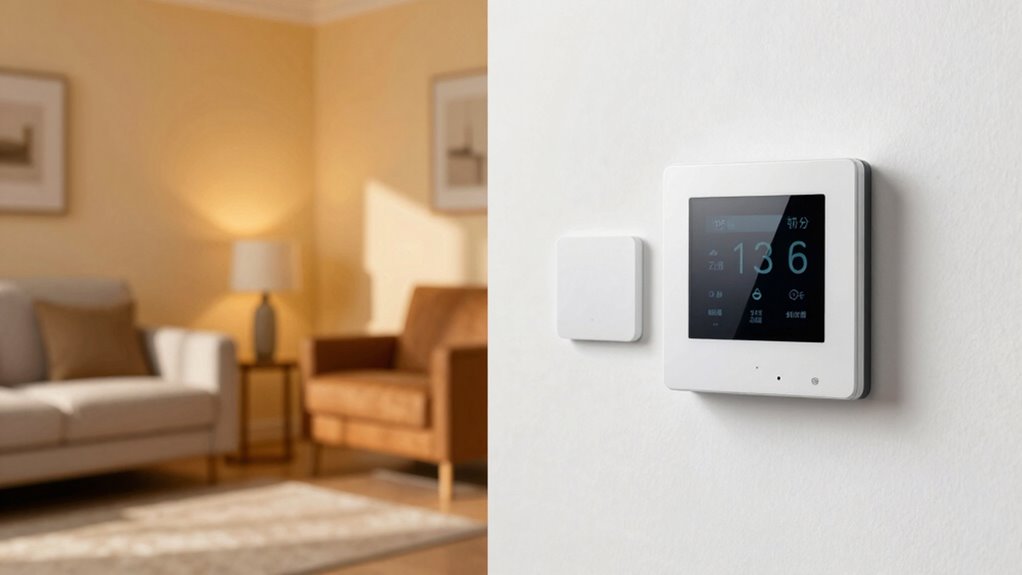
Room sensors are smart devices that detect environmental conditions like temperature, humidity, motion, and light within a space. They gather real-time data to help you manage your home’s comfort and efficiency more effectively. One of the key ways they do this is by working with a smart thermostat, which adjusts your heating and cooling systems based on the sensor inputs. If you’ve ever struggled with uneven temperatures—hot upstairs and cold downstairs—room sensors can be a game-changer. Instead of setting a single thermostat and hoping for even comfort, sensors allow your system to respond dynamically to different zones within your home, balancing temperatures more precisely.
By installing room sensors throughout your house, you gain the ability to tailor climate control to each area’s needs. For example, sensors placed upstairs can detect when that space gets too warm during the day, prompting the smart thermostat to lower the heat or cooling in that zone. Meanwhile, sensors downstairs can signal when it’s cooler and needs more heating. This targeted approach prevents energy wastage, because your HVAC system no longer works overtime trying to cool or heat areas that don’t need it. As a result, you enjoy better energy efficiency, which can markedly lower your utility bills over time.
Installing room sensors helps target climate control, reducing energy waste and lowering utility bills.
Using room sensors with a smart thermostat also means your home’s climate adapts automatically. When a sensor detects no motion in a room, it can send signals to reduce heating or cooling in that zone until activity resumes. Conversely, when you enter a room, sensors quickly detect your presence and adjust the temperature to your comfort level. This responsiveness ensures your home stays comfortable without constant manual adjustments, and it reduces unnecessary energy consumption. Over time, these smart adjustments add up, making your home not only more comfortable but also more sustainable.
The integration of room sensors and smart thermostats results in a more efficient and comfortable living environment. Instead of wasting energy trying to maintain a uniform temperature everywhere, your system intelligently responds to actual conditions. This means less energy is used when you’re away or sleeping, and more precise climate control when you’re active. As you continue to fine-tune your system, you’ll notice fewer temperature swings and a more consistent indoor climate. The combination of room sensors and a smart thermostat allows you to fix common heating and cooling issues, like uneven temperatures, while also reducing your overall energy footprint. Additionally, understanding environmental conditions helps optimize your HVAC system’s performance.
As an affiliate, we earn on qualifying purchases.
Frequently Asked Questions
How Do Room Sensors Differ From Traditional Thermostats?
Room sensors differ from traditional thermostats by offering more precise temperature and humidity control, which helps maintain a comfortable environment. They enable zoning flexibility, allowing you to set different temperatures for various areas. Unlike basic thermostats, room sensors detect real-time conditions, adjusting heating or cooling accordingly. This results in better energy efficiency and comfort, especially when managing uneven temperatures like hot upstairs and cold downstairs.
Can Room Sensors Be Integrated With Smart Home Systems?
Yes, you can integrate room sensors with smart home systems. You’ll want to check sensor compatibility with your existing smart hub or automation platform. Once compatible, you can set up automation integration to adjust heating or cooling based on sensor readings. This way, your smart home becomes more responsive, optimizing comfort by controlling temperature in specific zones without manual intervention.
What Is the Typical Installation Process for Room Sensors?
You start by mounting the sensors in key locations, then connect them wirelessly to your system. During installation, you calibrate each sensor to guarantee accurate readings, like tuning an instrument. As you complete setup, your sensors sync seamlessly with your smart home, ready to adjust your climate. This process transforms your space, turning chaos into comfort through simple steps of mounting, calibrating, and connecting wirelessly.
Are Room Sensors Effective in Large or Multi-Story Homes?
Yes, room sensors are effective in large or multi-story homes. Proper sensor placement guarantees accurate temperature readings across different zones, helping you maintain consistent comfort. Wireless connectivity makes installation easier, allowing you to strategically position sensors without extensive wiring. By placing sensors in key areas and utilizing reliable wireless links, you can optimize your HVAC system’s performance, effectively balancing the temperature throughout your entire home.
How Do Room Sensors Impact Energy Savings and Utility Bills?
Room sensors help you save energy and lower utility bills by optimizing heating and cooling based on occupancy detection and humidity control. They prevent wasting energy in unoccupied rooms and maintain consistent comfort levels. By adjusting the temperature only where needed, they reduce overall energy consumption, making your HVAC system more efficient. As a result, you enjoy lower bills and a more comfortable home, especially in multi-story or large spaces.
Conclusion
By embracing room sensors, you gently guide your home to a more balanced harmony, subtly correcting those cozy upstairs and cooler downstairs quirks. Think of it as giving your house a friendly nudge toward comfort, where every room feels just right. With these clever devices, you’ll enjoy a cozy, even-tempered home without the fuss, making your daily life a little smoother. After all, a happy home is one that’s just a touch more attentive to your comfort.
Evergreen bestsellers Picks
bestsellers
As an affiliate, we earn on qualifying purchases.