
To guarantee your child’s safety, it’s essential that bed rails match the specific bed setup. Measure your bed’s dimensions carefully and choose the right-sized rails designed for your bed type. Proper installation and secure attachment prevent gaps, slipping, or falls. Regularly check the rails for stability and wear. When you match the rails correctly and install them properly, you’re making a safe sleep environment. Keep going to learn more about choosing and installing the best bed rails for your child’s safety.
Key Takeaways
- Match bed rails to the specific bed type (twin, full, bunk) for a secure and snug fit.
- Measure the bed dimensions accurately before selecting rails to prevent gaps or instability.
- Follow manufacturer installation instructions carefully to ensure proper attachment and safety.
- Regularly inspect and tighten rails to maintain stability and prevent accidents during sleep.
- Stay informed about safety recalls and guidelines to ensure the rails remain safe and compliant.
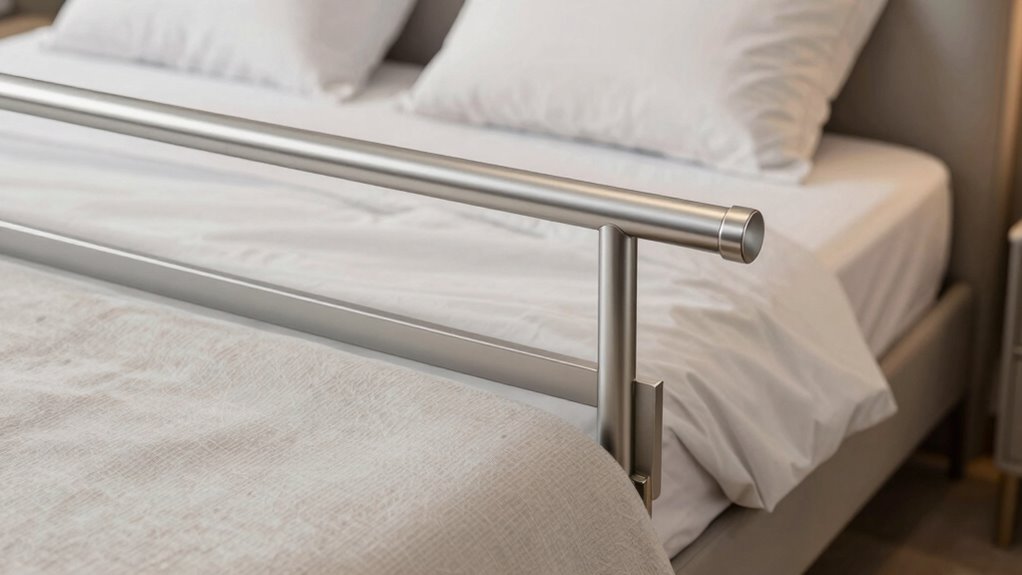
Have you ever worried about falling out of bed during the night? If you have a little one, that concern is probably constant. Bed rails can be a great solution for child safety, but only when they match the bed setup properly. It’s tempting to think that any bed rail will do, but if the installation isn’t correct or the rail doesn’t fit your bed, it might cause more problems than it solves. The key is choosing the right bed rail and ensuring it’s installed securely, so your child can sleep peacefully without the risk of falling.
Choosing the right, securely installed bed rail is essential for your child’s safety and peaceful sleep.
When you’re considering bed rail installation, start by measuring your child’s bed. Whether you have a twin, full, or bunk bed, each requires a different type of rail. A mismatch can lead to gaps that a child could slip through or create an unstable barrier that might come loose during the night. The goal is a snug fit that prevents falls but doesn’t cause discomfort or restrict movement. Many manufacturers provide specific rails designed for certain bed types, so take the time to select one that matches your bed’s dimensions and style.
Child safety is the top priority, and that means paying attention to the details during installation. Ensure the bed rail is firmly attached to the bed frame, with no loose screws or unstable sections. Follow the manufacturer’s instructions carefully—skipping steps or improvising can compromise safety. Test the rail by gently pulling or pushing it to check stability. If it wobbles or shifts, readjust and secure it better. Remember, an improperly installed bed rail can be just as dangerous as not having one at all, especially if it detaches while your child is sleeping. Additionally, understanding proper installation techniques can help ensure the safety and durability of the bed rail over time. Incorporating safety standards from reputable sources can further enhance peace of mind. Being aware of product recalls and safety notices related to bed rails can also prevent potential hazards. Staying informed about latest safety guidelines can help you make better decisions when selecting and installing bed rails.

GrowthFun Foldable Bed Rail for Toddlers, 71in Reinforced Carbon Steel Frame&Connectors, Breathable Cationic Fabric – Safety Toddler Bed Rails for Queen, King, Twin, Full, No-Tool Setup.
- Enhanced Stability and Support: Reinforced carbon steel frame and connectors
- Wide U-Shaped Base: Provides superior weight support and stability
- Adjustable Height Fit: Fits mattresses 4-12 inches thick
As an affiliate, we earn on qualifying purchases.
As an affiliate, we earn on qualifying purchases.
Frequently Asked Questions
Are Bed Rails Safe for All Age Groups?
Bed rails aren’t safe for all age groups. When considering bed rail installation, you must account for the user’s age and mobility. They work well for children and some adults, but may pose risks for seniors or those with limited mobility. Always check compatibility with your bed and use appropriate bed rail accessories. Proper installation and regular checks guarantee safety, but never leave bed rails in place if they might cause injury or hinder movement.
How Do I Measure My Bed for Compatible Rails?
To measure your bed for compatible rails, first measure the mattress length, width, and height accurately using a tape measure. Check the bed rail installation instructions to verify it fits your bed’s dimensions and style. Confirm mattress compatibility by verifying that the rails accommodate your mattress thickness. This ensures a secure fit, preventing accidents. Always double-check the product specifications to match your bed setup perfectly.
Can Bed Rails Be Used With Adjustable Beds?
Yes, bed rails can be used with adjustable beds if they offer adjustable bed compatibility. You’ll need to guarantee the rails have secure rail attachments designed for adjustable frames. Check the product specifications to confirm compatibility, and look for rails that can adapt as your bed adjusts. Properly installed, these rails provide safety without interfering with the bed’s movement, offering peace of mind during adjustments.
Do Bed Rails Affect Mattress Warranties?
Bed rails can affect your mattress warranty, especially if they interfere with mattress compatibility or violate warranty clauses. Some manufacturers specify that using certain accessories, like rails, may void the warranty if they cause damage or aren’t approved. Always check your warranty details before adding bed rails. Properly installed, matching rails usually won’t impact warranty coverage, but incompatible or improperly fitted rails could lead to issues.
What Safety Features Should I Look for in Bed Rails?
Think of bed rails as your guardian angels—protective and vigilant. When choosing them, look for safety features like sturdy locking mechanisms, smooth edges, and non-slip grips. During bed rail installation, make sure they fit snugly without gaps, and maintain them regularly through bed rail maintenance to keep safety at its highest standard. These precautions help prevent falls and injuries, giving you peace of mind and a secure night’s sleep.
Conclusion
When choosing bed rails, make sure they match your setup perfectly. A mismatched rail can do more harm than good, leaving you feeling like you’re fighting an uphill battle. By selecting rails that fit snugly and suit your bed’s style, you’ll turn a simple safety feature into a seamless part of your sleep space. Remember, the right fit can make all the difference—don’t put the cart before the horse when it comes to your comfort and safety.