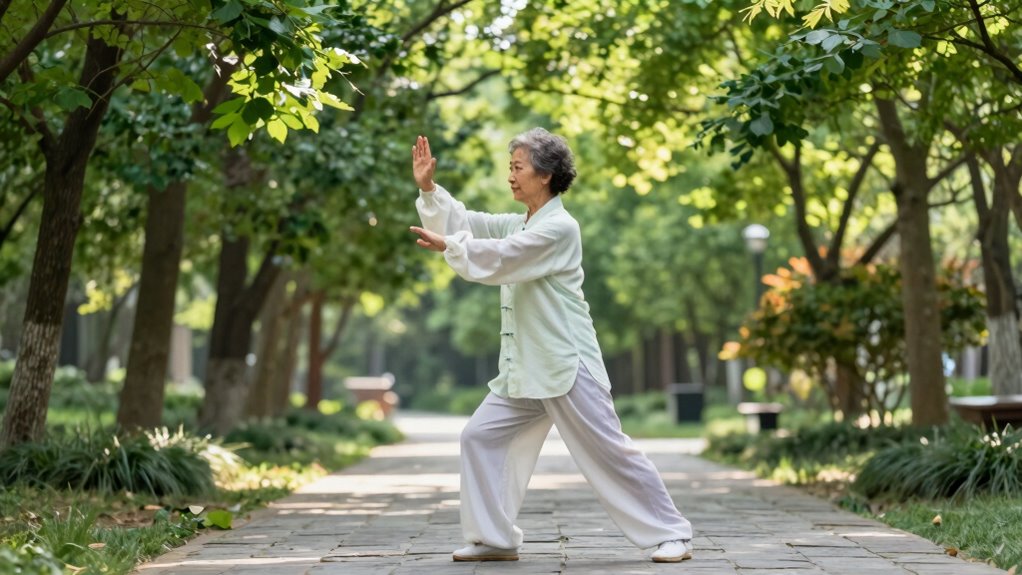

You should try gentle mind-body exercises like tai chi or yoga, as they improve balance, coordination, and posture while calming your mind. These practices reduce stress, anxiety, and tension, helping you feel more relaxed and focused. They’re safe, adaptable, and require little space or equipment, making them ideal for seniors. Regular practice can boost your energy, stability, and mental resilience. Keep exploring to discover how these exercises can enhance your daily life and well-being.
Key Takeaways
- Combines physical movement with mental focus, enhancing both balance and mental clarity for overall well-being.
- Is gentle, adaptable, and safe, making it accessible for seniors of all fitness levels.
- Promotes better posture, flexibility, and energy while reducing stress and anxiety.
- Supports independence by improving neuromuscular function and stability.
- Encourages consistent practice for long-term physical and mental health benefits.
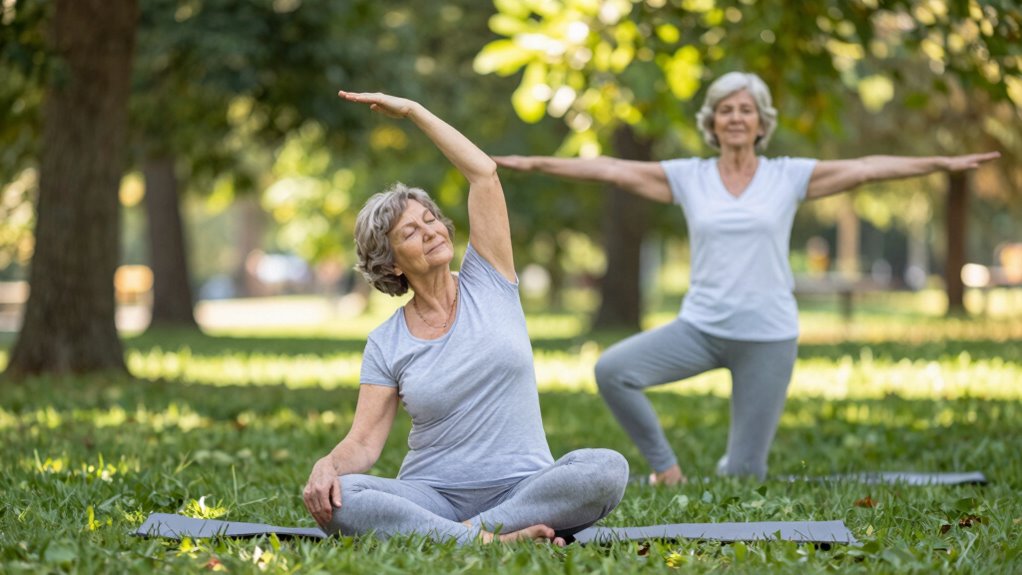
As we age, staying active becomes increasingly important for maintaining both physical health and mental well-being. One effective way to do this is by exploring mind-body exercises that combine movement with mental focus. These practices not only promote physical stability but also nurture mental clarity, making them ideal for seniors seeking a holistic approach to health. When you incorporate activities like tai chi, yoga, or qigong into your routine, you’ll notice notable improvements in your balance and coordination. Better balance reduces your risk of falls, which is a common concern as you get older, and enhances your confidence in daily activities. These exercises gently challenge your stability, helping your body develop better proprioception and muscle engagement, which are crucial for maintaining independence over time.
Mind-body exercises like tai chi and yoga improve balance, boost confidence, and support independence as we age.
Beyond physical benefits, mind-body exercises are powerful tools for stress reduction. When you focus on slow, deliberate movements combined with deep breathing and mindfulness, you create a calming effect on your nervous system. This mental component helps you disconnect from daily worries and reduces feelings of anxiety or tension. Regular practice can lead to a sense of tranquility, physically lowering your blood pressure and easing muscle tension. As you become more attuned to your body and breath, you’ll find it easier to stay present, which can improve your overall mood and mental resilience. Incorporating mind-body exercises into your routine supports not only physical health but also enhances your mental clarity, which is especially beneficial as you age. These exercises can also help improve your physical stability, reducing the risk of falls and increasing confidence in everyday movements.
Adding consistent practice can also positively impact your neuromuscular function, leading to more efficient coordination and muscle control. Developing neuromuscular awareness through these exercises can further enhance your ability to perform daily tasks safely and effectively. The beauty of these exercises is that they are adaptable to your current fitness level, making them accessible and safe. You don’t need special equipment or a gym membership—just a quiet space and a willingness to try something new. Consistency is key; even just 15 to 20 minutes a day can yield significant benefits. As you develop a regular routine, you’ll likely notice improvements in your posture, flexibility, and overall energy. These physical enhancements, paired with the mental calmness you cultivate, create a positive feedback loop that encourages continued participation. Over time, you’ll find yourself feeling more balanced not just physically but emotionally as well, leading to a more vibrant, engaged life.
Incorporating mind-body exercises into your routine is a proactive step toward aging gracefully. They help you stay grounded physically and mentally, making everyday activities easier and more enjoyable. More seniors should try this combo because it offers a gentle yet effective way to boost balance and reduce stress, ultimately supporting a healthier, more fulfilled life.
As an affiliate, we earn on qualifying purchases.
Frequently Asked Questions
Can Beginners Easily Start Mind-Body Exercises?
Yes, beginners can easily start mind-body exercises. You just need to focus on mental focus and relaxation techniques, which are simple to learn. These exercises often involve gentle movements, deep breathing, and mindfulness, making them accessible for all fitness levels. As a beginner, you’ll find it easy to incorporate them into your routine, helping you improve flexibility, reduce stress, and boost overall well-being without feeling overwhelmed.
Are There Any Age Restrictions for These Exercises?
There are generally no strict age restrictions for mind-body exercises, but age-related limitations can influence how you perform them. You should consider exercise modifications to accommodate any physical restrictions or health conditions. Listening to your body is key—start slow, adapt movements as needed, and consult with a healthcare professional if you have concerns. These exercises can be safe and beneficial for seniors when tailored to your individual needs.
How Long Should Each Session Last?
Think of each session as a gentle river, flowing smoothly without rushing. For ideal benefits, aim for 20 to 30 minutes per session, adjusting based on your session intensity and exercise variety. If you include more vigorous movements, keep sessions shorter. Balance your routine to prevent fatigue, ensuring you enjoy the process while improving your mind-body connection. Consistency matters most, so find a duration that feels sustainable for you.
Do These Exercises Require Special Equipment?
These exercises generally require minimal equipment, making them accessible for most seniors. You might need a yoga mat, chair, or light weights, but many exercises can be modified to use just body weight. Equipment requirements are flexible, allowing you to adapt based on your comfort and available resources. With exercise modifications, you can easily tailor the workout to your fitness level, ensuring safety and effectiveness without needing specialized gear.
Can They Help With Specific Health Conditions?
Yes, these exercises can help with specific health conditions. They boost mental clarity by calming your mind and improving focus, which benefits those with anxiety or depression. They also enhance emotional resilience, helping you manage stress and emotional challenges better. Regular practice can improve overall well-being, support mobility, and reduce symptoms related to chronic conditions like arthritis or hypertension, making them a valuable addition to your health routine.
Conclusion
So, seize the chance to strengthen your stamina, soothe your senses, and spark your spirit through this simple yet powerful mind-body movement. Embrace exercises that energize, engage, and elevate your everyday life. By blending balance with breath and movement with mindfulness, you craft a calmer, more confident core. Don’t delay—delight in the delightful dance of dedication, and discover a dynamic, disease-defying difference in your day-to-day well-being.