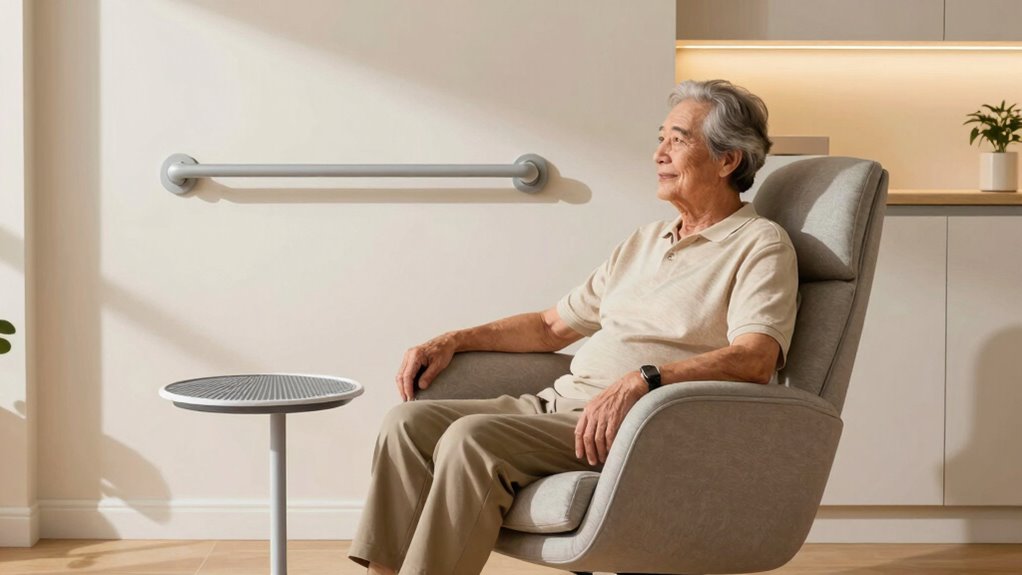

Aging-in-place products should put your dignity and independence first by providing solutions that fit naturally into your daily routine, focusing on discreet, stylish designs, and easy-to-use interfaces. Technology should support your needs without feeling intrusive or stigmatizing, helping you stay autonomous while maintaining privacy. Devices that adapt to your changing abilities and respect your choices empower you with confidence and control. Keep exploring to discover how these thoughtful approaches can genuinely enhance your quality of life.
Open a free Amazon Business account
Business pricing, bulk buying and tax-exempt orders.
As an affiliate, we earn on qualifying purchases.
Key Takeaways
- Design products that blend seamlessly into daily routines, maintaining users’ sense of independence and control.
- Prioritize discreet, stylish, and unobtrusive devices to reduce stigma and promote confidence.
- Ensure interfaces are intuitive and accessible, respecting diverse abilities and promoting autonomy.
- Develop adaptable technology that evolves with users’ changing needs while safeguarding privacy.
- Focus on empathetic, respectful solutions that empower aging individuals to live securely and with dignity.

As the population ages, designing aging-in-place products that prioritize dignity becomes more important than ever. You want solutions that empower you to live comfortably and independently, without feeling like you’re losing control or autonomy. This means integrating technology thoughtfully to support your needs while respecting your privacy and self-respect. Modern aging-in-place products should blend seamlessly into your daily routine, making assistance feel natural rather than intrusive. For example, smart home devices can help you control lighting, temperature, and security systems with simple voice commands or intuitive interfaces, giving you independence without constant supervision.
Aging-in-place products should seamlessly support independence while respecting privacy and dignity through thoughtful, unobtrusive technology.
Technology integration plays an essential role in maintaining dignity. Instead of relying on bulky, stigmatizing devices, the focus should be on sleek, unobtrusive designs that enhance your quality of life. Wearable health monitors, for instance, should be comfortable and stylish, providing critical data without making you feel self-conscious. When these devices alert caregivers or medical professionals if something’s amiss, they do so discreetly, guaranteeing you’re supported without feeling scrutinized. This balance between safety and respect is indispensable in fostering a sense of autonomy. Moreover, designing for dignity involves understanding the emotional impact of these devices and ensuring they promote confidence rather than dependence. Incorporating emotional well-being considerations into design can help address these concerns more holistically. Additionally, thoughtful user experience design ensures that technology remains accessible and intuitive for users of all abilities.
Furthermore, user-friendly interfaces are key. If a device or system is complicated to operate, it could undermine your confidence and independence. The goal is to develop aging-in-place products that you can easily manage, with minimal frustration. Voice-activated controls, large buttons, or simplified apps help assure you remain in charge of your environment. When caregivers are involved, they should have access to information and controls that respect your privacy and preferences, upholding your dignity rather than diminishing it. Recognizing the importance of assistive technology can lead to better-designed solutions that truly support independence and respect. Incorporating user-centered design principles is essential for creating products that truly meet your needs without feeling invasive. It’s also crucial that these technologies are adaptable, accommodating changes in your abilities over time.
In essence, the future of aging-in-place products lies in their ability to combine advanced technology with empathetic design. By focusing on dignity first, these solutions support your independence, preserve your self-respect, and foster a sense of security. When technology seamlessly integrates into your life and caregiver assistance is offered respectfully, you’re empowered to age in place with confidence and grace.
discreet aging-in-place smart home devices
As an affiliate, we earn on qualifying purchases.
As an affiliate, we earn on qualifying purchases.
Frequently Asked Questions
How Do Aging-In-Place Products Enhance Emotional Well-Being?
Aging-in-place products enhance your emotional well-being by promoting emotional independence and offering mental health support. They empower you to manage daily tasks confidently, reducing feelings of helplessness or frustration. Features like easy-to-use interfaces and safety alerts provide reassurance, helping you stay connected with loved ones and healthcare providers. This support fosters a sense of control and security, ultimately boosting your confidence and emotional resilience while aging comfortably at home.
Are These Products Customizable for Individual Needs?
Yes, these products are highly customizable to meet your individual needs. You can explore various personalization options and make user-specific adjustments, ensuring the device fits your lifestyle and preferences. This flexibility helps you feel more comfortable and independent. Many aging-in-place solutions are designed with adaptability in mind, so you can tailor them to your unique requirements, promoting dignity and ease of use every day.
What Training Is Available for Using These Products Safely?
You can access various training programs designed to guarantee product safety when using aging-in-place products. These programs cover proper installation, operation, and maintenance, helping you feel confident and secure. Many providers offer in-person or online training sessions tailored to individual needs. By participating, you learn how to use the products safely, reduce risks, and maintain your independence with dignity. Always choose reputable programs that emphasize safety and personalized support.
How Affordable Are Dignity-Focused Aging-In-Place Solutions?
While dignity-focused aging-in-place solutions might seem costly, they often prove quite affordable when considering long-term benefits. You should do a cost analysis, factoring in installation, maintenance, and potential healthcare savings. Affordability factors vary based on product complexity and your budget. Many providers offer options that balance quality and cost, making it possible for you to support independence without breaking the bank, all while preserving your dignity.
Can These Products Be Integrated Into Existing Home Designs?
Yes, these products can seamlessly integrate into your existing home designs through thoughtful home renovation. Focus on design compatibility by choosing solutions that match your current decor and layout, ensuring they don’t stand out or compromise style. Consulting with professionals can help you select discreet, functional aging-in-place products that enhance safety and dignity without sacrificing aesthetic appeal, making your home both beautiful and accessible.
Conclusion
You hold the power to transform aging-in-place products into tools of dignity, not just safety. When you prioritize respect and independence, you’re creating a world where seniors thrive, not just survive. Imagine a future where every product empowers, elevates, and celebrates their lives—it’s not just possible, it’s essential. By choosing dignity first, you’re not just making a difference; you’re shaping a revolution that could change lives more profoundly than you’ve ever dreamed.
Fall Picks
fall essentials
As an affiliate, we earn on qualifying purchases.