Choosing between hardwired and plug-in EV chargers depends on your needs for convenience, cost, and installation ease. Hardwired units offer a permanent, high-power solution ideal for long-term use but require professional installation and higher upfront costs. Plug-in chargers are simpler, more portable, and easier to set up, making them great for flexible or temporary needs. To understand how these options fit your lifestyle and what technical factors come into play, keep exploring the details ahead.
Key Takeaways
- Hardwired chargers offer higher power and faster charging, ideal for permanent installations, while plug-in chargers provide flexibility and easier setup.
- Hardwired units require professional installation with dedicated circuits, whereas plug-in chargers can be plugged into standard outlets.
- Hardwired chargers involve higher upfront costs and potential home electrical upgrades; plug-in chargers are more affordable initially.
- Plug-in chargers are suitable for renters or those needing portability; hardwired units are better for long-term, high-capacity charging needs.
- The choice depends on lifestyle, budget, and safety considerations, balancing convenience versus long-term power capability.
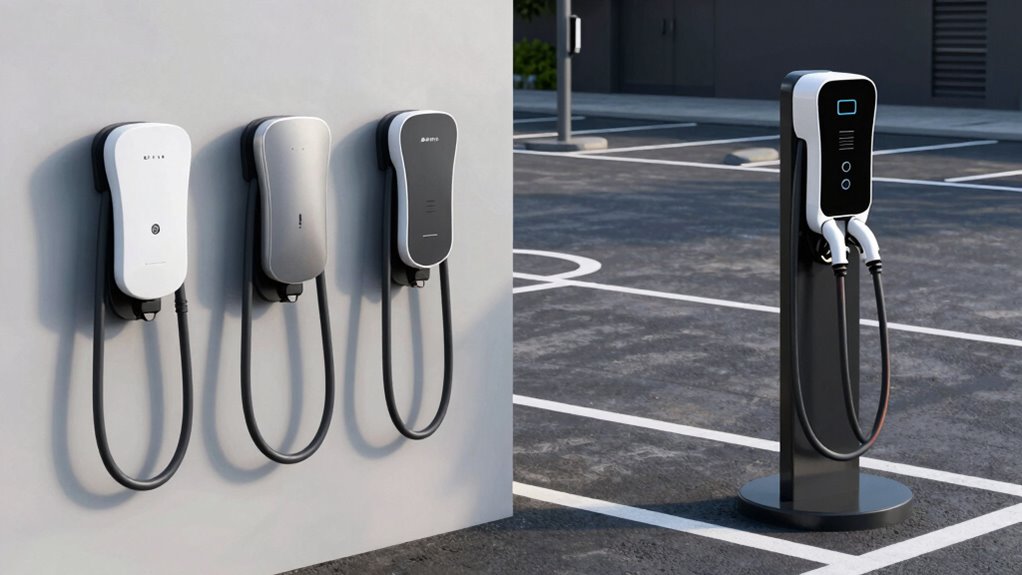
Electric vehicle (EV) chargers are essential for keeping your EV powered and ready to go. Whether you’re contemplating a hardwired or plug-in charger, understanding the differences can help you make the best choice for your needs. One of the main factors to consider is the cost comparison. Hardwired chargers tend to have a higher upfront cost because of the installation process and the materials involved. They often require professional installation, which can add to the expense, especially if your home’s electrical system needs upgrades. On the other hand, plug-in chargers are generally more affordable initially and can be set up with less complexity, making them ideal if you’re looking for a budget-friendly option or want the flexibility to move the charger later. However, the long-term costs should also include installation, maintenance, and potential upgrades, so it’s essential to weigh these factors carefully.
When it comes to the installation process, hardwired chargers are typically more involved. They require a dedicated circuit and a permanent connection to your electrical system, which may involve running new wiring through walls or the garage. This process usually demands professional help to ensure safety and compliance with local electrical codes. The installation can take several hours or even a day, depending on your home’s wiring and the desired location. Conversely, plug-in chargers are designed for simple setup. They often just need an appropriate outlet, similar to a large appliance, and can be plugged in quickly without extensive electrical work. This makes them a popular choice for renters or those who prefer a more flexible setup. Additionally, advancements in field-of-view and imaging-scale technologies have improved the efficiency of some high-capacity hardwired units, making them appealing for more serious users.
Despite the difference in installation complexity, both types of chargers can provide efficient charging speeds, but hardwired units often support higher charging capacities, which can be beneficial if you have a fast-charging need or multiple EVs. When choosing between the two, consider not only the initial cost and installation process but also your long-term plans and how often you’ll need to charge your vehicle. If you want a clean, permanent solution that maximizes power and minimizes inconvenience, a hardwired charger might be the best choice, but it comes with higher upfront costs. If you value convenience, flexibility, and lower initial investment, a plug-in charger could serve you well. Ultimately, understanding the cost comparison and installation process will help you select the most suitable EV charger for your lifestyle.
As an affiliate, we earn on qualifying purchases.
Frequently Asked Questions
How Much Does Installation Typically Cost for Each Type?
You can expect installation costs for EV chargers to range from $300 to $1,500 depending on the type. Hardwired chargers usually cost more due to electrical work, while plug-in units are simpler and cheaper to install. When budgeting, consider these installation costs alongside the charger price. Keep in mind that additional expenses, like permits or upgrades, may impact your overall budget considerations, so plan accordingly.
Are Hardwired Chargers More Weather-Resistant Than Plug-In Models?
Hardwired chargers generally offer better weather resilience and outdoor durability than plug-in models because they are permanently installed and often built with weatherproof materials. You’ll find them more resistant to rain, snow, and temperature fluctuations, making them ideal for outdoor use. Plug-in chargers, while convenient, can be more vulnerable to weather elements if not properly protected, requiring additional enclosures or covers for better outdoor durability.
Can Existing Home Wiring Support a Hardwired Charger?
Your existing home wiring might support a hardwired charger if it has enough circuit capacity. Check your electrical panel to see if there’s a dedicated circuit with the proper amperage recommended by the charger manufacturer. If your wiring is outdated or the circuit is already heavily used, you may need an upgrade. Consult a licensed electrician to assess your current wiring and verify it can safely handle the load.
What Are the Theft Risks Associated With Each Type?
Hardwired chargers pose a higher theft risk because they’re permanently installed, making them easier targets for theft. To prevent this, you should implement security measures like locking enclosures or installing security cameras. Plug-in chargers are less vulnerable since they can be quickly disconnected and hidden, but theft prevention still matters. Always consider security measures for both types to protect your investment and make sure your EV charging setup remains secure.
Do Different EV Models Require Specific Charger Types?
Most EV models have specific charger compatibility requirements, so you should verify your vehicle’s model-specific requirements before choosing a charger type. Some cars may only support plug-in chargers, while others can handle hardwired units. Always confirm your EV’s charging specifications to ensure proper operation and safety. Ignoring model-specific requirements could lead to charging issues or damage, so consult your vehicle’s manual or manufacturer recommendations when selecting a charger.
Conclusion
Choosing between hardwired and plug-in EV chargers depends on your needs and preferences. Think of it like selecting a trusty steed—either a sturdy, built-in carriage or a flexible, portable wagon. Both get you where you need to go, but your choice influences convenience, installation, and code compliance. So, weigh your options carefully, and remember, whether you’re plugging in or hardwiring, your EV adventure is just a charge away—no need to send a telegram for help!