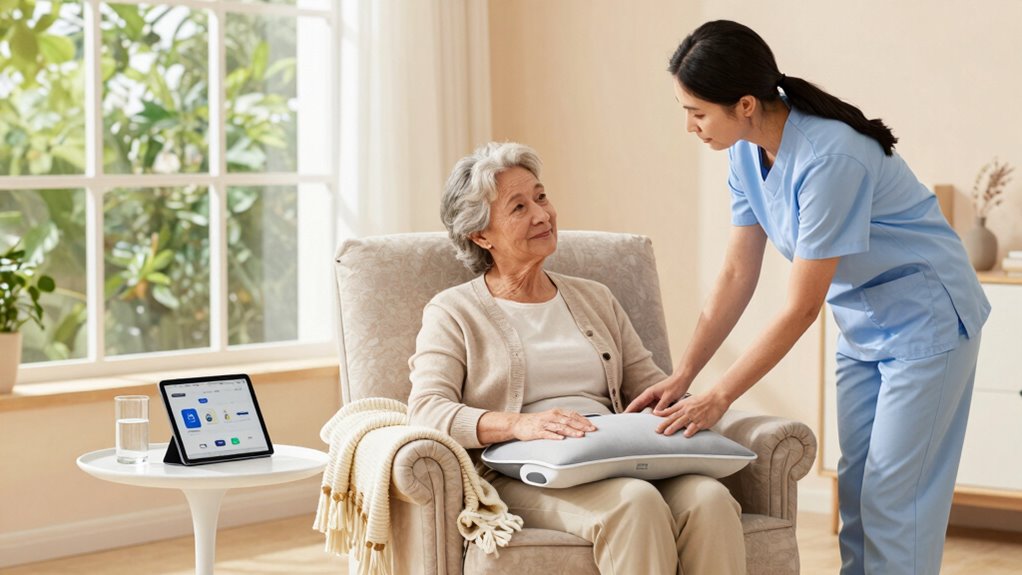
Upgrading your home with smart safety features and automation makes caregiving easier and less stressful. You can control lights, locks, and thermostats remotely, reducing physical strain. Safety modifications like grab bars and non-slip floors help prevent accidents. Smart devices alert you to hazards and emergencies quickly. These upgrades create a safer environment for your loved ones while easing your caregiving tasks. To discover more about how these changes can transform your caregiving experience, keep exploring the options.

Get decor and gifts delivered free with Prime
- Fast, free delivery on millions of items
- Prime Video, Amazon Music and more included
- Member-only deals all year
Key Takeaways
- Smart home automation reduces caregiver effort by remotely controlling lights, locks, and thermostats, promoting safety and independence.
- Safety modifications like grab bars and non-slip flooring minimize fall risks, easing caregiver concerns.
- Automated safety devices, including sensors and emergency alerts, enable quick response and monitoring for caregivers.
- Environmental and cost benefits, such as energy savings and accident prevention, support sustainable, budget-friendly home updates.
- Enhanced safety features improve the overall quality of life for loved ones and make caregiving tasks more manageable.

Have you ever wondered if updating your home could make life easier for both you and your loved ones? If you’re caring for an aging parent, a family member with health issues, or someone with limited mobility, small changes can have a big impact. One of the most effective updates you can make involves integrating home automation and safety modifications. These upgrades aren’t just about modern gadgets; they’re about creating a safer, more manageable environment that reduces stress and physical strain for caregivers and loved ones alike.
Home automation systems give you the power to control lights, locks, thermostats, and even appliances remotely. Imagine being able to turn on the lights or adjust the temperature from your phone, even when you’re not home. This can prevent accidents—like trips or falls due to poor lighting—and make daily routines smoother. Voice-activated devices allow your loved ones to operate lights or call for help without needing to get up or find a phone. This level of automation creates independence for the person receiving care, while giving you peace of mind knowing that help can be summoned instantly if needed.
Control lights, locks, and thermostats remotely for safer, smoother daily routines and enhanced independence.
Safety modifications are equally vital. Installing grab bars in bathrooms, non-slip flooring, and raised toilet seats can significantly reduce the risk of falls. Widening doorways and removing thresholds can improve mobility for wheelchairs or walkers. You might also consider adding motion sensors in hallways and bathrooms that turn on lights automatically, reducing the chance of accidents during nighttime visits. These modifications make the home more accessible and less hazardous, which means fewer emergencies and less worry for you as a caregiver. Incorporating home safety improvements can further enhance the protective environment for your loved ones. Additionally, understanding home safety principles can help you identify other potential hazards before they become a problem. Using conservation practices in these updates can also contribute to more sustainable living, aligning safety with environmental responsibility.
Combining home automation with safety modifications transforms your home into a supportive environment. For example, smart smoke and carbon monoxide detectors can alert you immediately if there’s a problem, even when you’re not in the house. Automated medication dispensers can ensure your loved ones take their pills on time, reducing the risk of missed doses or overdose. These upgrades streamline caregiving tasks, giving you more time and less stress, while also enhancing safety and comfort for those in your care. Additionally, home automation and safety modifications can lead to long-term cost savings by preventing accidents and reducing emergency room visits.
Incorporating these updates might seem like a big step, but they’re investments in peace of mind and quality of life. They help create a home that adapts to changing needs, making caregiving less physically demanding and more manageable. Ultimately, this approach doesn’t just support your loved ones—it also supports you, making daily caregiving a little easier and a lot safer.
smart home automation system for elderly care
As an affiliate, we earn on qualifying purchases.
As an affiliate, we earn on qualifying purchases.
Frequently Asked Questions
How Much Does the Home Update Typically Cost?
A home update typically costs between $10,000 and $50,000, depending on the scope of work. You should focus on budget planning early, setting realistic expectations. When selecting a contractor, compare quotes, check references, and make sure they understand your needs, especially if the update helps caregivers. Keeping these factors in mind helps you manage costs effectively and ensures a smooth renovation process tailored to your priorities.
Are There Government Grants for Home Modifications?
Yes, you can access government grants for home modifications, which provide valuable financial assistance. These grants often target seniors, individuals with disabilities, or caregivers, helping cover costs for ramps, bathroom updates, or other accessibility features. Be sure to take into account legal considerations, like eligibility requirements and application processes. Research local and federal programs to find the best options, and consult with professionals to ensure your modifications comply with regulations.
How Long Does the Renovation Process Usually Take?
Renovation times vary, but typically, it takes around 4 to 8 weeks. You’ll appreciate the design flexibility, allowing adjustments as needed, and material durability guarantees the updates stand the test of time. Factors like project scope, contractor availability, and material choices influence the timeline. Staying proactive and communicating clearly with your contractor helps keep things on schedule, ensuring your home update meets your needs efficiently.
Can These Updates Be Customized for Specific Needs?
Yes, these updates can be tailored for your specific needs. You have access to a variety of personalization options, allowing you to customize features like safety measures, accessibility, and design elements. The flexibility in customization ensures your home adapts perfectly to your lifestyle and caregiving requirements. You can work closely with professionals to select options that best suit your unique situation, making your home both functional and comfortable.
What Safety Features Are Most Effective for Caregivers?
The most effective safety features for caregivers include thorough safety assessments and fall prevention tools. Conducting regular safety assessments helps identify hazards, while installing grab bars, non-slip mats, and adequate lighting prevents falls. You should also consider motion sensors and emergency alert systems for quick assistance. These features create a safer environment, giving you peace of mind while caring for loved ones and reducing the risk of accidents.
Conclusion
By making simple updates to your home, you create a safer, more comfortable space that benefits everyone—especially caregivers, who often feel overwhelmed. Think of your home as a well-oiled machine; when each part is optimized, everything runs smoother. Small changes, like better lighting or easy-to-reach storage, can lighten the load and bring peace of mind. When your home adapts to your needs, caregiving becomes less of a burden and more of a shared journey.
Halloween Picks
halloween
As an affiliate, we earn on qualifying purchases.