
TL;DR

Get decor and gifts delivered free with Prime
- Fast, free delivery on millions of items
- Prime Video, Amazon Music and more included
- Member-only deals all year
A Veranda report describes six bathroom trends designers expect to gain traction in 2027: custom storage, expressive hardware, layered lighting, patterned tile floors, more residential styling and smart technology. These are designers’ forecasts based on client interests, not confirmed industry-wide adoption or measured market data.
A Veranda report identifies six bathroom design directions that designers expect to gain traction in 2027, including made-to-measure storage, more distinctive hardware and layered lighting. The predictions reflect observations and client requests described by two designers; they are not evidence that the styles have already become widespread across the housing or renovation market.
The designers point to a move toward bathrooms planned around how residents use them, rather than relying on standard cabinets and a single overhead or mirror light, an approach that also matters when considering what to fix first in a bathroom renovation. Custom cabinetry and organizational features are among the expected changes, with examples including drawers fitted with power outlets, storage for hair tools and spaces for towels and makeup essentials. Gina Elkins, founder and principal of Studio Casa Vita, says clients want to locate products more easily while keeping the room visually considered.
Other predictions concern visible finishes and lighting, including the importance of following designers’ advice before choosing a paint color. Rachel Cannon, founder and principal designer of Rachel Cannon Limited, says clients are becoming more willing to choose distinctive cabinet hardware, including knobs paired with backplates. The report also describes mixing metal finishes and laying familiar tile in less conventional patterns, such as herringbone, offset brick, plaid, stripes or borders.
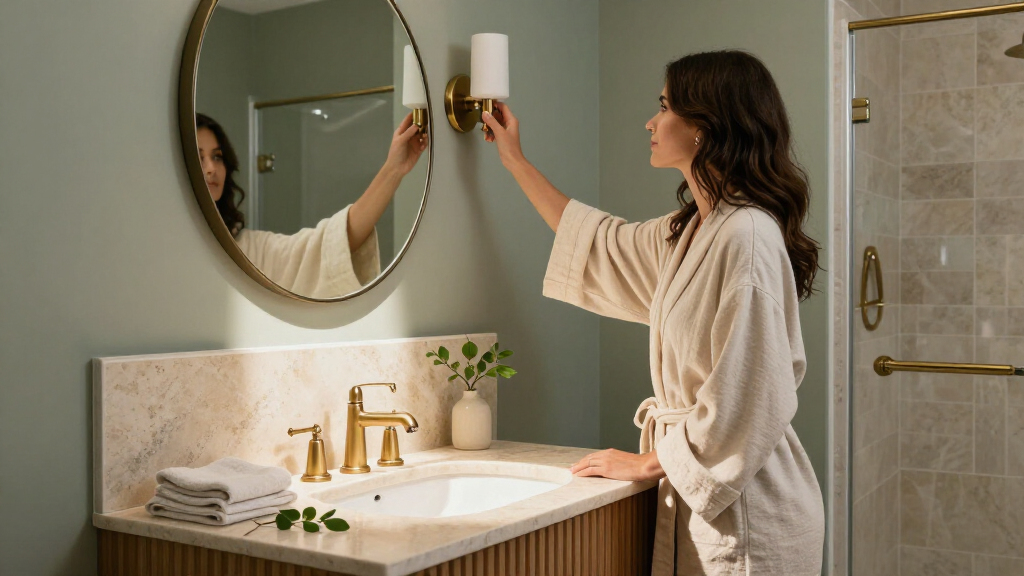
Elkins describes multiple lighting sources for different uses, from brighter light around makeup areas to softer illumination at night. Examples include toe-kick or baseboard night lights, decorative fixtures and lamps. The remaining trends are a more residential approach to bathroom interiors—using details such as warmer paint, wood, molding and ceiling treatments—and adding technology such as automated shower controls, smart toilet functions, touch-free faucets and motorized window coverings.
Bathrooms Move Beyond Basic Function
The predictions point to bathrooms being designed with the same attention to comfort, personal style and daily routines as other rooms in a home. Custom storage and task-specific lighting address practical needs; patterned floors and expressive hardware give homeowners ways to personalize a space without changing its entire layout.
For people planning a renovation, the list offers ideas to discuss with a designer, but it is not a guarantee that each feature will suit every home, budget or resale market. The report does not provide price estimates, adoption figures or evidence that these choices increase property value. Decisions involving wet areas, electrical fixtures or plumbing also require appropriate planning and qualified professionals.
As an affiliate, we earn on qualifying purchases.
Designers’ Client Observations
The report frames its list as predictions drawn from designers’ observations of current projects and client requests. Elkins says trends can reflect changes in materials, storage and function, while Cannon describes clients becoming more adventurous with hardware and tile layouts. The article does not cite a survey, sales data or a broad industry forecast.
Its six categories span both appearance and use: bespoke cabinetry and storage; standout hardware; multiple lighting sources; uniquely patterned tile floors; a shift away from purely utilitarian design; and smart technology. Several suggestions are adaptable—a new tile layout or cabinet hardware, for example—while custom cabinetry, reworked lighting and automated fixtures may call for more extensive renovation work.
““By incorporating customized organizational systems, we can maximize every inch and make the bathroom feel more intuitive, efficient, and personal.””
— Rachel Cannon, founder and principal designer of Rachel Cannon Limited, as quoted by Veranda
Forecasts, Not Market-wide Results
The report does not establish how common these choices are, how quickly they may spread or whether they will remain popular through 2027. Its claims are designer predictions and client observations, not findings from a representative survey or quantified market analysis. It also offers no cost comparisons or evidence that any trend raises home resale value.
Whether a feature is practical depends on the room, the household and the scope of work. For instance, the report names smart fixtures and additional lighting but does not give product recommendations, installation requirements or performance data. Those details remain open for homeowners to assess with design and trade professionals.
Homeowners Weigh Choices in 2027
The next test is whether these ideas appear more often in completed projects and product offerings as homeowners plan renovations in 2027. The Veranda report does not name a later research update or set a date for measuring adoption, so the forecasts should be treated as a snapshot of designers’ current expectations.
For readers considering a bathroom update, the practical next step is to distinguish cosmetic changes from work that affects plumbing, electrical systems or wet areas. A designer can help adapt storage, finishes and lighting to the room; qualified professionals should handle regulated installations and confirm applicable requirements.
Key Questions
What are the six bathroom trends predicted for 2027?
The Veranda report lists custom storage, standout hardware, layered lighting, patterned tile floors, more residential styling and smart technology. They are forecasts from designers, not confirmed market-wide trends.
Why are designers emphasizing custom bathroom storage?
The designers say tailored cabinets and organizers can make products easier to find and use. Examples include powered drawers, hair-tool storage and dedicated spaces for towels and makeup items.
What does layered bathroom lighting mean?
It means using different sources for different purposes, such as task lighting near a vanity, softer night lighting and decorative fixtures. Elkins also cites toe-kick or baseboard lights as ways to illuminate a path at night.
Does the report show these trends will increase resale value?
No. The report presents designers’ predictions and does not provide resale figures, cost estimates or market-adoption data showing that these choices increase a home’s value.
Source: rss
Halloween Picks
halloween
As an affiliate, we earn on qualifying purchases.