
To improve your IAQ, focus on controlling pollutants at their source, like using exhaust fans and opening windows, which reduces the amount of contaminants introduced. Supplement this with proper ventilation to dilute indoor pollutants and consider air cleaners with HEPA filters for added safety. Personal protective equipment can help during high-exposure activities. Combining these strategies creates a safer environment—if you want to discover how to implement them effectively, there’s more to explore.
Key Takeaways
- Source control reduces pollutant generation at the origin, preventing indoor air quality issues before they occur.
- Air cleaners filter existing airborne pollutants but are less effective if new pollutants are continuously introduced.
- Combining source control with proper ventilation enhances pollutant dilution and overall indoor air quality.
- Mechanical ventilation and exhaust fans actively remove moisture and odors, complementing source control efforts.
- Relying solely on air cleaners is insufficient; integrating source control and ventilation creates a holistic IAQ strategy.
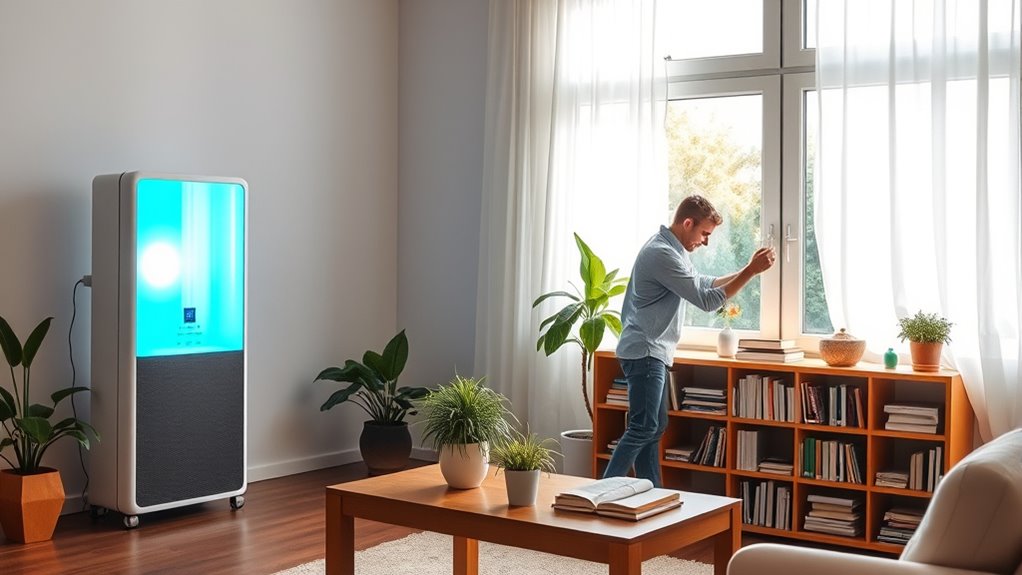
When it comes to improving indoor air quality, understanding the difference between source control and air cleaners is essential. Source control involves reducing or eliminating pollutants at their origin, while air cleaners focus on filtering contaminants already present in the air. Both strategies play a crucial role, but knowing how to implement them effectively can make a significant difference in your indoor environment.
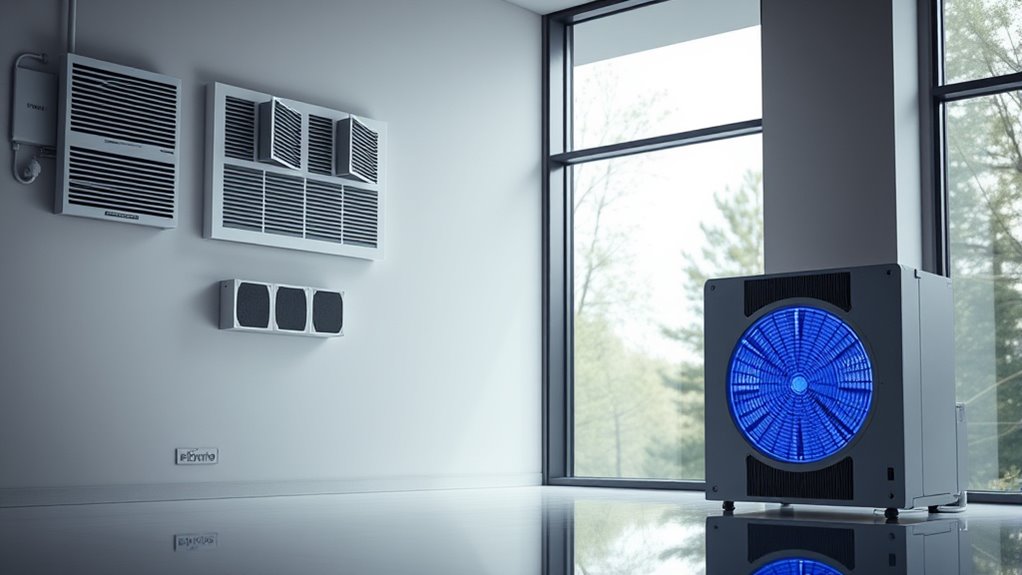
Ventilation strategies are a key aspect of source control. Proper ventilation helps to dilute indoor pollutants with outdoor air, lowering their concentration indoors. You should verify your home or workspace has adequate air exchange rates, using exhaust fans in kitchens and bathrooms to vent moisture and odors outside. Opening windows regularly can also improve airflow, especially when outdoor air quality is good. Mechanical ventilation systems with high-efficiency filters can further enhance air exchange, pulling in cleaner air and removing stale, contaminated air. These strategies prevent pollutants from accumulating, reducing the burden on air cleaners and improving overall IAQ.
Personal protective equipment (PPE) is another essential element, especially when dealing with specific sources of pollution like mold, dust, or hazardous chemicals. For example, wearing masks or respirators during cleaning or renovation projects helps prevent inhalation of fine particles and harmful substances. PPE acts as a barrier, protecting you from exposure when source control measures alone aren’t enough or during temporary interventions. Remember that PPE is a supplementary measure; it doesn’t address the root cause but helps safeguard your health during high-exposure activities.
While air cleaners, such as HEPA filters and air purifiers, are effective at capturing airborne pollutants, they are most successful when paired with source control and proper ventilation. Relying solely on air cleaners can be insufficient if source pollutants are continuously introduced or if ventilation isn’t adequate. For example, using an air purifier in a room with ongoing cigarette smoking or cooking fumes won’t eliminate the source—these pollutants will keep entering the air, overwhelming the filter. That’s why adjusting ventilation strategies to reduce pollutant sources and employing PPE during specific activities can make your air cleaner more effective.
Ultimately, a holistic approach combines source control, effective ventilation strategies, the use of PPE when necessary, and air cleaning devices. By tackling pollutants at their source, improving airflow, and protecting yourself during high-risk activities, you create a safer, healthier indoor environment. This integrated method ensures better IAQ and reduces potential health risks, making your indoor space more comfortable and safer for everyone.
Additional consideration of a comprehensive approach] can further enhance indoor air quality efforts by addressing multiple facets simultaneously.
Frequently Asked Questions
How Do Source Control Methods Impact Overall Indoor Air Quality?
Source control methods considerably improve your indoor air quality by reducing VOC emissions and odor issues at their source. When you limit pollutant release, you create a cleaner environment, making it easier to manage air quality. This proactive approach decreases the need for extensive air cleaning efforts, leading to better VOC reduction and odor mitigation. Ultimately, source control helps you breathe healthier air and maintains a fresher, more comfortable indoor space.
Can Air Cleaners Fully Replace Source Control Strategies?
Think of air cleaners as a band-aid, not a cure. They can’t fully replace source control strategies because occupant behavior and building design play vital roles. If you ignore controlling sources of pollution, air cleaners are overwhelmed, like trying to put out a fire with a water pistol. To truly improve IAQ, you need both effective source control and well-designed air cleaning systems working together, not just one or the other.
What Are the Maintenance Requirements for Effective Air Cleaners?
To keep your air cleaners effective, you need to regularly replace filters as recommended by the manufacturer, usually every 3 to 6 months. Additionally, you should perform routine system inspections to check for dirt buildup, proper operation, and any wear or damage. Regular maintenance guarantees peak filtration, prolongs the lifespan of the unit, and maintains good indoor air quality. Staying consistent with these tasks makes a noticeable difference.
How Do Different Pollutants Respond to Source Control Versus Air Cleaners?
Did you know that particulate pollutants are 60% more effectively removed by air cleaners than source control alone? You’ll find that source control, like reducing emissions, works best for chemicals that undergo chemical reactions in the air, while air cleaners excel at particulate removal. You respond by combining both strategies: source control reduces pollutants at their source, and air cleaners trap remaining particles, ensuring better indoor air quality for you.
Are There Cost Differences Between Implementing Source Control and Air Cleaning?
The cost comparison between source control and air cleaners varies. You’ll find that initial investment for source control can be higher due to modifications in building systems, but it often reduces ongoing expenses. Air cleaners typically have lower upfront costs but may require frequent replacements and maintenance. Consider your budget and long-term goals to decide whether the initial investment in source control or the ongoing costs of air cleaners better suit your needs.
Conclusion
When it comes to improving indoor air quality, remember that relying solely on air cleaners is like putting a band-aid on a bigger problem. Source control tackles the root cause, offering a more effective long-term solution. Combining both strategies gives you the best shot at clean, healthy air. Don’t put all your eggs in one basket—taking proactive steps now will save you headaches later and keep your indoor environment safe and breathable.