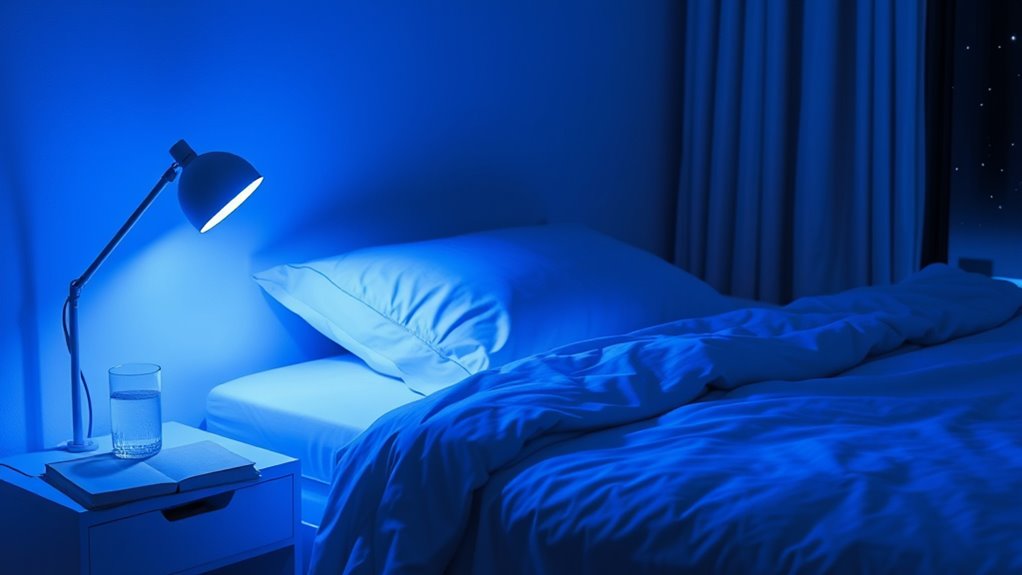

Bright, blue-toned lighting in your bedroom signals your body that it’s daytime, which suppresses melatonin production and disrupts your circadian rhythm. This makes it harder to fall asleep and affects sleep quality overall. Using warm, dim lighting can help your body produce more melatonin and prepare for restful sleep. If you want to learn how subtle changes to your bedroom hue can improve your rest, keep exploring these tips.
Key Takeaways
- Blue light from bedroom hues suppresses melatonin, delaying sleep onset and disrupting circadian rhythms.
- Warm, dim lighting mimics natural sunset, supporting melatonin production and promoting restful sleep.
- Bright or blue-toned lights interfere with melatonin levels, increasing sleep disturbances and restlessness.
- Choosing low-intensity, amber, or red lights helps maintain melatonin levels and enhances sleep quality.
- Proper bedroom hue aligns with the body’s internal clock, leading to improved sleep and overall health.

Have you ever felt a lingering sadness when the night light dims, leaving you alone with your thoughts? That feeling isn’t just in your mind; it’s closely tied to your body’s natural rhythms. Your sleep cycle and circadian rhythm work together to regulate when you feel alert and when you’re ready to rest. As night approaches, your body prepares for sleep by releasing melatonin, the hormone that signals it’s time to wind down. But the color and brightness of your bedroom light can influence this process more than you might realize.
Your bedroom lighting influences your body’s natural sleep rhythms and melatonin production.
When your bedroom is illuminated with harsh, bright white or blue lights, it can disrupt your circadian rhythm. These lights emit a high level of blue wavelength, which mimics daylight. This tricks your brain into thinking it’s still daytime, suppressing melatonin production. As a result, your sleep cycle gets thrown off, making it harder to fall asleep or stay asleep through the night. You might find yourself tossing and turning, feeling restless even when you’re physically exhausted. Over time, this disruption can lead to poor sleep quality, affecting your mood, concentration, and overall health.
On the other hand, softer, warmer hues—like amber or red lights—are less likely to interfere with your circadian rhythm. These colors emit lower levels of blue light and are closer to the natural glow of sunset. When you use dim, warm lighting in your bedroom, your brain receives signals that it’s time to wind down, allowing melatonin levels to rise naturally. This helps stabilize your sleep cycle, making it easier to fall asleep quickly and enjoy deeper, more restorative rest. It’s a simple change that can have a profound impact on your sleep quality.
Understanding the relationship between bedroom hue and melatonin isn’t just about aesthetics; it’s about aligning your environment with your body’s internal clock. If you want to improve your sleep, pay attention to the lighting you use at night. Opt for low-intensity, warm-colored bulbs in your bedroom to support your circadian rhythm. Avoid bright, blue-lit screens and overhead lights close to bedtime. Instead, create a calming atmosphere that encourages melatonin production and helps your sleep cycle stay on track. Incorporating mindfulness techniques like deep breathing or visualization can further enhance your relaxation and sleep quality.
In the end, your choice of bedroom hue isn’t just about style—it’s about nurturing your body’s natural rhythm. By making small adjustments to your lighting, you can enhance your sleep, boost your mood, and wake up feeling refreshed and ready for the day.

TORANKOS 2 Pack Very Dim Sleep Night Lights Plug into wall, Kids Sleep Light, Adult Sleep Light, Bedroom Night Light, Light Sensor, LED, Dimmable, Warm Soft Light Plug in Night Light
- Healthy Sleep Light: Back-positioned, zero-blue-light LED
- Multiple Color Options: Cold white, warm white, natural light
- Dimmable Brightness: Five adjustable brightness levels
As an affiliate, we earn on qualifying purchases.
As an affiliate, we earn on qualifying purchases.
Frequently Asked Questions
Does Natural Moonlight Influence Melatonin Levels?
You might wonder if natural moonlight influences melatonin levels. Moonlight exposure, especially during clear, full moon nights, can introduce low levels of nighttime luminance that subtly impact your body’s melatonin production. Although it’s less intense than artificial light, this natural luminance can still affect your sleep cycle by signaling your brain that it’s not fully dark. So, even gentle moonlight might play a part in regulating your sleep hormones.
Can Colored Light Therapy Improve Sleep Quality?
Imagine transforming your sleep space and revealing better rest—could colored light therapy be the key? By adjusting the light spectrum in your bedroom, you might influence your sleep patterns positively. Studies suggest certain hues can promote relaxation or alertness, helping you fall asleep faster and enjoy deeper sleep. Don’t underestimate the power of light; it could be your secret weapon for improving sleep quality naturally.
Are There Specific Bedroom Colors That Promote Melatonin Production?
You can enhance your sleep environment by choosing bedroom colors that promote melatonin production, based on color psychology. Soft, muted shades like blue and green are known to encourage relaxation and improve sleep quality. Avoid bright or harsh colors, which can disrupt your melatonin levels. Creating a calming sleep environment with these hues helps your body naturally produce melatonin, making it easier to fall asleep and stay asleep longer.
How Does Screen Time Before Bed Impact Melatonin?
Imagine you’re scrolling through your phone before bed; that blue light exposure can considerably impact you. Blue light suppresses melatonin, making it harder to fall asleep. Studies show that screen time before bed delays melatonin production, disrupting your sleep cycle. To improve sleep quality, try limiting screen use an hour before bed or use blue light filters. This simple change helps your body produce melatonin naturally, promoting better rest.
Do Age-Related Changes Affect Sensitivity to Bedroom Lighting?
As you age, your age-related vision changes can make you more sensitive to bedroom lighting, affecting your sleep pattern shifts. You might find brighter lights or certain hues disturb your sleep more than they did when you were younger. Adjusting your bedroom lighting to softer, warmer tones can help mitigate this sensitivity, promoting better melatonin production and improving your overall sleep quality.
Conclusion
You might be surprised to learn that exposure to blue light before bed can reduce melatonin production by up to 23%. This means your favorite bedroom hue could be quietly sabotaging your sleep. By choosing warmer, dimmer lighting in your room, you support natural melatonin levels and improve your rest. Don’t underestimate the power of your bedroom’s color and light choices—they play a bigger role in your sleep quality than you might think.