
Pressure cooking applies physics principles to cook meals faster by creating a sealed environment where steam builds pressure. This increased pressure raises the boiling point of water above 212°F, allowing food to reach higher temperatures quickly. The dense, high-pressure steam evenly transfers heat, breaking down tough fibers efficiently. This vapor power accelerates cooking times markedly without sacrificing flavor. If you want to discover how physics makes your meals quicker, there’s more to explore below.
Key Takeaways
- Sealed lids trap steam, increasing pressure and elevating internal temperatures for faster cooking.
- Higher pressure raises water’s boiling point above 212°F, speeding up food breakdown.
- Pressure regulators maintain safe, consistent pressure levels, optimizing heat transfer.
- Denser steam exerts force on food, enhancing heat transfer and reducing cooking times.
- Vapor power and physics principles enable quick, efficient cooking without sacrificing flavor.
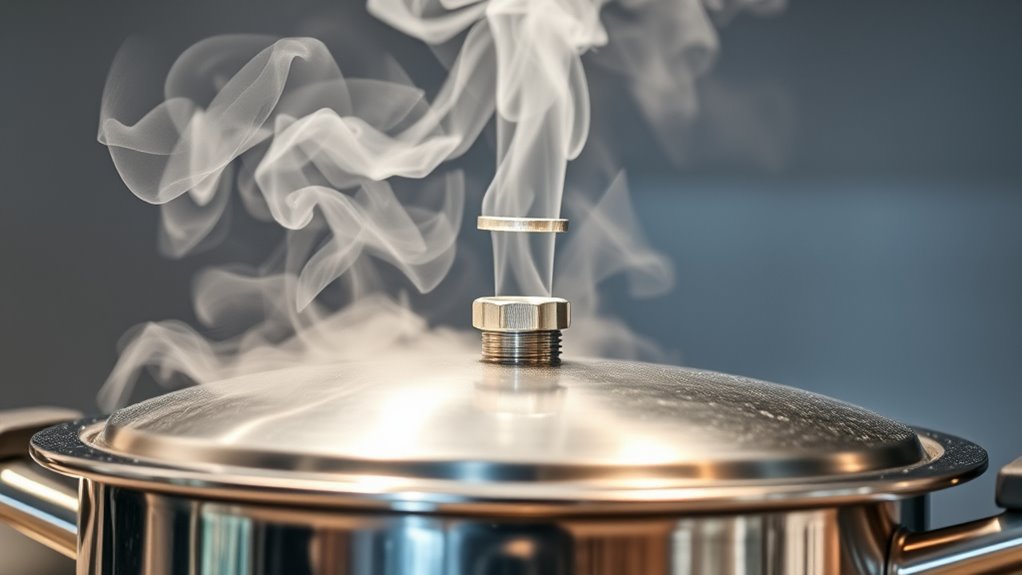
Pressure cooking relies on the principles of physics to greatly reduce cooking times. When you seal the lid, you create a confined environment where steam dynamics play a vital role. As heat is applied, water inside the pot heats up and begins to produce steam. Because the lid is locked tight, this steam cannot escape easily, causing pressure to build. This increase in pressure directly influences the temperature regulation within the cooker, allowing it to reach temperatures higher than boiling water’s standard 212°F (100°C). Instead of cooking at normal boiling temperatures, your food is exposed to higher heat levels, which accelerates the breakdown of tough fibers and speeds up the cooking process overall. Understanding pressure regulation is essential to optimizing cooking times and safety.
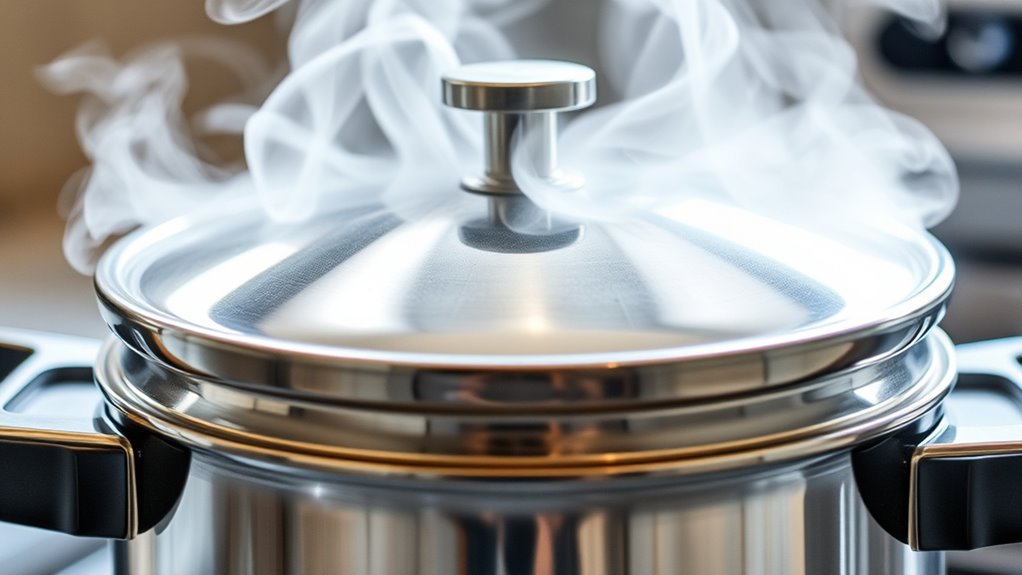
Understanding steam dynamics is key to grasping why pressure cookers work so efficiently. When pressure rises, the steam inside the vessel becomes denser and exerts more force on the pot’s walls and on the food itself. This high-pressure environment causes the boiling point of water to rise beyond 212°F, regardless of altitude. As a result, heat transfer occurs more rapidly. You’ll notice that foods like stews, beans, and tough cuts of meat become tender in a fraction of the time it would take using conventional methods. The rapid movement of steam molecules within the sealed environment also helps evenly transfer heat, ensuring consistent cooking throughout your ingredients.
Temperature regulation in pressure cooking is a finely tuned process. The pressure regulator on your cooker maintains a specific pressure level, often around 15 psi (pounds per square inch), which corresponds to a set temperature—usually about 250°F (121°C). When the temperature or pressure exceeds this level, the regulator releases excess steam, preventing dangerous over-pressurization. Conversely, if the pressure drops, the heat source adjusts to maintain the ideal temperature for cooking. This delicate balance means you don’t need to constantly monitor your cooker; it self-regulates to keep the conditions perfect for rapid, efficient cooking. By understanding and trusting this process, you’ll realize how pressure cookers leverage physics—specifically steam dynamics and temperature regulation—to cut down your meal prep time considerably.
In essence, your pressure cooker isn’t just a simple pot with a lid; it’s a physics-powered tool that harnesses the properties of steam and temperature control. This combination allows you to cook meals faster without sacrificing flavor or texture. Instead of waiting hours for a stew to become tender, you can have it ready in under an hour, thanks to the science of vapor power. Once you grasp these principles, you’ll appreciate how pressure cooking turns basic physics into a practical, time-saving culinary technique.
Frequently Asked Questions
How Does Altitude Affect Pressure Cooker Performance?
Altitude impacts your pressure cooker’s performance because higher elevations lower the boiling point of water. You need to make an altitude adjustment by increasing the pressure to reach the proper boiling point, ensuring food cooks thoroughly. Without this adjustment, your meals may take longer or not cook properly. So, remember to adjust your pressure settings based on your altitude to maintain peak cooking conditions and achieve the best results.
What Materials Are Best for Durable Pressure Cooker Construction?
Material matters matter most when it comes to durable pressure cooker construction. You want construction materials that combine corrosion resistance, heat conduction, and toughness. Stainless steel tops the list, offering superior strength and durability without rusting or warping. Aluminum is lightweight and conducts heat well but isn’t as resilient. For longevity, opt for stainless steel, which withstands wear and tear, ensuring your cooker remains a reliable kitchen companion through countless culinary creations.
Can Pressure Cooking Be Safely Used for Canning?
You can safely use pressure cooking for canning if you follow proper canning safety and sterilization techniques. It’s essential to use a pressure canner, not just a pressure cooker, as it maintains the correct temperature and pressure for safe preservation. Always follow tested recipes and guidelines to guarantee sterilization and prevent foodborne illnesses. Properly processed jars will have a secure seal, indicating safe preservation.
How Does Vapor Pressure Influence Cooking Times?
Vapor pressure directly impacts your cooking times by raising the boiling point of water. When steam pressure increases inside your pressure cooker, it elevates the boiling point above 212°F, allowing foods to cook faster. The higher the steam pressure, the quicker your meal cooks, because the elevated boiling point accelerates heat transfer. So, controlling vapor pressure is key to speeding up cooking while ensuring safety and perfect results.
What Are Common Safety Features in Modern Pressure Cookers?
Modern pressure cookers include essential safety features like pressure release mechanisms and safety valves. These components automatically vent excess vapor if pressure gets too high, preventing explosions. You should always verify these safety valves are clean and functioning properly before use. When the pressure cooker reaches the correct pressure, the safety valve releases vapor to maintain safe levels, allowing you to cook efficiently and safely without worrying about dangerous pressure build-up.
Conclusion
Think of pressure cooking as your trusty ship sailing through stormy seas. With vapor as your wind, you harness its power to cut through time and transform tough ingredients into tender treasures. By mastering this physics, you become the captain of your culinary journey, steering swiftly toward delicious destinations. Embrace the steam’s force, and watch how it turns ordinary meals into extraordinary experiences—proof that with a little science, you hold the key to faster, flavorful feasts.