
You should always prioritize grip when choosing hallway runners because safety comes first. Non-slip technology and proper backing help prevent slips and falls, especially in busy areas. Durable materials ensure your runner lasts longer, withstands foot traffic, and stays safe over time. While style matters, it shouldn’t come at the expense of security or stability. If you keep exploring, you’ll discover more about selecting the safest and most effective runners for your space.

Get decor and gifts delivered free with Prime
- Fast, free delivery on millions of items
- Prime Video, Amazon Music and more included
- Member-only deals all year
Key Takeaways
- Prioritizing grip ensures safety by preventing slips and falls in high-traffic hallway areas.
- Non-slip backing and surface treatments enhance traction on various flooring types.
- Durable materials like nylon and polypropylene maintain grip and longevity under constant foot traffic.
- Proper installation with appropriate adhesives secures the runner and maintains its grip over time.
- Regular maintenance, including vacuuming and spot cleaning, preserves non-slip features and overall safety.

When choosing a hallway runner, prioritizing grip over style guarantees safety and durability. You want a runner that stays firmly in place, preventing slips and falls, especially in high-traffic areas or homes with children and elderly residents. Modern non-slip technology plays an essential role here. Many runners now feature specialized backing or surface treatments designed to enhance traction on various floor types, from hardwood to tile. This non-slip technology ensures that your runner won’t shift or bunch up underfoot, giving you peace of mind every time you walk across it. Additionally, understanding non-slip backing can help you select the most effective option for your specific flooring needs. Material durability is another key factor you should consider. A hallway sees constant foot traffic, so your runner needs to withstand wear and tear without fraying or deteriorating quickly. Look for materials that are tough yet maintain a soft surface underfoot. Synthetic fibers like nylon or polypropylene are popular because they combine resilience with ease of cleaning. Natural fibers such as wool are also durable and can add a touch of luxury, but they might require more maintenance. The durability of the material directly impacts the longevity of your runner, saving you money and effort in the long run. Proper installation is crucial to ensure the non-slip features perform as intended and to prevent potential accidents. Even the best non-slip technology can be compromised if the runner isn’t installed correctly. Ensuring proper adhesion can significantly improve safety and stability. Utilizing **proper installation techniques**, including selecting the right adhesive or tape, can further enhance grip and prevent shifting. Proper installation maximizes grip and prevents dangerous bunching or shifting. Regular maintenance, like vacuuming and spot cleaning, also helps preserve the material’s integrity, keeping your hallway safe and looking good for years.
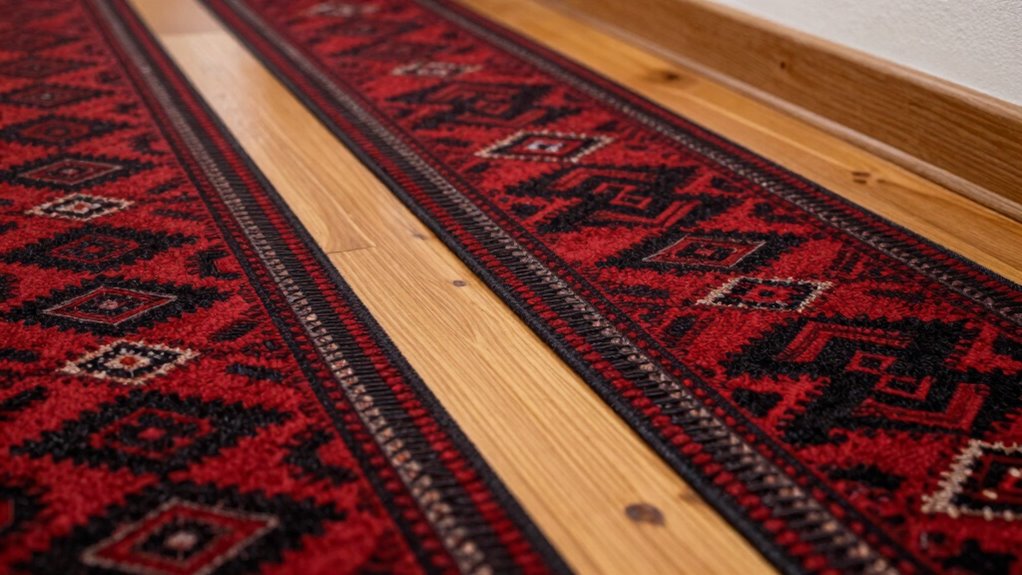
non-slip hallway runner with rubber backing
As an affiliate, we earn on qualifying purchases.
As an affiliate, we earn on qualifying purchases.
Frequently Asked Questions
What Are the Best Materials for Hallway Runner Grip?
The best materials for hallway runner grip are rubber and latex-backed fabrics. These runner materials offer excellent grip enhancement, preventing slips on smooth or polished floors. Look for rugs with non-slip latex or rubber backing, as they stay securely in place. Avoid slick materials like silk or thin polyester, which lack traction. Prioritizing these grip-enhancing materials guarantees safety and stability while walking through your hallway.
How Often Should I Replace My Hallway Runner?
Think of your hallway runner as a vibrant tapestry that guides your steps; when it starts to fade or fray, it’s time to replace it. Typically, you should swap out your runner every 3-5 years, especially if it shows signs of wear. Consider your decorative patterns and runner length—if they no longer match your style or space, it’s a clear sign to refresh. Keep your hallway lively and safe.
Can I Use Rugs on Hardwood Floors Without Slipping?
Yes, you can use rugs on hardwood floors without slipping by choosing ones with non-slip backing or adding a rug pad. Look for decorative patterns and color coordination to match your decor, ensuring the rug complements your space. This not only provides safety but also enhances style. Regularly check the rug’s grip and replace or reposition it as needed to maintain both safety and aesthetic appeal.
Are There Non-Slip Adhesives for Hallway Runners?
Yes, you can find non-slip adhesives for hallway runners that keep your stylish decor secure. These adhesives come with a variety of decorative patterns and color options, allowing you to match your runner’s look while ensuring safety. Applying them is straightforward, and they help prevent slips without compromising your design. With these adhesives, you get peace of mind and a beautiful, secure hallway that feels just right.
How Do I Clean and Maintain Grip on My Runner?
To clean and maintain grip on your runner, start by vacuuming regularly to remove dirt and debris. Use a mild detergent for seasonal cleaning, making sure you don’t oversaturate the rug. Check the non-slip backing and replace or refresh it if it wears out. For designer patterns, avoid harsh chemicals that could damage the design. Keeping your runner clean and the grip intact ensures safety and preserves its stylish appearance year-round.
Conclusion
When choosing hallway runners, prioritize grip to prevent slips, prioritize safety to protect your home, and prioritize comfort to make every step easier. Focus on durability to guarantee longevity, focus on style to match your decor, and focus on ease of cleaning to keep your space fresh. By balancing safety and style, grip and design, you create a space that’s secure, stylish, and inviting—because your hallway deserves more than just good looks; it needs good footing too.
Halloween Picks
halloween
As an affiliate, we earn on qualifying purchases.