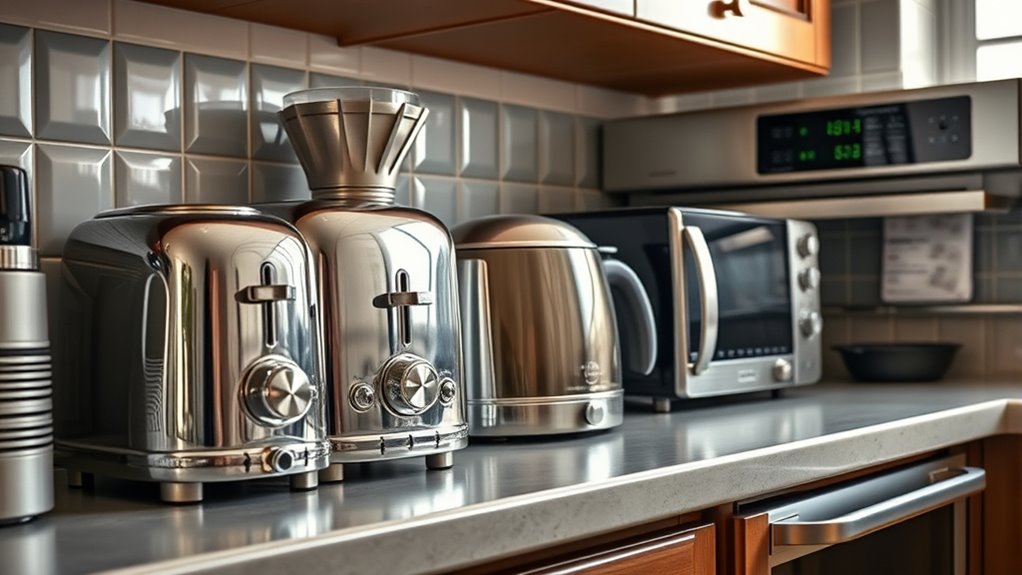

Home appliances have evolved from simple electric toasters to smart, AI-enabled ovens that communicate and adapt to your needs. Early innovations like washing machines and refrigerators revolutionized chores, and now, connected devices optimize energy use and performance. Modern appliances can be controlled remotely and learn your habits over time. This progress reflects a broader shift toward automation and smarter living. Stay with us to discover how these advancements continue shaping everyday convenience and sustainability.

Get decor and gifts delivered free — and shop member deals
- Fast, free delivery on millions of items
- Access to Prime Big Deal Days deals on October 6–7
- Prime Video, Amazon Music and more included
Key Takeaways
- Early home appliances like toasters and washing machines revolutionized household chores in the 20th century.
- The introduction of electricity enabled the development of more advanced, electric-powered appliances.
- Transition from mechanical to electronic and digital systems led to smarter, more efficient devices.
- Modern appliances now incorporate AI, connectivity, and sensors for automation and energy optimization.
- Ongoing innovations continue to enhance appliance intelligence, sustainability, and integration within smart homes.
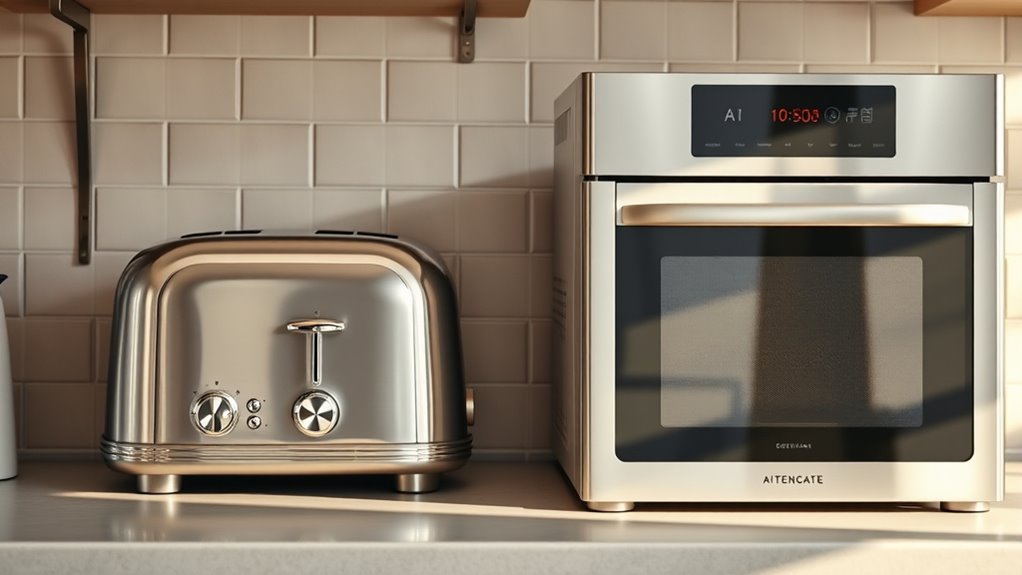
Have you ever wondered how modern home appliances came to be? It’s fascinating to see how they’ve evolved from simple mechanical devices to intelligent systems that integrate seamlessly into our daily lives. Today, many homes are turning into smart homes, where appliances don’t just perform basic functions but also communicate, adapt, and optimize their performance. This shift has markedly improved energy efficiency, allowing homeowners to reduce waste and lower utility bills. The journey from early electric appliances to AI-powered ovens reflects a broader trend toward automation and smarter living.
Modern appliances have evolved from simple devices to smart systems that communicate and adapt seamlessly.
In the early days, appliances like toasters, washing machines, and refrigerators revolutionized household chores. They replaced manual labor and made daily routines faster and more convenient. As electricity became more accessible in the 20th century, manufacturers raced to develop devices that could harness this new power source. These innovations laid the foundation for what would become the smart home revolution. Today, the integration of smart home technology means appliances can be controlled remotely via smartphones or voice commands, adding convenience and efficiency. Modern refrigerators can track food inventory and suggest shopping lists, while smart thermostats optimize heating and cooling to save energy.
Energy efficiency has become a key focus in appliance design. Older models consumed more power and often wasted energy, but recent advancements aim to minimize environmental impact. Energy-efficient appliances now feature better insulation, intelligent sensors, and adaptive settings that adjust operation based on real-time needs. For instance, smart washing machines can detect load size and soil level, adjusting water and energy use accordingly. This not only conserves resources but also reduces household costs. As your home becomes smarter, these appliances work together to create an ecosystem that’s both sustainable and cost-effective. The development of smart sensors in appliances has further accelerated this trend by enabling more precise control and energy savings.
The evolution of home appliances from basic electric devices to sophisticated, AI-enabled systems shows how technology continuously enhances our living spaces. Today’s smart home appliances don’t just perform tasks; they learn from your habits, optimize their functions, and contribute to a greener, more energy-efficient lifestyle. You’re no longer bound by manual controls or inefficient settings; instead, you enjoy a connected environment where appliances anticipate your needs and adapt accordingly. This progress underscores the importance of ongoing innovation in making homes more comfortable, efficient, and aligned with modern sustainability goals. As technology advances, expect even more intelligent appliances that will further streamline your daily routines while helping you live more sustainably.
Frequently Asked Questions
How Have Home Appliances Impacted Daily Household Routines?
Home appliances have transformed your daily routines by boosting energy efficiency and user convenience. They save you time and effort, allowing you to focus on other tasks. Modern appliances adapt to your needs, making chores easier and faster. With innovations like smart controls and energy-saving features, you enjoy more efficient, effortless household management, giving you greater comfort and control over your environment every day.
What Are the Environmental Effects of Evolving Home Appliances?
Imagine a world where your smart fridge is powered by AI, but it also increases energy consumption. Today’s evolving home appliances can boost efficiency but often contribute to e-waste if not properly recycled. You need to contemplate their environmental effects, like higher energy use and waste management challenges, to make eco-friendly choices. Staying aware helps reduce your carbon footprint and encourages sustainable appliance innovations.
Which Companies Led the Innovation in Home Appliance Technology?
You’ll find that companies like Samsung, LG, and Whirlpool have led the way in home appliance innovation. They focus on smart connectivity, enabling you to control devices remotely, and prioritize energy efficiency to reduce your environmental impact. These brands continuously develop smarter, more sustainable appliances, making your home more convenient and eco-friendly. Their innovations keep you connected and help you save energy, shaping the future of home living.
How Do Modern Appliances Ensure User Safety and Privacy?
Sure, your smart fridge isn’t secretly spying on your midnight snack runs, but it does use smart sensors and data encryption to keep you safe. Modern appliances prioritize user safety by detecting hazards and preventing mishaps. Privacy-wise, they encrypt data to thwart sneaky hackers. So, relax—your appliances are more vigilant than your nosy neighbor, safeguarding your home while you just try to enjoy a toast without a side of paranoia.
What Future Trends Are Expected in Home Appliance Development?
You’ll see even smarter home appliances that integrate seamlessly into your smart home, offering enhanced energy efficiency and personalized control. Future trends include AI-powered systems that learn your routines, optimizing energy use and reducing waste. Expect appliances to communicate more with each other, providing greater convenience and sustainability. These advancements will make your home more efficient, eco-friendly, and intuitive, transforming everyday living with innovative technology that adapts to your needs.
Conclusion
As you look back at home appliances’ evolution, it’s remarkable how far we’ve come—from simple electric toasters to sophisticated AI ovens. Did you know that the smart appliance market is expected to grow by over 20% annually? This shows how technology keeps transforming our kitchens, making cooking more convenient and efficient. So, next time you use your device, remember you’re part of a long, exciting history of innovation that continues to shape our daily lives.
Fall Picks
fall essentials
As an affiliate, we earn on qualifying purchases.