
To control allergens and improve comfort, use an air purifier with a HEPA filter in main living areas and regularly replace the filters. Combine this with allergen-proof bedding like tightly woven mattress and pillow covers, washing your bedding weekly in hot water. Keep your environment clean by vacuuming with a HEPA filter vacuum, reducing dust and pet dander. This combined approach can markedly ease allergy symptoms and create a healthier indoor space—more tips for a allergy-friendly home await you.
Key Takeaways
- Use HEPA air purifiers in main living areas to trap airborne allergens like pollen and dust mites.
- Encase mattresses and pillows with allergen-proof covers to block dust mites and microscopic particles.
- Wash bedding weekly in hot water (≥130°F) to reduce allergen buildup.
- Maintain a clean environment by vacuuming with a HEPA-filter vacuum and dusting regularly.
- Combine air purification with allergen-proof bedding for a comprehensive approach to allergy relief.
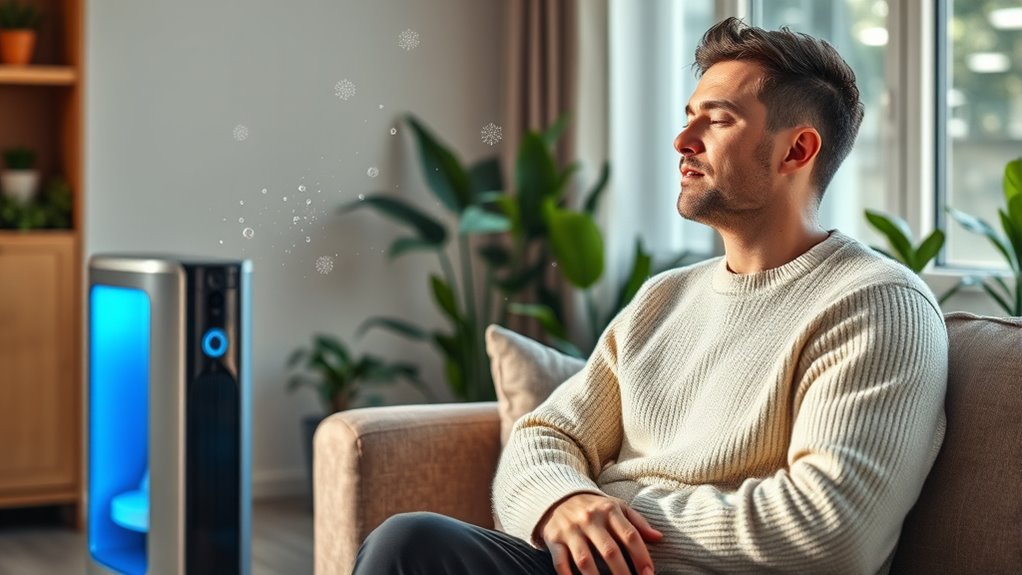
If you suffer from allergies, controlling allergens in your environment is essential for comfort and well-being. One effective way to do this is by investing in air purifier technology. Modern air purifiers use HEPA filters to trap tiny particles like pollen, pet dander, and dust mites, preventing them from circulating in your indoor air. When turned on regularly, an air purifier can markedly reduce airborne allergens, making breathing easier and reducing allergy symptoms. Positioning the purifier in common areas like the bedroom or living room maximizes its benefits, especially during peak allergy seasons. Remember to choose a purifier designed for your space size and replace filters as recommended to maintain peak performance.
Alongside air purifier technology, allergen proof bedding plays a vital role in minimizing respiratory irritants. Allergens like dust mites thrive in bedding, which can be a persistent source of allergens even when you’re not aware. Using allergen proof mattress and pillow covers creates a barrier that prevents dust mites and other microscopic irritants from penetrating your bedding. These covers are typically tightly woven, making it difficult for allergens to pass through. Washing your bedding weekly in hot water (at least 130°F or 54°C) further reduces allergen buildup and keeps dust mites at bay. Opting for hypoallergenic pillows and quilts also helps minimize exposure to potential irritants while providing a comfortable sleep environment. Regular cleaning of your bedroom, including dusting and vacuuming with a HEPA-filter vacuum, supports allergen reduction efforts.
Combining air purifier technology with allergen proof bedding creates a complete approach to allergen control. It’s about reducing airborne particles and limiting the allergens that settle into your bedding and surroundings. This dual strategy can lead to noticeable improvements in allergy symptoms, especially if you’re sensitive to dust mites or pollen. Additionally, maintaining a clean and dust-free environment supports your efforts—vacuuming with a HEPA-filter vacuum cleaner, avoiding heavy drapes, and reducing clutter all help prevent allergen accumulation. Implementing air filtration solutions as part of your routine can further enhance indoor air quality and allergen reduction.
Frequently Asked Questions
How Often Should Air Filters Be Replaced for Optimal Allergen Control?
You should replace your air filters every 30 to 60 days for maximum allergen control. The filter lifespan depends on factors like household size, pets, and air quality, so adjusting your replacement schedule accordingly helps maintain a clean indoor environment. Regularly checking your filters ensures they don’t become clogged, which can reduce their effectiveness and worsen respiratory irritants. Stay on top of your replacement schedule for healthier, cleaner air.
Are Certain Household Plants Better Than Others for Reducing Allergens?
Certain household plants can improve indoor air quality and help reduce allergens, but some are better choices. Plants like snake plants, pothos, and spider plants are known for filtering airborne toxins and irritants effectively. When selecting plants for allergen control, consider low-maintenance varieties that don’t release pollen or strong scents. Proper plant care also guarantees they remain healthy and continue to support a cleaner, more comfortable indoor environment.
Can Pet Grooming Reduce Airborne Allergens Effectively?
Sure, pet grooming does wonders—if your goal is to keep airborne allergens like pet dander from taking over your airspace. Regular grooming reduces dander, which is the main culprit behind allergy flare-ups. Think of it as your pet’s spa day, but for allergy control. The grooming benefits extend beyond shiny coats; they also help keep your indoor air cleaner and your respiratory system happier.
What Is the Best Humidity Level to Minimize Respiratory Irritants?
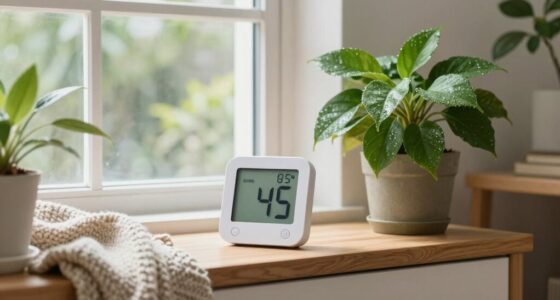
You should aim for a humidity level between 40% and 50% to effectively minimize respiratory irritants. Proper humidity control helps reduce airborne irritants like dust mites and mold spores, making the air easier to breathe. Maintaining this range creates a comfortable environment, discourages mold growth, and lessens irritation. Regularly monitor humidity levels with a hygrometer to guarantee ideal irritant reduction and improved respiratory comfort in your space.
Do Allergen-Proof Bedding Covers Really Make a Difference?
Yes, allergen-proof bedding and dust mite barriers really make a difference. They create a physical barrier that prevents dust mites, pet dander, and other irritants from reaching your skin and breathing zone. By sealing off common sources of allergens, these covers reduce allergy symptoms and improve your comfort, especially if you have sensitivities or asthma. Investing in high-quality allergen-proof bedding can profoundly enhance your sleep quality and respiratory health.
Conclusion
By taking simple steps to control allergens, you can create a more comfortable, irritation-free environment. Remember, airborne allergens like dust mites and pet dander can be as small as 10 microns—about one-tenth the width of a human hair—yet they can cause big breathing problems. With consistent cleaning and good ventilation, you’ll considerably reduce these tiny irritants, making your home a healthier, more comfortable space for everyone.