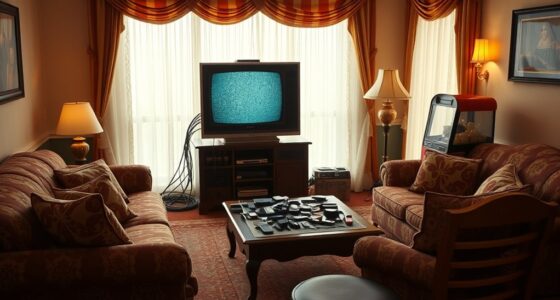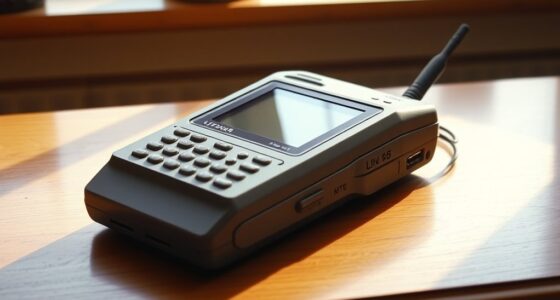
In the 1980s, home automation shifted with the arrival of the X10 protocol, allowing you to control devices remotely over existing electrical wiring. Wireless options like infrared signals and power line communication made automation more practical and easier to use. You could operate lighting and appliances with simple switches or early remote controls, making smart homes more accessible. If you want to know how these innovations laid the groundwork for today’s smart homes, keep exploring.
Key Takeaways
- The X10 protocol enabled remote control of home devices over existing electrical wiring during the 1980s.
- Wireless technologies like infrared signals and power line communication made automation more accessible.
- Simple handheld remotes and wall switches provided basic user interfaces for controlling automated appliances.
- Early home automation focused on practicality, allowing homeowners to experiment without extensive technical knowledge.
- These innovations laid the foundation for modern smart home systems and demonstrated the potential of remote automation.
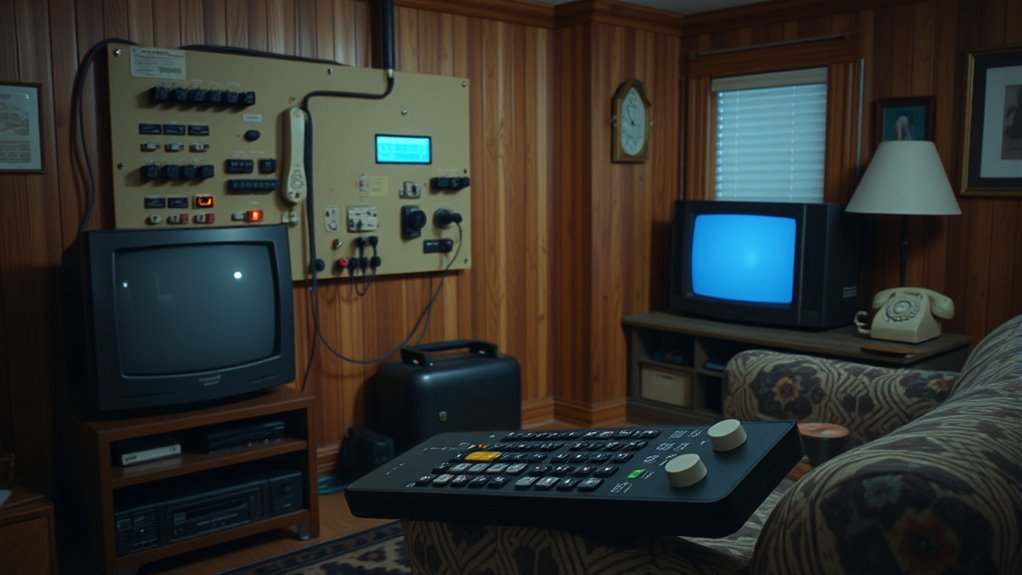
During the 1980s, home automation was beginning to move from science fiction into reality, sparking the imaginations of homeowners and engineers alike. At its core, this era marked the early stages of connecting everyday appliances to make home management more convenient. You might not realize it, but the foundation of modern smart homes was being laid during this decade, primarily through innovations like the X10 protocol. This technology enabled devices to communicate over existing electrical wiring, creating a network that could be controlled remotely. As a user, you could imagine turning on your living room lights or controlling your appliances with a simple command, even if those commands came from a basic remote or a wall switch.
Home automation in the 1980s used protocols like X10 over existing wiring for remote control.
Wireless protocols played a vital role during this period, even though they were still in their infancy. Unlike today’s Wi-Fi or Bluetooth, the protocols used in the 1980s relied heavily on power line communication, like X10, or on infrared signals for remote controls. These protocols allowed devices to interact without requiring complex wiring or setup, making home automation more accessible and less intrusive. However, they weren’t always perfect—interference and limited range sometimes hampered their reliability. Still, these protocols laid the groundwork for more sophisticated wireless communication methods that would come later, demonstrating the potential of remote control and automation. Additionally, the development of wireless communication protocols during this decade further contributed to the evolution of remote controls and home automation systems.
User interfaces in the 1980s were often simple but functional. You might have used a basic handheld remote, equipped with just a handful of buttons, to turn lights on or off or activate appliances. Wall-mounted switches also played a significant role, giving you manual control over automated devices. These interfaces were straightforward, designed to be easy to understand and operate, even if they lacked the sleekness or sophistication of today’s touchscreens. Despite their simplicity, they offered a glimpse into a future where controlling your home could be as easy as pressing a button or flipping a switch.
As you consider this era’s technological landscape, it’s clear that the focus was on making home automation practical and accessible. The combination of emerging wireless protocols and user-friendly interfaces meant that homeowners could start experimenting with automation without needing extensive technical knowledge. While these early systems had their limitations, they proved that remote control and automation were feasible concepts, setting the stage for rapid advancements in technology. This period truly marked the birth of modern home automation, transforming homes from static spaces into dynamic, controllable environments, one device at a time.
Frequently Asked Questions
How Did X10 Compare to Modern Smart Home Systems?
Modern smart home systems outshine X10 by offering wireless convenience and seamless user customization. You can control devices remotely via smartphone apps, unlike X10’s wired and limited setup. Today’s systems enable personalized automation, voice commands, and integration with various gadgets, giving you more flexibility and ease. While X10 laid the foundation, contemporary technology provides a smarter, more intuitive experience, making home automation simpler and more tailored to your lifestyle.
Were There Security Concerns With Early Home Automation?
You might not realize it, but early home automation raised security concerns. Privacy risks existed because these systems often lacked robust encryption, making them vulnerable to unauthorized access. Without proper safeguards, malicious individuals could potentially control devices or eavesdrop on your activities. While technology has improved, understanding these past vulnerabilities helps you appreciate the importance of modern security measures in today’s smart homes.
What Were the Main Technical Limitations of 1980S Systems?
You’d find that 1980s home automation systems faced significant technical limitations. Signal interference was common, disrupting communication between devices and causing unreliable operation. Additionally, limited scalability meant you couldn’t easily expand these systems as your needs grew, restricting functionality. These challenges made it difficult to rely on early automation, prompting users to seek more advanced solutions as technology improved.
How Did Consumers Initially React to X10 Technology?
You’d find that initially, many consumers were skeptical about X10 technology, with surveys showing only 20% trusting its reliability. Despite this, a wave of technological enthusiasm pushed some early adopters to experiment with home automation. However, widespread skepticism persisted, as people doubted whether these remote controls could truly simplify their lives. Over time, persistent marketing and improvements gradually shifted opinions, encouraging more households to embrace automation.
Did Early Home Automation Influence Today’S Iot Devices?
You can see that early home automation laid the groundwork for today’s IoT devices. It influenced legacy integration, making smart devices more compatible across platforms. User adoption grew as technology improved, encouraging more innovation. The innovations from that era created a foundation that shaped modern smart homes, making automation more accessible and seamless for consumers like you.
Conclusion
By the end of the 1980s, X10 technology had transformed homes, with over 10 million units sold worldwide. Imagine controlling your entire house with just a few clicks—lights, appliances, even curtains—all from a remote. This innovation marked the dawn of modern home automation, making everyday tasks more convenient and paving the way for today’s smart homes. You can see how those early gadgets set the stage for a future where technology seamlessly integrates into your life.