To prevent floods, you need to set up your basement dehumidifier pump correctly. Make sure the drain line is secure, free of kinks, and slopes downward for proper flow. Position the pump on a stable surface with easy access for maintenance. Regularly check for clogs and leaks to keep it working efficiently. Proper setup and upkeep help you keep moisture under control and avoid costly water damage—keep exploring for detailed tips.
Key Takeaways
- Connect the pump to a secure, unobstructed drain line that exits outside or into a drainage system.
- Ensure the drain line is properly sloped downward to enable gravity-assisted water flow.
- Regularly inspect and clean the pump and drain line to prevent clogs and blockages.
- Position the pump on a level, stable surface for reliable operation and easy maintenance access.
- Incorporate backup power or alarms to alert you of pump failure and prevent potential flooding.
If you’re dealing with excess moisture in your basement, a dehumidifier pump can be a game-changer. It effectively manages moisture control by automatically removing water collected by your dehumidifier and directing it away from your home. Without a proper drain setup, that water can accumulate, risking flooding or mold growth. A reliable pump ensures continuous operation, so you don’t have to worry about emptying buckets or dealing with water backups. It’s a simple yet vital component for maintaining a dry, healthy basement environment. Incorporating proper electrical connections is essential to ensure safety and reliable pump performance.
A dehumidifier pump keeps your basement dry by automatically removing and draining excess moisture.
To get the most out of your dehumidifier pump, regular pump maintenance is essential. You should routinely check that the pump is functioning correctly, inspecting for clogs, leaks, or any buildup that might hinder its performance. Clean the pump’s intake and outlet to prevent debris from causing blockages. Also, verify that the power connections are secure and that the pump’s float switch—if equipped—is moving freely. Proper maintenance not only extends the lifespan of your pump but also guarantees consistent moisture control, preventing unexpected failures that could lead to water damage.
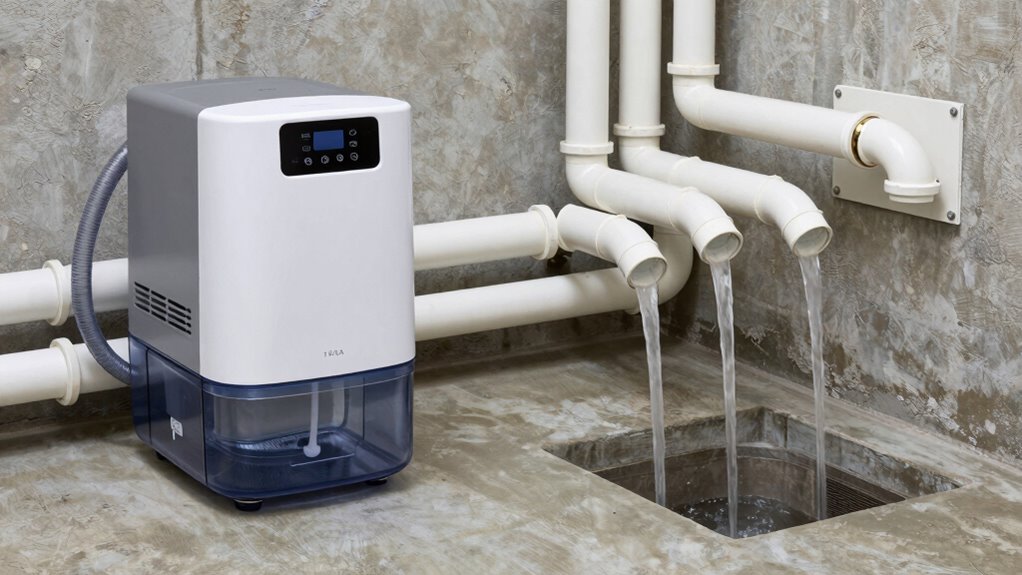
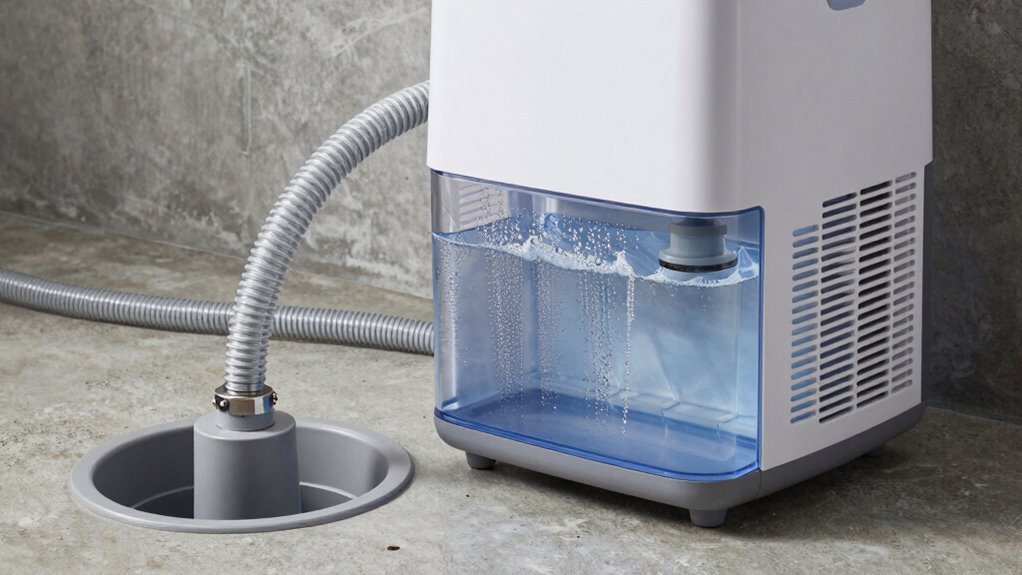
Setting up the drain correctly is another key aspect of preventing basement floods. Ensure the pump is connected to a drain line that terminates outside your home or into a suitable drainage system. The drain line should be secure, clear of kinks, and positioned at an appropriate height to allow gravity to assist drainage. If your area experiences power outages or pump malfunctions, consider installing a backup power source or an alarm system that alerts you to pump failure. This way, you’re alerted immediately if the drain stops working, giving you time to take action before water accumulates.
You also want to think about the placement of the pump itself. Position it on a level surface or a stable platform, ensuring it’s not at risk of tipping or becoming submerged. The location should be accessible for regular inspections and maintenance. Keep in mind that the pump’s inlet should be free of obstructions, and the discharge line should have a slight downward slope to promote efficient water flow. Proper setup and diligent maintenance work hand in hand to keep moisture levels in check, helping you avoid costly repairs down the line.
Ultimately, a well-maintained dehumidifier pump with a proper drain setup offers peace of mind. It actively prevents excess water from building up and causing damage, making your basement a safer, more comfortable space. Staying vigilant with pump maintenance and ensuring your drainage system is correctly configured will keep your moisture control system running smoothly for years to come.
Frequently Asked Questions
How Often Should I Check the Pump’s Operation?
You should check your pump’s operation at least once a month. Listen for any unusual pump noise and guarantee it’s running smoothly. It’s especially important to inspect the installation location, making sure the pump is properly positioned and free of obstructions. Regular checks help catch potential issues early, preventing flooding. If you notice any irregularities, like strange noises or leaks, address them promptly to keep the system functioning efficiently.
Can I Install the Pump Myself or Need Professional Help?
Did you know that over 60% of homeowners successfully install dehumidifier pumps with DIY efforts? You can definitely attempt a DIY installation if you’re comfortable with basic plumbing and electrical work. However, for maximum safety and efficiency, professional assistance is recommended, especially if you’re unsure about connections or local codes. This way, you guarantee your pump functions correctly and reduces flood risks without any hassle.
What Maintenance Is Required for the Dehumidifier Pump?
You should regularly check your dehumidifier pump for pump noise and guarantee it’s functioning smoothly. Keep the installation height correct, usually around 6 inches above the floor, to prevent issues. Clean the pump and drain lines monthly to avoid clogs. Listen for unusual pump noise, which could indicate a problem. Proper maintenance keeps your pump running efficiently, preventing floods and extending its lifespan.
What Signs Indicate the Pump Is Malfunctioning?
If your pump makes unusual noises or stops working after power outages, it’s a sign it’s malfunctioning. You might hear loud grinding or clicking sounds, indicating issues. Additionally, if the pump doesn’t drain water properly or stops running unexpectedly, check for power interruptions or electrical problems. Regularly inspecting for these signs helps prevent flooding and guarantees your dehumidifier pump works reliably.
Are There Backup Options if the Pump Fails?
If your pump fails, you should consider backup systems like an alarm alert or an additional sump pump to prevent flooding. These backup options activate if the primary pump malfunctions, giving you peace of mind. Regular maintenance and testing make certain your backup systems are ready when needed. Don’t wait for a pump failure to act—prepare with reliable backup options to protect your basement from water damage.
Conclusion
Properly setting up your basement dehumidifier pump and drain is essential to prevent costly floods. Did you know that water damage costs homeowners an average of $10,000 per incident? By ensuring your pump is correctly installed and maintained, you can dramatically reduce this risk. Don’t overlook the importance of a reliable drainage system—it’s your best defense against unexpected water issues. Take action now and keep your basement dry and safe for years to come.