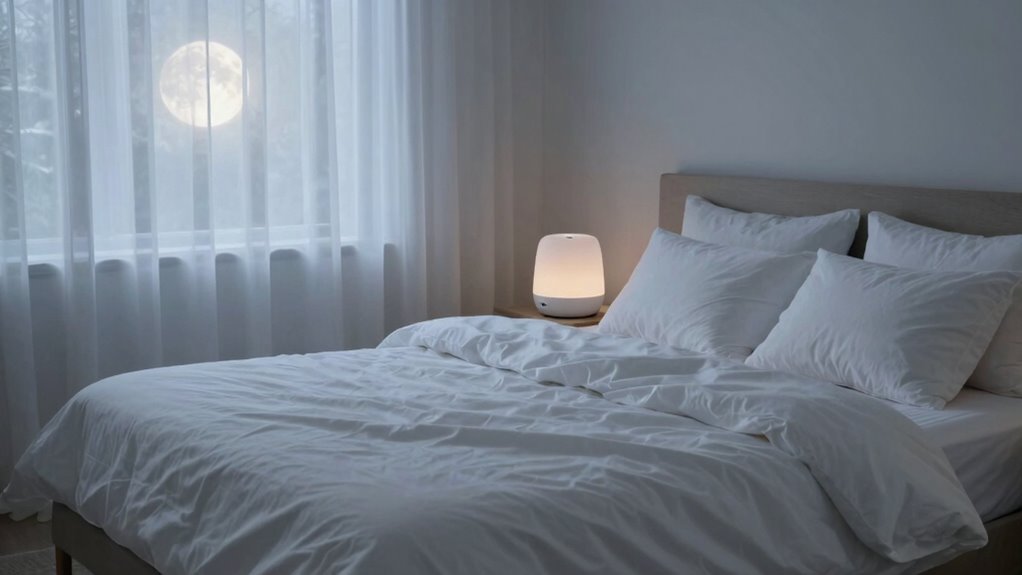

For white noise to work best, your whole room needs to support a good sleep environment. Keep your space dark, cool, and clutter-free to help your brain relax. Position your white noise device properly, ideally near your bed, so its soothing sound blankets the entire room. Removing distractions like screens and bright lights also boosts its effectiveness. By creating a calming, noise-treated space, you’ll enhance sleep quality—keep going to discover how to optimize your room further.

Get decor and gifts delivered free — and shop member deals
- Fast, free delivery on millions of items
- Access to Prime Big Deal Days deals on October 6–7
- Prime Video, Amazon Music and more included
Key Takeaways
- Proper device placement ensures even sound coverage, enhancing white noise effectiveness throughout the entire room.
- Creating a dark, cool, and clutter-free environment promotes relaxation and supports the calming effects of white noise.
- Soundproofing and acoustic treatments reduce external disturbances, allowing white noise to mask disruptions more effectively.
- Consistent sleep routines and a comfortable sleep setup reinforce the environment’s ability to promote restful sleep.
- Minimizing light and noise pollution outside the room enhances the overall effectiveness of white noise for better sleep.
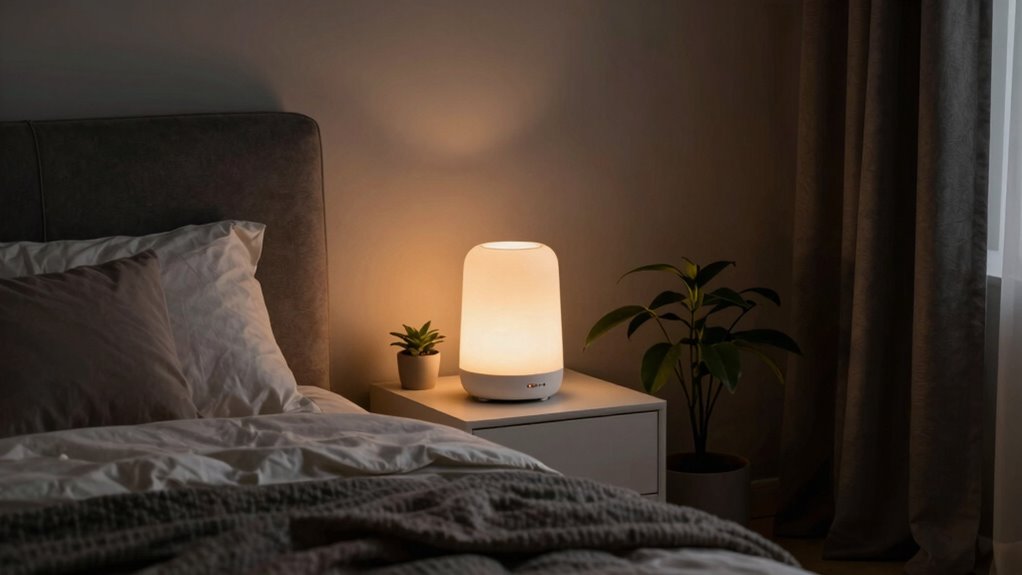
If you struggle to fall asleep or stay asleep through the night, white noise might be just what you need. It works by providing a consistent, soothing sound that masks disruptive noises, helping your brain focus on calming sounds rather than sudden disturbances. But for white noise to be truly effective, it’s not enough to simply turn it on; your entire sleep environment should support this calming effect. Creating a sleep-friendly space involves more than just playing white noise—it’s about designing a room that encourages relaxation and minimizes interruptions.
Sound masking is a key concept here. When you use white noise as a form of sound masking, it fills the room with a steady soundscape that conceals more jarring noises like traffic, barking dogs, or household chatter. This consistency helps your brain interpret the environment as safe and stable, reducing the likelihood of waking up during the night. To maximize this effect, you should position your white noise device carefully—ideally in a central location or close to your bed—so the sound envelops the entire sleep environment evenly. If the noise is too distant or inconsistent, it won’t provide the same level of sound masking.
Proper placement of white noise devices ensures even sound masking and a calmer sleep environment.
Your sleep environment plays an indispensable role in supporting white noise’s benefits. A cluttered, bright, or noisy room can undermine your efforts to achieve restful sleep, even with sound masking in place. Dim the lights and keep your room cool and dark to promote deeper, uninterrupted sleep. Consider blackout curtains or an eye mask if light seeps in. Remove distractions like screens or work-related clutter from your sleeping space. The goal is to create a sanctuary where your mind can unwind without constant interruptions. Additionally, the quality of your mattress and pillows impacts how well you sleep. Comfortable bedding reduces physical discomfort, making it easier to drift off and stay asleep. Creating a sleep-conducive environment by minimizing noise and light pollution can further strengthen the calming effects of white noise. Proper sound insulation can also help block external noises that might otherwise disturb your rest. Ensuring your room is designed with acoustic treatment can enhance sound masking and improve overall sleep quality. It’s also helpful to incorporate a consistent sleep routine, which reinforces your body’s natural sleep-wake cycle and enhances overall sleep quality. When your entire sleep environment is aligned with your sleep goals, white noise becomes a more effective tool. It acts as a gentle, continuous backdrop that complements the calm, quiet space you’ve created.
Ultimately, white noise works better when the whole room supports sleep. Combining sound masking with a thoughtfully arranged sleep environment ensures you’re not just relying on sound alone but setting the stage for a restful, restorative night’s sleep.
As an affiliate, we earn on qualifying purchases.
Frequently Asked Questions
Can White Noise Help Sleep in Noisy Urban Environments?
Yes, white noise can help you sleep in noisy urban environments. By using sound masking, white noise creates a consistent background sound that drowns out disruptive noises like traffic or sirens. Effective noise mitigation involves placing your speaker or white noise machine strategically in the room, ensuring the sound covers the entire space. This way, you can relax more easily and improve your chances of falling asleep peacefully.
Does White Noise Improve Sleep Quality for Children?
Imagine a tiny boat sailing smoothly through turbulent waters—that’s your child’s sleep. White noise acts like calm waters, helping improve their sleep quality by stabilizing sleep patterns and reducing noise sensitivity. When their environment supports peaceful sleep, the noise becomes less disruptive, allowing them to rest deeply. You can create this tranquil space by using white noise, helping your child wake up refreshed and ready to face the day.
How Loud Should White Noise Be for Optimal Sleep Support?
You should keep the white noise volume at a gentle level, around 50-60 decibels, comparable to a quiet conversation. This guarantees your sleep environment remains soothing without becoming disruptive or damaging your hearing. Adjust the white noise volume as needed for comfort, making sure it’s loud enough to mask disruptive sounds but not so loud that it disturbs your sleep or causes strain.
Is White Noise Effective for Light Sleepers or Only Deep Sleepers?
White noise can be effective for both light and deep sleepers, but it often depends on individual sleep cycle influence. For light sleepers, it helps mask disruptions, making it easier to stay asleep. Deep sleepers might find it less necessary but still beneficial. Think of white noise as a buffer—if your sleep is easily disturbed, it acts as a steady companion, promoting uninterrupted rest regardless of your sleep stage.
Are There Any Risks of Long-Term Dependence on White Noise?
Long-term dependence on white noise can pose dependence risks and lead to habituation effects, making it harder for you to fall asleep without it. While occasional use is safe, relying on white noise every night might reduce your natural ability to sleep without it over time. To minimize these risks, try gradually reducing white noise use and developing other sleep strategies, like relaxation techniques or consistent sleep routines.
Conclusion
Just like the soothing hum of the ocean calms a restless mind, white noise works best when your entire room becomes a sanctuary of sleep. When your environment supports relaxation—dim lights, comfortable bedding, minimal distractions—you create a haven where sleep can drift in effortlessly. Think of it as tuning an instrument; when everything’s aligned, the melody of restful nights plays on. Embrace your space, and let white noise be the gentle conductor guiding you to peaceful slumber.
Fall Picks
fall essentials
As an affiliate, we earn on qualifying purchases.