
When choosing eco-friendly paints, it’s important to check their VOC levels, ideally below 50 grams per liter or even zero. Low or zero-VOC options reduce harmful fumes and improve indoor air quality, making your space safer for everyone. Manufacturers often highlight VOC numbers on labels, so look for these details before buying. To guarantee you’re making the healthiest and most sustainable choice, explore further — there’s more valuable information to discover.
Key Takeaways
- Look for paints with VOC levels below 50 grams per liter for safer indoor air quality.
- Check product labels for clear VOC content information to compare safety levels easily.
- Zero or low-VOC paints significantly reduce off-gassing during and after application.
- Be aware of regulatory standards that promote low or zero-VOC formulations for environmental compliance.
- Choosing eco-friendly paints with verified VOC numbers supports healthier homes and sustainable manufacturing.
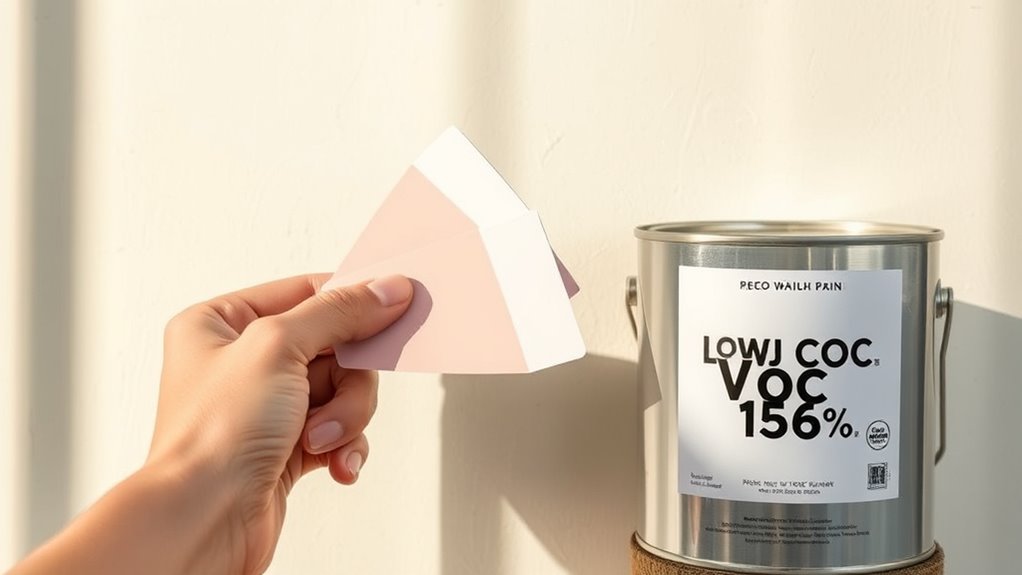
As more people become aware of environmental impacts, eco-friendly paints have gained popularity as a safer alternative to traditional options. You’re likely looking for products that not only beautify your space but also minimize health risks and environmental harm. One of the key factors to consider is the paint formulation, which directly influences the VOC (volatile organic compounds) levels and overall safety of the product. Eco-friendly paints are formulated with low or zero VOC content, reducing the emission of harmful fumes during and after application. By examining the paint formulation, you can guarantee that the product aligns with your health priorities without sacrificing quality or durability.
Market trends show a steady increase in the availability of eco-friendly paints, driven by consumer demand and stricter regulations. Manufacturers are now prioritizing low-VOC formulations and sustainable ingredients, making it easier for you to find options that meet both environmental standards and aesthetic preferences. Today’s market offers a variety of eco-friendly paints suitable for different surfaces and finishes, from matte to gloss, with many brands emphasizing transparency about their VOC numbers. This transparency is essential because it helps you make informed decisions that align with your safety standards.
Eco-friendly paints are increasingly available, with transparent VOC info helping you choose safer, sustainable options for your space.
When shopping for eco-friendly paints, pay close attention to the VOC numbers listed on the label. Low VOC levels—generally below 50 grams per liter—are preferable, but some products boast even lower or zero VOC content. It’s important to note that VOCs can off-gas for days or weeks after application, so choosing a paint with a lower VOC number can notably reduce indoor air pollution. Checking the label for specific VOC content allows you to compare products effectively and select a safer option for your home or workspace. Additionally, staying informed about VOC regulations can help you understand the standards that manufacturers are expected to meet and ensure compliance.
Furthermore, stay updated on market trends by reading reviews and consulting trusted sources. Many brands now highlight their VOC ratings prominently, making it easier for you to identify environmentally friendly choices. This transparency not only guarantees you’re selecting a product with minimal VOCs but also encourages manufacturers to maintain high standards. As the market continues to evolve, expect to see more innovative formulations that push the boundaries of sustainability while delivering high performance.
Ultimately, understanding paint formulation and being aware of market trends empower you to choose eco-friendly paints that are both safe and effective. By checking VOC numbers before you buy, you contribute to healthier indoor environments and support a shift toward more sustainable manufacturing practices. Your informed choice can make a meaningful difference, helping protect both your health and the planet.
Frequently Asked Questions
How Do VOC Levels Affect Indoor Air Quality Long-Term?
Higher VOC levels can harm your indoor air quality over time. You might notice lingering fumes, which can cause headaches, dizziness, or respiratory issues. Long-term exposure may increase health effects like allergies or asthma. To protect your health, guarantee proper ventilation and choose paints with low VOC content. Being mindful of VOC numbers helps you maintain a healthier environment and reduce potential health risks inside your home.
Are Eco-Friendly Paints as Durable as Traditional Options?
Think of eco-friendly paints as the steady oak in a forest of traditional options. You might worry about their durability, but many eco labels guarantee these paints withstand the test of time. While they contain fewer volatile compounds, they often match traditional paints in longevity and resilience. So, you can enjoy the peace of mind that comes with eco-friendly choices without sacrificing durability, knowing you’re protecting your space and the environment.
Can Low-Voc Paints Be Used on Outdoor Surfaces?
Yes, low-VOC paints can be used on outdoor surfaces, but you need to contemplate outdoor weather resistance. Make sure to choose a paint formulated for exterior use, and follow surface preparation tips like cleaning and priming properly. This ensures the paint adheres well and withstands elements like rain and sun. Always check the product label for durability claims and suitability for outdoor weather conditions before application.
What Certifications Indicate Truly Eco-Friendly Paints?
Think of eco-friendly paints as a treasure chest—you want to find genuine gems. Certifications like Green Seal and UL Environment validate that paints contain natural pigments and recycled content, ensuring they’re truly eco-friendly. Look for labels that verify low VOC levels and sustainable sourcing. These marks are your map to making responsible choices, helping protect the environment while giving your space a beautiful, healthy finish.
Do Eco-Friendly Paints Cost More Than Conventional Paints?
You might notice eco-friendly paints often cost more than conventional options, but it’s mainly due to factors like higher-quality ingredients and sustainable production methods. The price comparison depends on the brand and specific product features, such as VOC levels and durability. While you may pay a bit extra upfront, you’ll benefit from healthier indoor air and better environmental impact. Always consider these price factors when choosing eco-friendly paints for your project.
Conclusion
When choosing eco-friendly paints, always check their VOC levels to guarantee you’re making a healthier choice. Remember, “You are what you eat,” and in this case, what you breathe matters too. Opting for low-VOC paints not only benefits your health but also protects the environment. So, do your homework before buying—small steps lead to big changes. After all, the journey of a thousand miles begins with a single step, and choosing green paints is a step in the right direction.