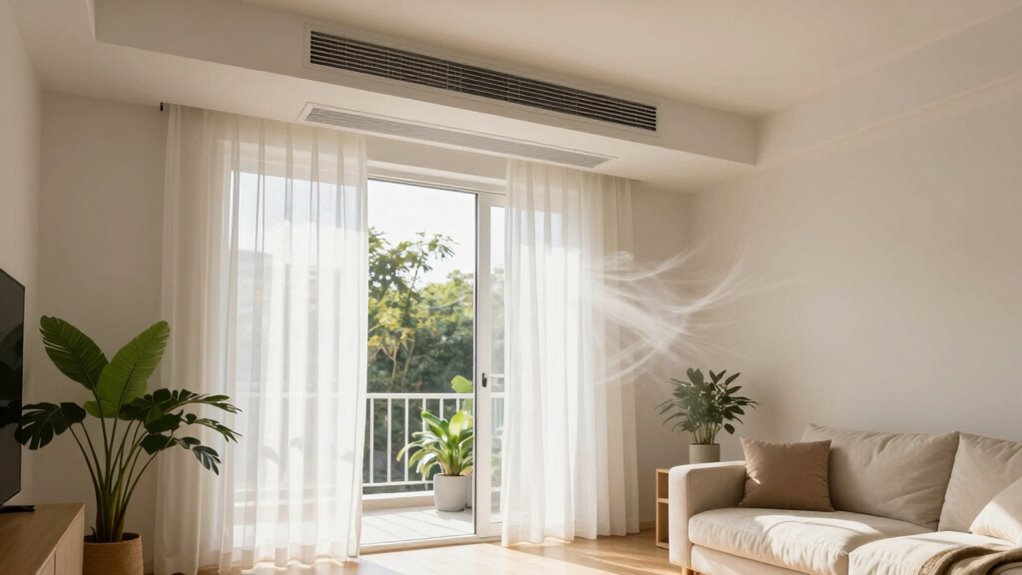

Whole-house ventilation is a system that quietly replaces the stale air in your home with fresh outdoor air, helping to improve indoor air quality without you noticing. It works continuously, removing dust, mold spores, and VOCs, while balancing airflow to prevent moisture issues. Modern systems often include heat recovery to save energy. If you want to understand how it keeps your home healthier and more comfortable, there’s more to discover below.

Get decor and gifts delivered free with Prime
- Fast, free delivery on millions of items
- Prime Video, Amazon Music and more included
- Member-only deals all year
Key Takeaways
- Whole-house ventilation continuously replaces indoor air with fresh outside air, improving air quality across the entire home.
- It operates quietly and automatically, eliminating the need to open windows or use individual fans.
- Modern systems recover heat from outgoing air, saving energy and reducing heating or cooling costs.
- Proper design and installation ensure effective airflow, prevent moisture buildup, and minimize noise.
- Overall, it creates a healthier, more comfortable home while saving energy and reducing indoor pollutants.

Have you ever wondered how to keep your home fresh and healthy year-round? Whole-house ventilation might be the answer you’re looking for. It’s a way to improve air quality inside your home by replacing stale, polluted air with fresh outdoor air. This process isn’t complicated once you understand it. Instead of relying on individual fans or opening windows all the time, a whole-house system works quietly in the background, managing airflow throughout your space. This means you get cleaner air without sacrificing comfort or energy efficiency.
When your home has good ventilation, the air quality improves because harmful pollutants like dust, mold spores, and VOCs (volatile organic compounds) are continuously removed. Better air quality isn’t just about comfort; it’s about health too. Breathing cleaner air can reduce allergy symptoms, improve sleep, and even decrease respiratory issues. Whole-house ventilation ensures these benefits are consistent, no matter the season or weather. You won’t have to worry about opening windows when it’s cold or polluted outside. Instead, the system brings in fresh air in a controlled way, filtering out contaminants along the way.
Another big advantage of whole-house ventilation is its positive impact on energy efficiency. Many think that bringing in outdoor air might increase heating or cooling costs, but modern systems are designed to minimize this. They often include heat recovery units that transfer heat from outgoing stale air to incoming fresh air, saving you energy. This means your HVAC system doesn’t have to work as hard to heat or cool the new air, leading to lower energy bills. It’s a smart way to keep your home comfortable while also being kind to the environment and your wallet. Additionally, the properly designed ventilation can help control humidity levels, preventing issues like mold growth and reducing moisture-related damage.
Getting your home set up with whole-house ventilation isn’t complicated, but it does require some planning. You’ll need to consider the size of your home, the climate where you live, and your specific needs for air quality. Proper ventilation is essential for maintaining a healthy indoor environment and preventing moisture buildup that can lead to mold growth. Additionally, choosing the right system can help optimize airflow and ensure minimal noise during operation. Professionals can help install the right system, ensuring it’s properly balanced for efficient airflow and minimal noise. Once installed, you’ll notice your home feels fresher, and you’ll breathe easier. Plus, with improved energy efficiency, you’ll spend less on heating and cooling, making your home a healthier, more comfortable place to be all year round.
In short, whole-house ventilation is an effective, energy-efficient way to boost air quality and maintain a comfortable environment. It’s a simple upgrade that can make a significant difference in your daily life.
As an affiliate, we earn on qualifying purchases.
Frequently Asked Questions
How Much Does a Whole-House Ventilation System Cost to Install?
A whole-house ventilation system typically costs between $2,000 and $6,000 to install, depending on your home’s size and the system type. The cost comparison varies based on features and complexity. During the installation process, a professional assesses your home’s needs, then mounts and connects the system. While it’s an investment, proper ventilation improves air quality and energy efficiency, making it well worth considering.
Can Ventilation Systems Be Integrated With Existing HVAC Systems?
Yes, ventilation systems can often be integrated with your existing HVAC, like adding a new piece to your home’s puzzle. This integration guarantees a smooth air exchange, keeping indoor air fresh without overworking your system. You’ll want to check system compatibility first, making sure the ventilation unit matches your current HVAC’s capacity and controls. This way, you create a harmonious flow, breathing fresh life into your home’s air quality.
What Maintenance Is Required for a Whole-House Ventilation System?
You need to regularly check your whole-house ventilation system for air filter maintenance, replacing filters as recommended to guarantee ideal airflow and air quality. Keep an eye out for signs of system troubleshooting, like unusual noises or reduced efficiency. Clean or replace filters monthly or as advised, and inspect ducts and vents periodically. Proper maintenance keeps your system running smoothly, improving indoor air quality and extending its lifespan.
How Does Ventilation Impact Indoor Air Quality Over Time?
Ventilation is like a revitalizing gust, keeping your indoor environment healthy over time. It improves air quality by consistently facilitating air exchange, removing pollutants, and reducing indoor allergens. Without proper ventilation, pollutants can build up, leading to health issues and discomfort. Regular air exchange ensures stale air exits and fresh air enters, maintaining a cleaner, safer living space and supporting your overall well-being.
Are There Energy-Efficient Options for Whole-House Ventilation?
Yes, there are energy-efficient options for whole-house ventilation. You can upgrade to energy-saving ventilation technology like heat recovery ventilators (HRVs) or energy recovery ventilators (ERVs), which minimize energy loss while maintaining fresh air. Combining these with energy-saving upgrades, such as better insulation and sealing leaks, helps reduce your home’s overall energy consumption. These innovations guarantee you get fresh air without notably increasing your energy bills.
Conclusion
Now that you understand whole-house ventilation, you can see how vital proper airflow is for a healthy home. It’s not just about fresh air; it’s about protecting your comfort and well-being. Remember, a chain is only as strong as its weakest link—so make certain your ventilation system works smoothly to keep your home safe and cozy. By prioritizing good airflow, you’re investing in a healthier, happier living space for you and your loved ones.
Halloween Picks
halloween
As an affiliate, we earn on qualifying purchases.