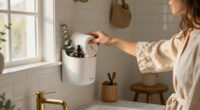
To support recovery at home, you should set up assistive devices like grab bars, raised toilet seats, and walkers to guarantee safety and stability. Organize medications with clear containers and reminders to stay on schedule. Make environmental modifications such as ramps, widened doorways, and securing rugs to prevent falls. Consider consulting professionals to customize your space for maximum safety and ease. Keep going to discover more ways to create a safe, supportive environment for recovery.

Get decor and gifts delivered free — and shop member deals
- Fast, free delivery on millions of items
- Access to Prime Big Deal Days deals on October 6–7
- Prime Video, Amazon Music and more included
Key Takeaways
- Install assistive devices like grab bars and raised toilet seats to support safe movement and prevent falls.
- Organize medications in dedicated, accessible areas with clear containers and reminders to ensure proper management.
- Modify the home environment with ramps, widened doorways, and secure rugs to enhance mobility and safety.
- Implement safety measures such as securing rugs and installing grab bars to minimize fall risks.
- Consult professionals for tailored home modifications that promote independence and meet individual recovery needs.
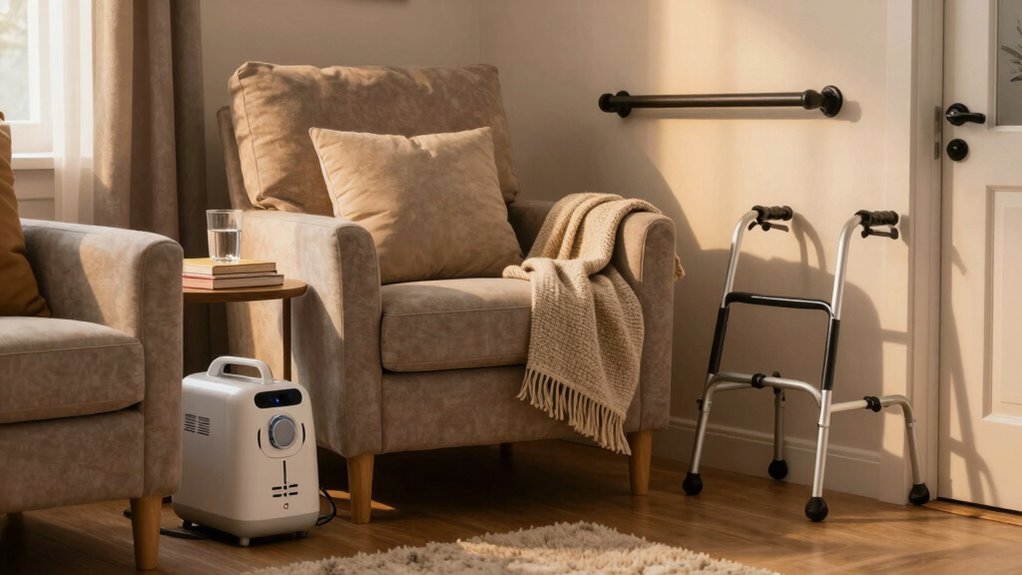
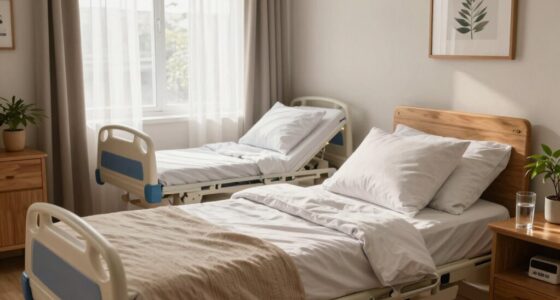
Have you ever wondered how your environment can influence your recovery process? The way your home is set up plays a key role in your healing journey, especially after a hospital stay. Making a few intentional adjustments can help you regain independence faster and feel more comfortable as you recover. One of the most effective ways to do this is by incorporating assistive devices into your space. These tools, like grab bars, raised toilet seats, and walkers, provide support where you need it most, reducing the risk of falls and giving you confidence to move around safely. Placing these devices strategically around your home ensures that everyday activities don’t become challenging or dangerous, helping you stay mobile and active during your recovery.
Strategically adding assistive devices promotes safety, independence, and confidence during your recovery at home.
Equally important is organizing your space to facilitate medication management. After a hospital stay, you often have a new set of medications to track, and forgetting doses can hinder your progress. Setting up a dedicated area for your medications — like a clear, accessible medicine box or a tray — makes it easier to stay on schedule. Keep your medications in a consistent spot, away from children or pets, and consider using a pill organizer to sort doses by day and time. This simple setup can prevent missed doses and ensure you’re taking your medication correctly, which is essential for healing. Additionally, setting alarms or reminders on your phone can supplement your physical setup, reinforcing your medication routine. Creating a medication management system that suits your needs can significantly enhance your recovery process. Incorporating home accessibility improvements, like ramps or widened doorways, can further support your mobility and independence. Being mindful of home safety** measures, such as securing loose rugs or installing grab bars, can also prevent accidents and make your environment more secure during recovery. Moreover, consulting with professionals about home modifications** can help you identify the most effective changes tailored to your needs.
Frequently Asked Questions
How Can I Ensure My Home Is Accessible for Mobility Aids?
To guarantee your home is accessible for mobility aids, start with essential home modifications like widening doorways and installing ramps. Keep pathways clear of clutter and use assistive devices such as grab bars and stairlifts where needed. You should also consider installing non-slip flooring and bathroom safety features. Regularly check that all modifications meet safety standards, making your home a secure, supportive environment for mobility needs.
What Safety Features Are Essential to Prevent Falls?
Ironically, the most obvious safety features are often overlooked. To prevent falls, install grab bars in bathrooms, guarantee rugs are non-slip, and keep pathways clutter-free. Conduct regular safety assessments and add nightlights to illuminate dark areas. These simple fall prevention measures create a safer environment, reducing the risk of accidents and helping your loved one recover comfortably at home. Safety isn’t just an option—it’s a necessity.
How Should I Organize Medications and Medical Supplies?
You should organize medications by using a labeled, easy-to-access medication organizer or pillbox, sorting doses by time of day. Keep medical supplies in a dedicated, clearly labeled storage area that’s easily reachable, like a low cabinet or a portable cart. Regularly check expiration dates and keep supplies neat to prevent clutter. This organization guarantees safety, quick access, and helps maintain an efficient, stress-free recovery environment.
What Are Effective Ways to Manage Pain at Home?
When it comes to managing pain at home, you’re in the driver’s seat. Try effective pain management techniques like deep breathing, gentle exercises, and relaxation methods to ease discomfort. Don’t overlook alternative pain relief options such as heat or cold packs, massage, or aromatherapy. Keep track of your pain levels and communicate with your healthcare provider to fine-tune your approach, ensuring you’re not fighting an uphill battle alone.
How Can I Create a Calming Environment for Recovery?
To create a calming environment for recovery, focus on creating ambiance with soft lighting and comfortable furniture. Incorporate aromatherapy techniques, like diffusing lavender or chamomile oils, to promote relaxation. Use gentle colors and add personal touches to make the space inviting. Keep noise levels low and make certain the room is tidy. These steps help reduce stress, enhance comfort, and support your healing process effectively.
Conclusion
Creating the right home setup can remarkably boost your recovery after a hospital stay. By simplifying daily tasks and ensuring safety, you set yourself up for a smoother healing process. Did you know that nearly 20% of hospital readmissions are due to inadequate home care? Don’t let that be you—invest in a comfortable, accessible environment and follow your healthcare provider’s advice. Your recovery depends on the right home setup, so start making those changes today.
Fall Picks
fall essentials
As an affiliate, we earn on qualifying purchases.