Welcome to the world of smart sensors in appliances, where continuous monitoring and optimization can revolutionize your home—discover how they truly make a difference.
Browsing Category
Appliance Science
128 posts
Energy Ratings and Appliance Labels: Decoding Efficiency
Better understanding energy ratings and appliance labels can help you save energy and money—discover how to decode these labels today.
Microwave Ovens: How Microwaves Heat Food
Inefficient heating methods are replaced by microwaves that rapidly excite water molecules, but how exactly does this process work?
Vacuum Cleaner Science: Suction Power and Filtration
Find out how vacuum cleaner suction power and filtration work together to improve cleaning efficiency and indoor air quality.
Dishwasher Science: Water Jets, Detergent Chemistry, and Drying
Guess how water jets, detergent chemistry, and drying work together to deliver spotless dishes—discover the science behind your dishwasher’s cleaning power.
How Heat Pumps Work: Principles of Energy‑Efficient Heating
A deep dive into how heat pumps transfer heat efficiently, revealing the science behind their energy savings and optimal comfort.
Induction vs. Gas Cooktops: Physics and Efficiency
Much depends on how electromagnetic induction and combustion physics influence efficiency, safety, and cooking performance—discover the key differences below.
Thermodynamics of Refrigeration: How Fridges Keep Food Cold
Your refrigerator keeps food cold through thermodynamics, using a refrigerant that undergoes…
Front Load vs. Top Load Washers: Efficiency Comparison
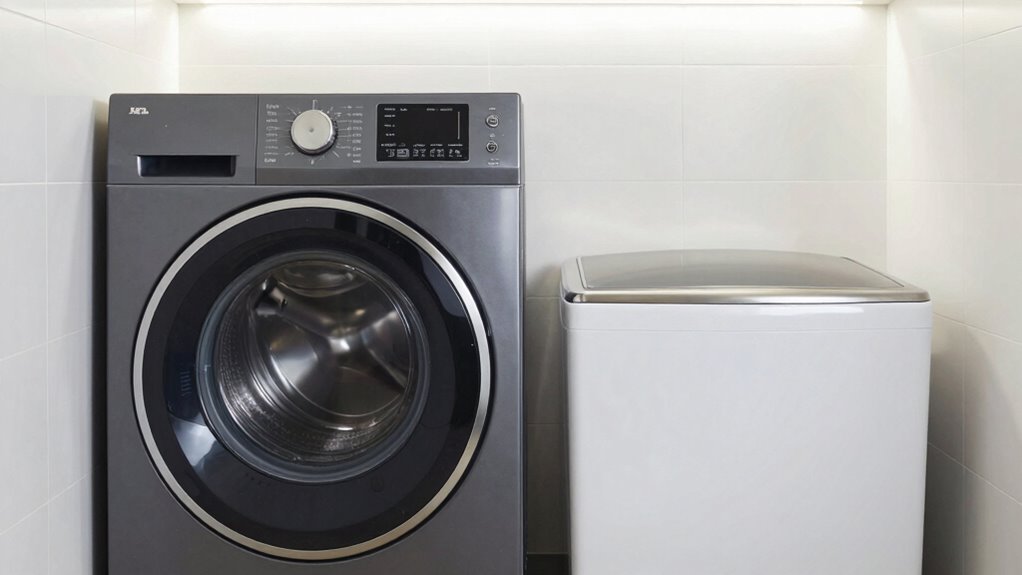
Keen to save energy and water, but unsure which washer type offers the best efficiency? Discover the key differences now.
How Clothes Washers Use Less Water: Understanding IWF and IMEF
Just how do modern clothes washers use less water through IWF and IMEF ratings? Discover the innovative features that could transform your laundry routine.